Reviews of the novels by Rachel Seiffert and Alice Jolly shortlisted for The Walter Scott Prize for Historical Fiction 2026

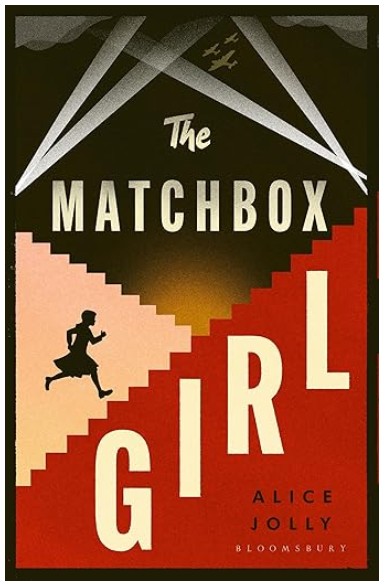
‘How dare we predict the behaviour of man?’ wrote Viktor Frankl, Austrian psychiatrist and holocaust survivor, and author of Man’s Search for Meaning. His quote is at the front of Alice Jolly’s The Matchbox Girl (Bloomsbury, November 2025), but the theme at which it hints is shared also by Rachel Seiffert’s Once The Deed Is Done (Virago, March 2025). Both books are on the 2026 Walter Scott Prize for Historical Fiction shortlist, and I wholeheartedly recommend them. These beautifully written and painstakingly researched novels will steep you in life under Nazism and make you ask yourself an uncomfortable question: how might you have behaved under those circumstances? Of course, each of the two books handles several other themes.    

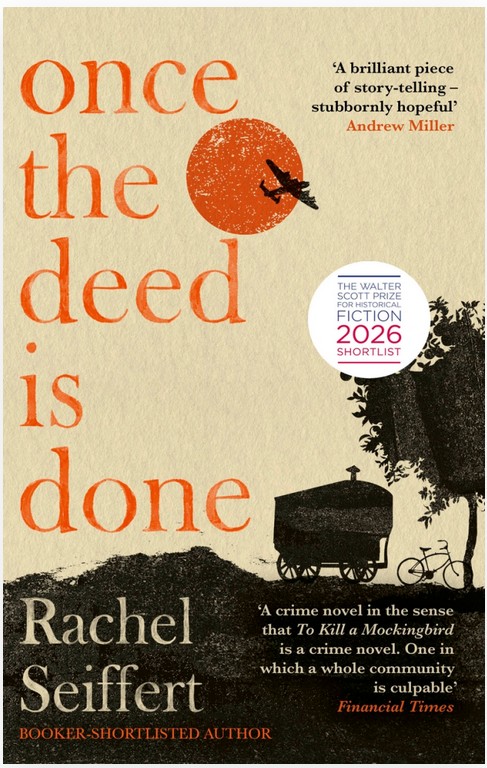
I begin with Rachel Seiffert’s Once The Deed Is Done, which I originally reviewed more briefly under ‘My top historical fiction reads’ in May 2025.  
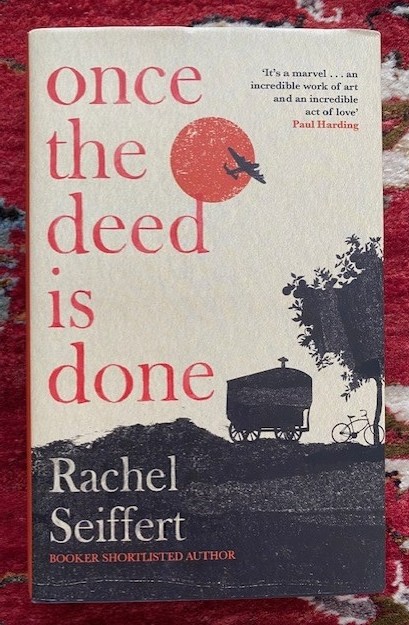
Once The Deed Is Done sheds light on a page of history rarely covered in fiction, immersing us so deeply in the events and in the protagonists’ inner and outer worlds that it feels as if we were there.

Lüneburg Heath, Northern Germany, 1945. It’s March, and the Reich’s defeat is imminent. We follow the thoughts and actions of the residents of a small town through multiple narrators’ points of view: young and old, those who were faithful to the Nazis, those who put up quiet resistance to them… Something mysterious and sinister happens one night on the town’s outskirts, near the munition works manned by Eastern European forced labourers. Fragments of that night’s events transpire slowly, as some of the townsfolk were there, or watched from a distance, or heard rumours.

We eventually discover what happened, through the eyes of a British Army sergeant, of a young fugitive carrying a baby in her arms, and of Ruth, a British Jewish Red Cross officer. Ruth and the sergeant oversee a camp for displaced people, set up by Allied forces at the war’s end on the town’s outskirts. There, we track the fortunes and inner lives of a large cast of characters: men, women, and two children who are among the hundreds of thousands forcibly transported by the Nazis to work in German factories and farms. Among them are mothers separated from their children, and vice-versa. Ruth works relentlessly to find the whereabouts of their loved ones, a Sisyphean task in the immediate post-war chaos. She faces tough choices every day: whether to ignore evidence of black-market activity in the camp or not; to move the two children to Hamburg, where they would be better catered for, but where their chance of finding again those they love would be lower, unless… Nor is repatriation the wish of every displaced person: those from Poland and Ukraine fear returning to lands now under Stalin’s control.

Few novelists can weave such a compelling narration through so many characters’ perspectives. Authors capable of it reward us with an uncommonly rich reading experience. We hear both the choral effect and the individual voices. Seiffert does not shy away from the enormity of the horror at the centre of this novel, but she also paints the minutiae of every character with the finest brush. The protagonists are three-dimensional people. The town where the shocking events have taken place is both itself and a microcosm of Germany: who supported, who acquiesced in, who resisted Nazism? One of the characters, the yard man Herr Brandt, realises the only reason he’s not on the Allies’ list of Nazi sympathisers is that he was not awarded a manufacturing contract he desperately sought. He contrasts his own cowardice with schoolmaster Arno’s brave dissent, and yet Arno feels a coward for not having done more.

Through her unsentimental and yet moving prose, Seiffert lays out the facts, and poses questions that linger in the mind about the past and the present. That is what the best historical fiction does. Seiffert’s novels have received well deserved recognition: one was shortlisted for the Booker Prize, another three were longlisted for the Women’s Prize… How wonderful to see Once The Deed Is Done on the shortlist of the Walter Scott Prize for Historical Fiction 2026.

Meet narrator Adelheid Brunner, a fictional Viennese neurodivergent 12-year-old when the book opens in 1934. She is the eponymous “matchbox girl” by virtue of her obsession for collecting and organising matchboxes. Adelheid refuses to speak, seeking safety in her silence, as she finds it difficult to understand what’s appropriate to say. ‘Staying silent’ is a recurring motif in the novel: some silences protect people, while others prove fatal. Adelheid’s complexity and her compulsion to understand things, to categorise them (into binaries which they resist), and to write them all down make her an engrossing narrator.

Much of the action takes place in the Curative Education Ward of the Vienna Children’s Clinic, where Adelheid is sent as a young patient and where she later works. From the very start, events in the outside world shape the lives of everyone in the ward: patients, doctors, nurses… From the murder of Chancellor Dolfuss, all the way to post-WW2 reconstruction, we follow history in the making through Adelheid’s unflinching gaze. Many of the events and behaviours she witnesses confound her because, with the advent of Nazism, reality acquires an upside-down quality. In a memorable paragraph, Dr Josef Feldner, one of the doctors on the ward, warns Adelheid that they’re now in a world in which she must do “the Wrong Thing in order to do the Right Thing” and that others must pretend not to see her doing it.

Feldner is one of many real-life characters in the novel. He bravely rescues a Jewish boy by passing him off as his nephew – an open secret which his colleagues keep. As readers, we’re plunged into the darkness and moral ambiguities the hospital staff navigate. Dr Hans Asperger, who sees the individuality and potential of every child in his pioneering research and work on autism, is the same man who signs off on the transfer of dozens of children to the notorious Am Spiegelgrund, where many are murdered. The insightful Dr Anni Weiss and Dr Georg Frankl leave Vienna and emigrate to the US because they are Jewish. Sr Viktorine Zak (whom Asperger called ‘a genius’) shines for her profound love and warm care of the children – she must have chosen to stay and look after them, knowing and not knowing about the encroachment of eugenicist ideology on the Children’s Clinic under Dr Franz Hamburger.

We’d all like to think we’d be as brave as Dr Feldner under the same atrocious circumstances – but would we be? The novel instills a sense of humility: the acknowledgment that most of us are fortunate (so far) not to be put to such tests. Where would we personally draw the line between compliance and resistance? Another of the novel’s epitaphs comes to mind, this time from psychiatrist and autism researcher Lorna Wing: ‘Nature never draws a line without smudging it’. How clearly can we draw one between ‘normal’ and ‘pathological’ behaviour? And between survival and collaboration?

The novel is superbly written and engaging. Adelheid has a strong voice and a complex perspective. The narration moves at a fast pace, taking in the stories of all the central characters. Alice Jolly is to be applauded also for highlighting the contributions of many people to our understanding of neurodiversity: the focus isn’t solely on the controversial Dr Asperger, but also on the forgotten Drs Feldner, Weiss, and Frankl, and Sister Viktorine Zak, whose character is particularly moving. How good for her to be given visibility: being a woman and a nurse, she features little in histories of autism, despite Asperger’s high esteem of her. Recognition of her work seems apt also because yet another ‘gender gap’ – in the diagnosis of autistic girls and women – has finally been addressed in very recent years.
Accuracy and authenticity in historical fiction

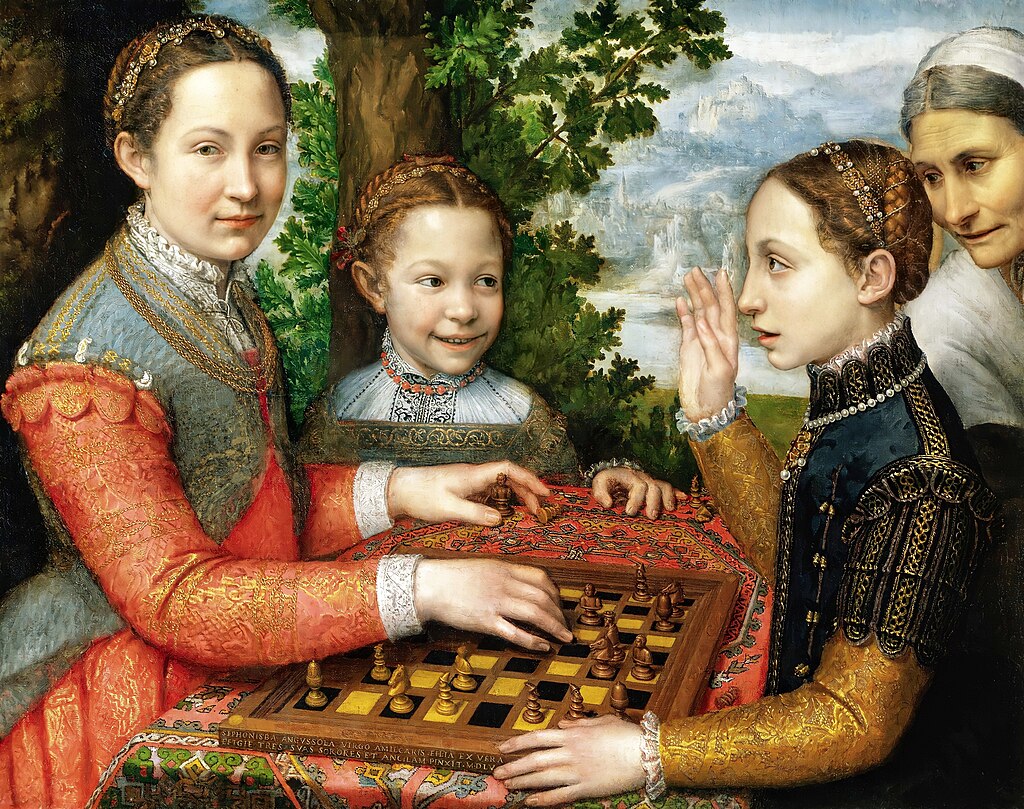
Sofonisba Anguissola’s The Chess Game (1555) is packed with meaning. Among other things, it’s a statement about women’s agency and about Sofonisba and her sisters’ exceptional education. The strategy game of chess was normally the preserve of men. Dama (le jeu de dames) was considered more appropriate for women.

Speak of accuracy and authenticity in historical fiction, and you’ll find writers agreeing on some things but not on others. “Shoulds” abound. Accuracy, you’ll often hear, is objective: it involves verifiable facts, from dates and places to furniture and dress. Authenticity, by contrast, is somewhat subjective: the reader must perceive the story’s world as faithful to the era in question.

Like many dichotomies, this clear-cut view of accuracy as objective and of authenticity as subjective is an over-simplification. The accurate details that authors of historical fiction work so hard to respect are unavoidably a selection, made from their own perspective and as a function of the story; conversely, readers may query the authenticity of well-documented elements that clash with widely held stereotypes and tropes. This matters because authors’ answers to these challenges lead to differing choices. It’s particularly important with respect to fictional re-imaginings of the female experience: recent decades of scholarly findings into ordinary women’s lives – whose legacy most impacts the present – now provide us with invaluable insights.

I’ve spent years researching and writing Habit of Disobedience, a novel inspired by real-life 16th-century women in Southern Italy. Scouring manuscripts, books, and articles in historical archives and libraries; attending history conferences; visiting museums of all kinds; corresponding with historians, in my search for missing details… You’ll gather my efforts at faithfulness – accuracy and authenticity – were not half-hearted. Still, since the key protagonists of my story are ordinary women, there are too many gaps to fully piece together the micro-history. I’m a novelist and tutor in creative writing, not a historian: my interest lay in attempting to inhabit the past until I could ‘see’ and ‘hear’ the characters in places that today convey only a faint echo of their struggles, joys, fears, and dilemmas. Where history left voids, I found doors I could open to fictional elements: characters and threads that capture people and the heartrending situations they experienced.

It’s the approach that felt right for this novel. The true events that inspired Habit of Disobedience are dramatic, and the fictional yarns I wove through them had to be highly consistent with their contemporary context. I’ve aimed to offer what Stephen Greenblatt expressed superbly in a 2009 article: for my protagonists to ‘carry the burden of a vast, unfolding historical process that is most fully realized in small, contingent, local gestures.’1

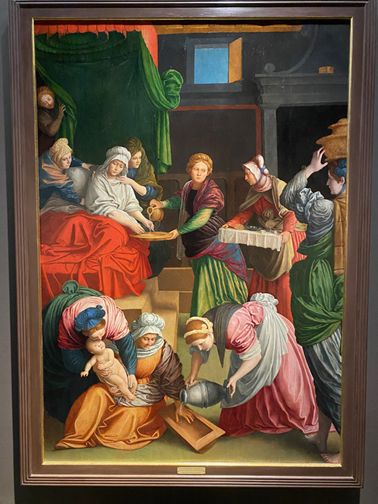
A realistic ‘women’s world’ in Gaudenzio Ferrari’s Birth of the Virgin (1541-43). The water from a baby’s first bath was thrown into the hearth for a girl and outside the front door for a boy.

There’s an additional reason why I’ve strived for faithfulness: I wanted to give a voice to these unheard women because of their relevance to the present day. The novel highlights their acquiescence in a system they thought they could not change, the areas of agency they carved out for themselves, and the trigger for their resistance. It holds a mirror to our times, without anachronisms. That’s also why I’ve aimed to immerse readers in the mentality of the time (to the extent available to me, five centuries later) – our value system affects how we frame and express our emotions in different eras and cultures.2 The more deeply readers let themselves be drawn into my protagonists’ worldview, the greater their surprise at how much of it persists today in changed forms.

Participants at a recent Women Writers Network discussion felt that most people today still live in a patriarchal society. The impact on women is obvious, but it is, ultimately, negative for everyone. It’s a framework of attitudes, beliefs, behaviours, and rules that most of us, no matter our gender, have absorbed and unwittingly sustain until we recognise them. Historical fiction can shine a powerful light on them.

As authors, we strive for accuracy and authenticity – seeking to shift perceptions, however slightly, away from stereotypes and tropes. In doing so, we can contribute much-needed nuance to the public discourse, making it more inclusive and less polarised.

In the words of Hilary Mantel: ‘What can historical fiction bring to the table? It doesn’t need to flatter. It can challenge and discomfort. If it’s done honestly, it doesn’t say, “believe this” – it says “consider this.” It can sit alongside the work of historians – not offering an alternative truth, or even a supplementary truth – but offering insight.’3

I look forward to telling you more about Habit of Disobedience as soon as it finds its publisher.


[1] https://www.nybooks.com/articles/2009/11/05/how-it-must-have-been/?utm_medium=email&utm_campaign=NYR-081124-news&utm_content=NYR-081124-news+CID_075386c07c1251a015e3b5bd8741dede&utm_source=Newsletter&utm_term=Stephen%20GreenblattHow%20It%20Must%20Have%20Been

[2] The academic field of history of the emotions was eye-opening in this respect, as was Arlie Russell Hochschild’s concept of ‘emotional labour’.

[3] The BBC Reith Lectures. Hilary Mantel’s Reith Lecture 2 – The Iron Maiden. https://www.bbc.co.uk/programmes/b08vkm52/episodes/player

Image credits:

Sofonisba Anguissola’s The Chess Game (1555). Photo by Mortendrak, reproduced under Creative Commons Attribution-Share Alike 4.0 international license.

Gaudenzio Ferrari’s Birth of The Virgin (1541-43). Photo by the author, taken at the Pinacoteca di Brera.  

History in fiction – why it matters

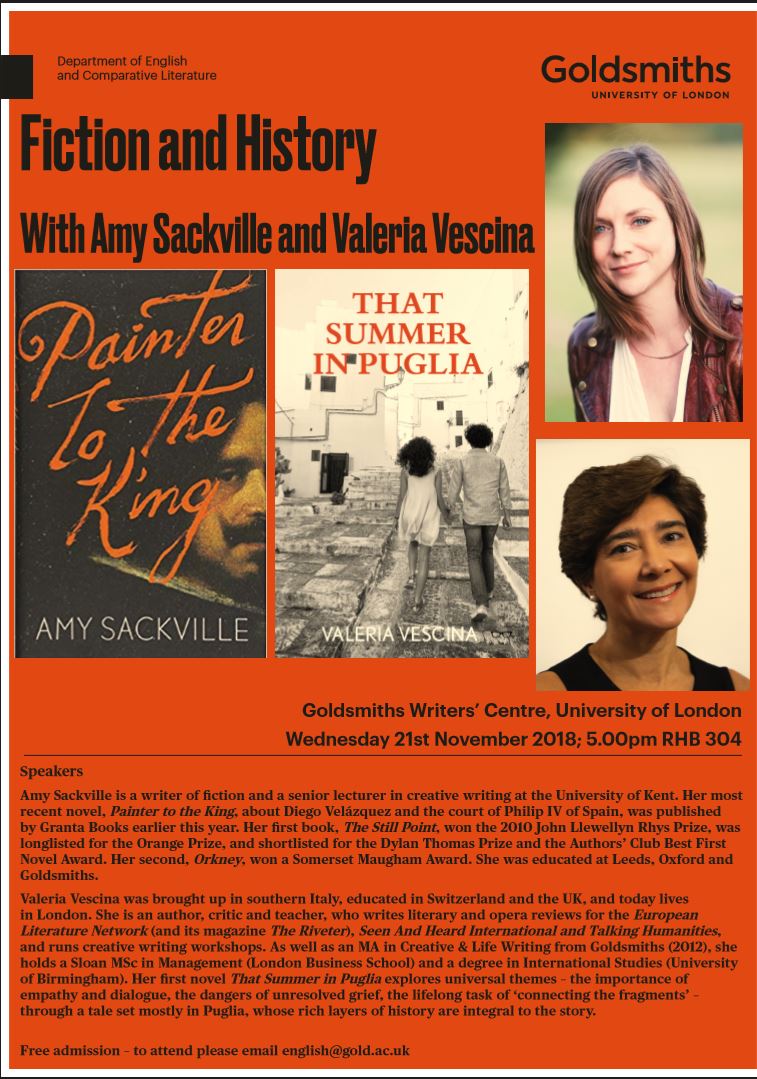
Recently, Amy Sackville and I were invited to speak at the Goldsmiths Writers’ Centre on the topic of ‘Fiction and History’ with reference to our novels. Amy presented Painter to the King (Granta), where she brings to life Diego Velazequez and the Court of Philip IV of Spain; I spoke about That Summer in Puglia (Eyewear Publishing), to which layers of history and diverse cultures are integral.

The Goldsmiths Writers’ Centre is ‘the home of new writing, debate about literature and more’, so the questions from writer and lecturer Ardu Vakil, our interviewer, were duly stimulating. My thanks to Prof. Blake Morrison: it was an honour to be invited to Goldsmiths, having been there years ago as a Creative & Life Writing MA student, and a pleasure to see some of my former tutors, including Ardu. This blog post is in response to requests, on the night and subsequently, to make available online my own reflections on history in fiction.

Goldsmiths Writers' Centre flier

Why weave history into fiction? Because it does something which really matters: it raises awareness of the legacy of history in our present day and of the fact that history is narrative. Novels can alert readers to these two issues and their consequences in ways which imprint themselves in our minds more deeply than intellectual notions alone.

The past conditions our present everywhere, but there are places where this is more evident than in others. My native Puglia, the region located in the ‘heel’ of Italy, is one such place. Part of the Ancient Greek world since the Bronze Age, it was eventually conquered by the Romans. The Via Appia soon stretched all the way from Rome to the port city of Brundisium (modern Brindisi), carrying armies and goods to this natural ‘Gateway to the East’ (‘Porta d’Oriente’). A succession of conquerors followed: Byzantines, Berbers, Normans, Swabians, French, Venetians, Spaniards… Over the centuries, they left an abundance of visible traces. First-time visitors to Puglia today are astonished by the sight of Ancient Greek or Roman ruins side by side with Norman churches, Swabian castles, Anjou palaces, Venetian loggias, Baroque jewels, the idiosyncratic ‘trulli’, whitewashed kasbahs… As a child whose bedroom windows opened onto the 11th-century round church of St. John of the Sepulchre, built by the Normans (influenced by the church of the Holy Sepulchre in Jerusalem) on top of a Roman house, I was conscious of walking daily where other children had walked for at least two-thousand years.

Of course, that is exactly what we’re all doing, physically or metaphorically, everywhere – but most places don’t bring us face to face with that realisation. Puglia has the power to do this also in slightly less obvious ways, and so my novel highlights the ‘living traces’ of diverse people and cultures in the region: the inhabitants’ physical appearance, which surprises foreigners; the mixture of languages which flowed into the local dialect; the cuisine; fairy tales which blend Greek myth with historical fact; proverbs where ancient gods and Christianity meet… I might write a future post about exactly how these traces appear in That Summer in Puglia. In the meantime, these sketchier references are here to help illustrate my answer to the wider question of why history in fiction – including, but not restricting ourselves to, historical fiction – matters.

Some awareness of how dynamically history still impacts the present is salutary for at least two reasons. First, it highlights positive aspects to be grateful for and exposes toxic ones. Second, by reminding us of the transience of life, it has high ‘existential value’: it awakens in us the instinct to make our existence meaningful; and the realisation that we’re tiny drops in the flow of humanity encourages empathy towards others not merely across time but across geographies. At the very least, it’s a spur to seeking to understand our world better and to take responsibility for daily actions. At its best, it pre-empts dangerous Othering. Umberto Eco’s Inventing the Enemy offers a memorable discussion of why intellectual awareness and courage are essential to countering the instinct to invent an enemy in the process of identity formation (individual as much as national).

Equally salutary – particularly when nationalism is experiencing a resurgence at all longitudes – is the recognition that history is narrative. All history is incomplete: the most scrupulous historians, committed to seeking the truth, are not exempt from the imperative to select the dots to connect; they have to sift through the facts and the personalities of the past in order to determine which to include or exclude. Even the most consciously unbiased will do that from a point of view inevitably tinged with the unconscious bias of their time and of other factors. And even the most balanced account can only be partial, a cross-section of reality. Think of the fils rouges running through your own life: they all tell true stories, but each thread can connect only certain aspects of your existence.

Omissions and distortions can have tragic consequences, especially when they’re wilful. That’s true both for societies and individuals and whether the narrative in question is the history of a nation or of a person. The story of Tommaso, the protagonist of That Summer in Puglia, is that of a man who unwittingly misinterprets and distorts past and present at great cost to himself and others, until the complexity of the truth catches up with him and presents him with a choice.

The link between the words ‘history’ and ‘story’ reminds us that both are narratives. The distinction between them in the English language is relatively recent: it first appears only around the late fifteenth century. In some other tongues – for example Italian (storia), French (histoire) and German (Geschichte) – one term still describes both. Layers of history – and different versions of them – shape national as well as personal identities; they give rise to frameworks of beliefs and of normative behaviour. I’m intrigued by how history with a capital ‘h’ affects personal histories as well as our own times. I’ve explored some of these intersections in my first novel and will explore others in my second one, a story set in late sixteenth-century Southern Italy. I hope That Summer In Puglia shows how layers of history and of diverse cultures account for my native region’s deep-rooted contradictions, which give rise to its intense beauty but also to conflicts between and within my protagonists; ultimately, their task is that of ‘connecting the fragments’.

512px-Vaso_di_Talos_particolare
Vase of Talos, Jatta Museum, Ruvo di Puglia

The word ‘history’ comes to us via the ancient Greek but derives from the proto-Indo-European ‘weid’ for ‘to see’, the root for the words ‘wisdom’ and ‘vision’. It strikes me as one of those cases in which etymology transmits a timeless truth: while knowledge and wisdom are different things, seeking ‘to see clearly’ is integral to acquiring some degree of wisdom. To ‘see clearly’ is always a challenge though, not least as it requires viewing things from multiple perspectives. An education which stresses the value of the arts and humanities encourages that, by training us to open-mindedness, empathy and critical thinking. Historian Diarmaid MacCulloch has argued the case (full text here) particularly effectively: ‘Never assume that the humanities are an optional extra, a bit of leisure-time fun, alongside the real hard-nosed human business of science, medicine or engineering. Without hard and creative thinking in the humanities, the human society in which you and I find ourselves may well go mad. Look around you at the world in which we live, and try to prove me wrong.’ Fiction and non-fiction are cornerstones of the arts and humanities.

Most novelists – I, for one – don’t write to a theme. Rather, a cluster of them tends to reveal itself only in the course of writing, and sometimes only afterwards. It’s in the nature of creative work that this remains true even when we set out to explore a specific issue. Historical novels can show powerfully how the past still affects the present. They can foreground microhistory, which is arguably as significant for our everyday as who won which battle (with some notable exceptions). They can convey people’s acceptance as givens, in their time, of rules and customs we find abhorrent, prompting us to query widespread present-day attitudes future generations will decry. They pose the question: how would you have behaved in those circumstances? The temporal distance inherent in historical novels (to varying degrees which impact the defamiliarization effect) can make it easier for us as readers to discern and engage with aspects of our own reality.

Researching the lives of ordinary people in sixteenth-century Southern Italy threw up surprises for me, such as the incidence of slavery, and the deep roots – immemorial by then – of a misogyny we’re still struggling against. The greatest challenge for me as I write my second novel is to resist all temptation to project a twenty-first century worldview onto characters from another era. As the great Carlo Ginzburg recently said in a Warburg Institute lecture: ‘history and anthropology are located forms of knowledge’, so we have to strive against unconscious bias, by listening to, and respecting, ‘the voices of the people at the time’.

That doesn’t mean that imagination plays no part in historical fiction – on the contrary. For example, my second novel is inspired by true events, but gaps in the documentary evidence call for a high degree of conjecture. My response to the challenge includes inventing protagonists who interact with real-life historical ones. They are far from being arbitrary inventions, though: rather, they’re fictional human beings who give voice to countless numbers of their contemporaries who actually experienced the situations and dilemmas they face in the story.

Is it worth all the research, all the emotional and imaginative effort to inhabit a consciousness located in a very different world, all the meticulous assembling of pieces of an incomplete puzzle? I think it is: fiction has the power to capture and communicate the narrative truth of fragments of the past – and so to illuminate the present.

Image credits:

Flier for ‘History and Fiction’ event: courtesy of Goldsmiths Writers’ Centre.

Scavi di Egnazia, Via Traiana 01, by Sailko. Reproduced under a CC license. For information about the Egnazia Archaeological Park, see the website http://www.egnazia.eu/en/itinerario-topografico/

Chiesa di Santa Croce, by Laibniz, Reproduced under GNU and CC licences.

San Giovanni al Sepolcro and View of Ostuni, by the author.

Particolare del vaso di Talos, by Forzaruvo94. Reproduced under a CC licence.