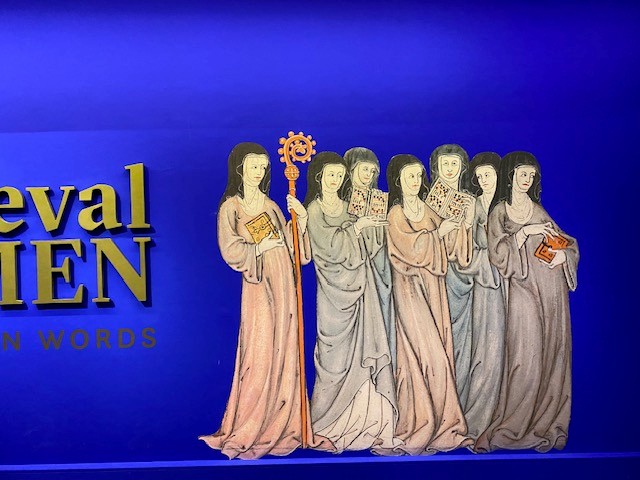
Whether you live in London or plan to visit, do not miss the ‘Medieval Women’ exhibition at the British Library. It has generated a phenomenal response, in terms of both praise and visitor numbers, and for good reason. The priceless documents on display offer a rare opportunity to view in one place the evidence of two long-term trends: the deep historical roots of women’s social and legal status; and women’s efforts to exercise agency despite them.
Some of the documents relate to famous figures: a letter signed by Joan of Arc, requesting munitions; the manuscripts of Julian of Norwich’s ‘Revelations of Divine Love’ and of Margery Kempe’s eponymous book; Christine de Pizan’s illuminated ‘Book of the City of Ladies’… The list is spectacular, but the context and detail provided by the items is what makes the whole an unmissable event – it’s not often that you get to ‘hear’ the words of ordinary women. The exhibits include books of treatments for women by women, texts on herbal cures and obstetrics manuals used by female practitioners, a petition by a female slave who refuses to be sold, embroidery and illuminated manuscripts signed by nuns, a woman’s treatise arguing that husbands and wives should enjoy equal rights, the first book printed by a woman… but also, a daughter disowned for marrying a family servant, nuns destined to the cloister since childhood, a queen who fends off male relatives’ attempts to dethrone her, the view of the female body as defective and disease-prone, the prayers to St Margaret for protection during childbirth, records showing women being paid less than men for the same work…
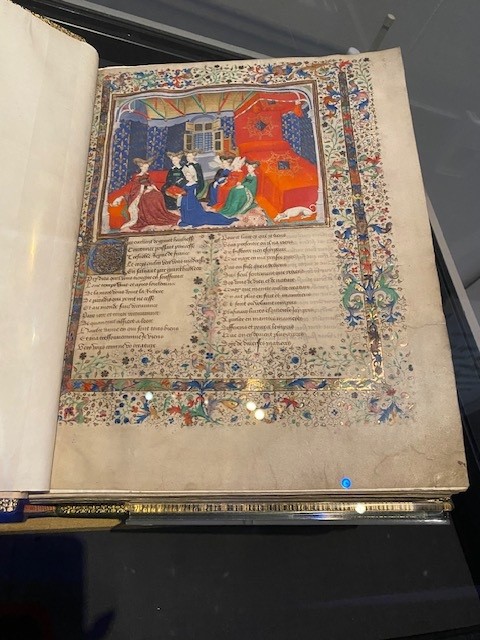


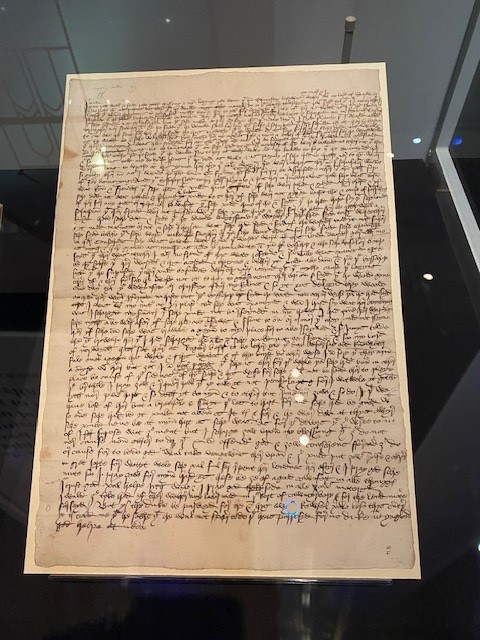


Through their selection of the items (around one hundred and forty), the curators have conjured a mosaic of medieval lives that is not only fascinating, but also offers insights into our own times, when women’s hard-won rights are coming under threat. As the curators explain: ‘Break free from traditional narratives and […] discover stories familiar to women today, from the gender pay gap and harmful stereotypes, to access to healthcare and education, as well as challenges faced by female leaders. Hear the words of medieval women from across the centuries, speaking powerfully for the thousands whose voices have not survived.’1
This sentiment of giving a voice to the unheard spurred my long quest to inhabit the forgotten lives of a group of Southern Italian women from a different era: sixteenth-century nuns. My second novel, which I’ve just completed, is inspired by their remarkable true story. For me, the catalyst was a set of archival documents penned in iron-gall ink: they spoke to enduring issues of power, control, and female resistance. I hope the book will quickly find a publisher, so that my characters may move readers as deeply as the terror, dilemmas, and resilience of the women I encountered in those archival documents moved me. Certain objects in the exhibition – manuscripts copied by scholarly nuns, a cellaress’s notes that probably stay quiet about the politics she often had to navigate, embroidery, a written protest against restrictions on what women could wear, a letter showing the risks of ‘marrying beneath oneself’ – touched me particularly, as they evoked some of my characters and their situations.
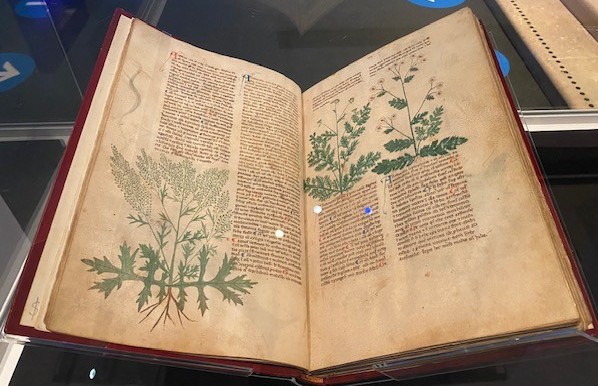
Below, some manuscripts originating in Southern Italy and displayed in the exhibition: Tractatus de herbis (‘Treatise on Herbs’, Southern Italy, c. 1300); De Curis Mulierum (‘Treatments for Women’, in a 13th-century manuscript from England) by Trota, a 12th-century female physician at the medical school of Salerno; and De Ornatu Mulierum (‘On Women’s Cosmetics’, England or France, 13th century, from the original Southern Italian 12th-century compilation), another text forming part of the Trotula.


The ‘Medieval Women’ exhibition runs until 2 March 2025. Learn more here. To book tickets, click here.
Valeria Vescina is a novelist, reviewer, creative-writing tutor, and literary director of an arts festival. She is a graduate of the Goldsmiths MA in Creative & Life Writing. Born in Southern Italy, she studied and lived in the UK most of her life, before settling in Switzerland.
CREDITS
1 Source: https://medievalwomen.seetickets.com/timeslots/filter/medieval-women-in-their-own-words
Images: author’s own photos of the exhibition.










 Valeria Vescina