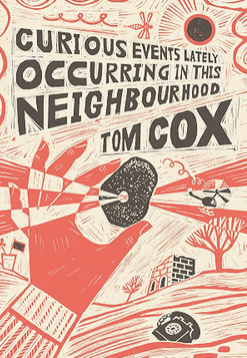
The beautifully written stories in Tom Cox’s collection range from flash fiction to longer form. For me, they made for a refreshing experience, in that they sit outside my usual reading range, which consists mainly of realist fiction. The stories in Curious Events Lately Occurring In This Neighbourhood (Breakthrough Books, September 2026) start out in realistic settings, but then we’re off into the uncanny. Most of them share fantastical elements, sometimes including folklore, ghosts, hints of horror… The voice varies – as it should – for each story but always bears Tom Cox’s incantatory watermark. The playful absurdist vein running through each piece sparks recognition of the many absurdities of modern life.
In Richard’s Existential Diary, the eponymous protagonist wonders not “why are we here?”, but “why aren’t we?”, given our constantly distracted minds. His assertion that he’ll never be famous because “there were no moving images of me as a child that could be used for a bittersweet future documentary” can’t fail to elicit a chuckle (or a wry smile!) in recognition of today’s celebrity-building dynamics. In The Realism Tree, a magical tree prompts people to disclose their most passionate hopes, only to crush them with seeming realism. In All The Underrated Absolute Legends Who Made Us Feel Great When We Were Alive, two elderly residents of a care home regret how uncharitable they used to be in their youth towards people who praised them for small actions, but then the two are merciless towards a woman who pays them a compliment. In The Turning Point, the consequences of an invented episode alter the course of a man’s life. I particularly enjoyed some of the metafictional stories. In Memory Almost Full, authors’ brains develop a hole “when writing mutates from a hobby to a job to an unalterable medical condition”. In The Backlash, an AI author becomes the subject of the kind of literary criticism normally reserved for human writers.
I’ll end with a quote from one of the last pieces, where a sentence encapsulated for me the spirit of the whole collection. “And it is during these times that I most acutely realise how futile my attempts to control the world around me are and that all realities are just stories we tell ourselves.”
Image credit:
The cover is reproduced with permission from the publisher, Breakthrough Books. Cover art and illustrations by Joe McLaren. Cover layout by Jamie Chipperfield.
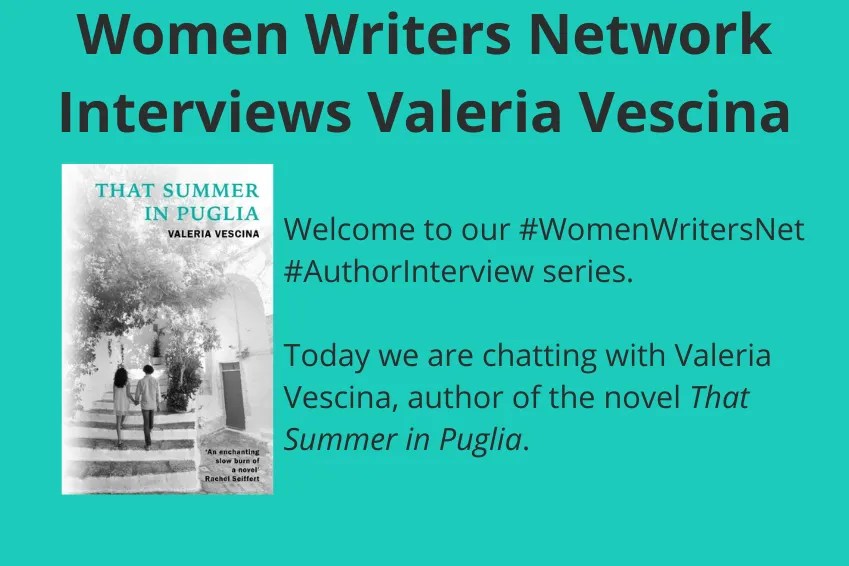
Last Thursday I had the privilege of being interviewed by Helen Murray Taylor of the Women Writers Network about That Summer in Puglia. Helen writes both fiction and nonfiction. She’s the author of the immersive The Backstreets of Purgatory (Unbound, 2018) and the powerful Love Lay Down Beside Me and We Wept (Wilton Square, 2026). The Women Writers Network is an international community active on Bluesky (formerly on Twitter). Founded in 2017, it supports and promotes women’s writing. Its activities include a monthly author interview.
If you have a Bluesky account, you can access our conversation via the links below. If you’ve not discovered Bluesky yet, you’ll find a transcript of the interview further down this page. A few of the attendees also posed questions, which I’ve incorporated in the transcript.
Helen: Welcome, Valeria. To get things started, can you tell us a bit about yourself and your writing career to date?
Sure! I write novels, teach creative writing, and review books. I’m also proud to be a co-founder of the Women Writers Network! My first novel, “That Summer in Puglia”, debuted in 2018 at the Oxford Lit Fest. A second edition of it has just been released by Breakthrough Books, who will also publish my second book, a historical novel, this coming winter.
I graduated from the Goldsmiths Creative & Life Writing MA and since 2013 I’ve taught creative writing to people of all ages – from secondary-school pupils to university BA and MA classes. I run 2-3 writing retreats a year in Switzerland’s magical Bernese Oberland.
Breakthrough Books: Has teaching creative writing helped your own craft?
Undoubtedly! I learn something new every time.
Helen: I’ve seen pictures from your writing retreats. What an amazing setting. Can you provide the link?
I’ve also reviewed fiction in translation for the European Literature Network’s The Riveter, opera and lieder for Seen And Heard International, and arts & culture events for the School of Advanced Study’s Talking Humanities. I occasionally review books on my blog.
Helen: Do all these other activities feed into your own writing practice?
For sure! Teaching means that I keep learning, but also that I must keep both my intuitive and my critical faculties working in tandem, in a balance. Writing reviews is similarly enlightening: I owe it to the author to always read as a writer!
Stephanie Bretherton: What made you want to go with Breakthrough Books?
In a risk-averse publishing landscape, Breakthrough Books champions exciting, original, high-quality books. So, it’s a joy to be published by it!
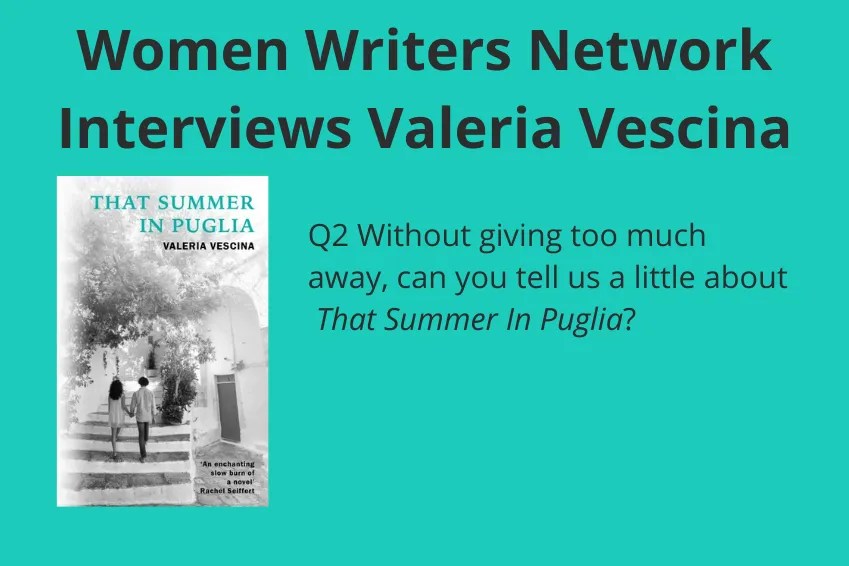
Helen: Without giving too much away, can you tell us a little about That Summer in Puglia?
That Summer in Puglia is set in 1980s Puglia (chiefly in Ostuni) and present-day London. Tommaso has escaped discovery for thirty years – but a young private investigator, Will, has tracked him down in London. Tommaso asks him to pretend never to have found him. To persuade Will, Tommaso recounts the story of his life and his great love, Anna. In the process, he comes to recognise his true role in the events that unfolded long ago in Puglia, and the legacy of unresolved grief. Now Tommaso is being presented with a second chance – but is he ready to pay the price?
Rita E. Gould: Such a fascinating premise of what happened between the opening in present-day London and Puglia 30 years ago. What made you decide to use a frame tale?
It felt completely coherent with the story itself. It’s a long-overdue excavation by a man of his own past.
Rita E. Gould: I loved how it worked! He needed that outside impetus to stop retreating and to re-examine everything.
Helen: Yes, exactly that. Without it he would have hidden from his own story for the rest of his life.
Yes, exactly. I’m happy that you felt it worked. I wanted Tommaso to resist the push by the young PI to excavate his own past, and, at the same time, to slowly feel – as he narrates his life story – a sense of relief as he finally faces up to it.
Helen: The novel is infused with the sights, sounds, tastes and atmosphere of Puglia, which is delightful. Why did you decide to set the novel there?
I felt that my native Puglia offered an ideal setting: its layers of history are integral to Tommaso’s story. His memories of its sensuous colours, aromas and tastes, and of how it felt to love and be loved, and to grieve, eventually overwhelm him and help him open up to Will.
I love my native region and am glad to hear from readers that they feel transported to it. I’m proud that one of the endorsements said, “Here is the discovery through literature of Puglia”.
Helen: That is so true. I felt like I was discovering a region that I didn’t know. Does it sound strange to say that to me its (Puglia’s) presence was almost like another character in the novel?
Not strange at all! On the contrary, I’m glad you felt that. Also to me, Puglia in this book truly is a character in its own right, in that it shapes and tests the protagonists. People who’re not very familiar with Southern Italy often don’t realise just how diverse it is, both between and within regions. Puglia is particularly rich in culture, for historical reasons.
Stephanie Bretherton: I loved the evocative richness of the story. It really made me want to visit the area, and it made me hungry all time! Do you think the Italian part of yourself made the ability to bring all the senses alive in the book a little more natural?
Thank you for that lovely comment (and question!). Yes, it’s my native region, so I know it very, very well. That helps to bring the sensorial details to life – and they’re very important in a story of a man recollecting his long-lost past.
Stephanie Bretherton: Yes, the senses compel us into feeling fully present while also immediately summoning the past!
It’s true of all of us, so yes, it was particularly important for Tommaso’s story.
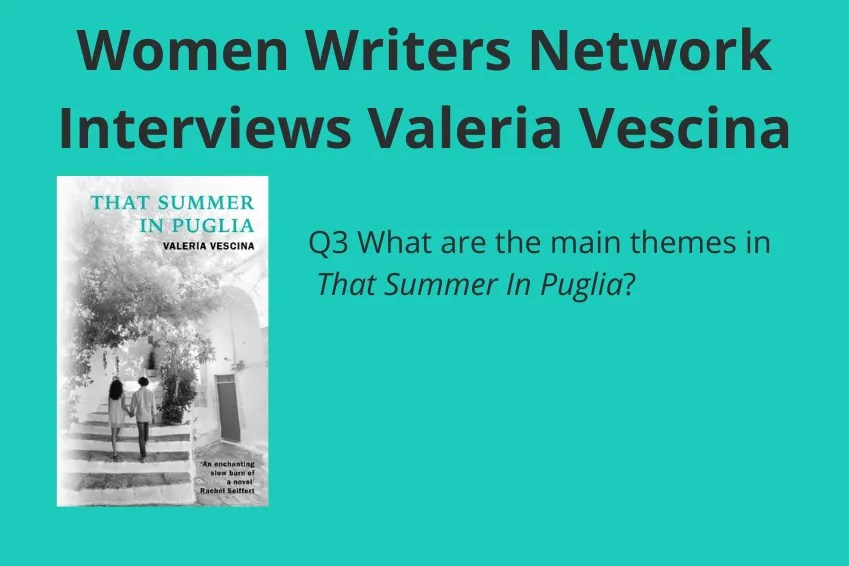
Helen: What are the main themes in That Summer in Puglia?
The novel has several interconnected themes. I did not set out to write to a theme (or two!), though, but discovered them while writing. That Summer is about all forms of love, and about compassion for others and oneself, as I think compassion is a thread running through them.
Helen: I think compassion is such an important theme, especially for our past selves. We can learn from Tommaso ‘s story. Better to face up to our mistakes because without that, we can’t be compassionate and forgiving to ourselves.
Exactly. Without compassion for ourselves and others, it’s so much harder to admit when we’re wrong and to learn from errors!
Rita E. Gould: I love that the compassion applies to everyone, including the PI! Tommaso listens to him and helps the investigator re-examine his pain.
Thank you for pointing that out. Indeed, I did mean it to hint at the fact that Tommaso was opening himself up to compassion, in the process!
That Summer is also about the necessity for dialogue, and the dangers of cutting oneself off from it. And it’s about the process that E.M. Forster called “connecting the fragments”: living with and bridging the contradictions in ourselves and others.
Rita E. Gould: I think communication is so key in this novel, both in the past and in the present.
Helen: You bring this out beautifully in the book. I was so frustrated with Tommaso at certain points because so much could have been avoided by proper communication.
Yes, that was central to the story.
Rita E. Gould: I also think it was quite true to the age of the protagonists — young enough to be impulsive and to believe the worst recklessly.
Ah, yes. Their age is totally bound up with their responses.
Helen: The story is presented as a dramatic monologue by Tommaso to a private investigator. Why did you decide to frame it in this way?
Tommaso narrates his story with the intensity that the resurfacing memories provoke in him. His narration is “framed” by moments with the young PI who has tracked him down. You don’t hear what the young man says but you infer it from Tommaso’s answers. That’s dramatic monologue. Browning used dramatic monologue for “My Last Duchess”, Camus for “The Fall”, Hamid for “The Reluctant Fundamentalist”. It’s not a form you see often, but it struck me as so appropriate for Tommaso’s story! I’ll explain why!
So, why dramatic monologue for “That Summer”? First, it breaks the intensity of Tommaso’s narration. Second, it conveys his isolation. Third, it’s a dialogue of which we hear only one side, and Tommaso caused a tragedy by refusing dialogue.
Rita E. Gould: It makes so much sense! Tommaso is the only who has to speak since he broke down the lines of communication.
The final reason for choosing dramatic monologue for That Summer is that the reader is placed in the position of identifying with the PI and so wavers between sympathy and judgment for Tommaso. That’s appropriate, as he’s an unwittingly unreliable narrator.
Helen: It is the perfect device for mirroring what is happening in the story. Did you decide to do it straight off or did it come as part of a rewrite or edit?
I decided to do it straight off. One of my MA tutors suggested I try also a different form, and I did, for experimentation. But the contrast between the two only proved that the intuition about dramatic monologue being ideal for this story had been correct!
Helen: Tommaso narrates the story in a second language that has become his first. He talks of being “caught out” by idioms. Italian words peppered throughout the novel add to the atmosphere. Could you tell us about this?
For Tommaso’s language, I drew partly on experience. I learned English as a child and have lived in English-speaking environments most of my life, so I’m fully bilingual. Tommaso, on the other hand, starts learning English only aged 19. I’ve therefore given him a recognizably Italian accent and have him being “caught out” by idiomatic expressions, as he has learnt much of his English from books. I also peppered Tommaso’s narration with Italian words. This can only be done sparingly, to avoid breaking the flow for the reader. So, Italian words appear either in particularly emotional moments, or to describe something especially Apulian.
Helen: You do this perfectly. Also, there is something singular and beautiful about your writing and I wonder whether you think it is influenced at all by being able to speak several languages?
Thanks for that lovely comment! I suppose being a linguist (I speak 4 languages) involves both a love of language and a heightened awareness of its structural and lexical possibilities. Maybe it’s bound to flow into a mixture of intuitive and conscious narrative choices.
Helen: What a wonderful gift for a writer to have the richness of four languages to work with. Very envious and impressed, Valeria.
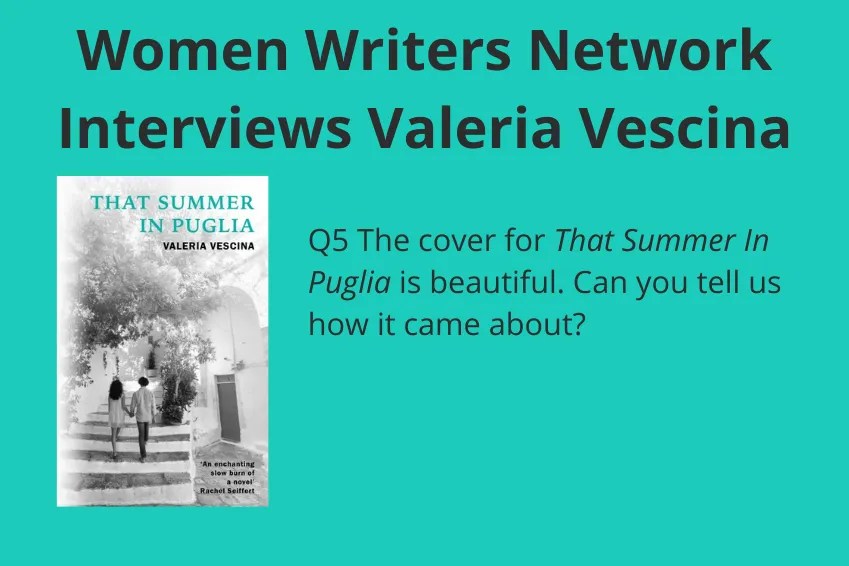
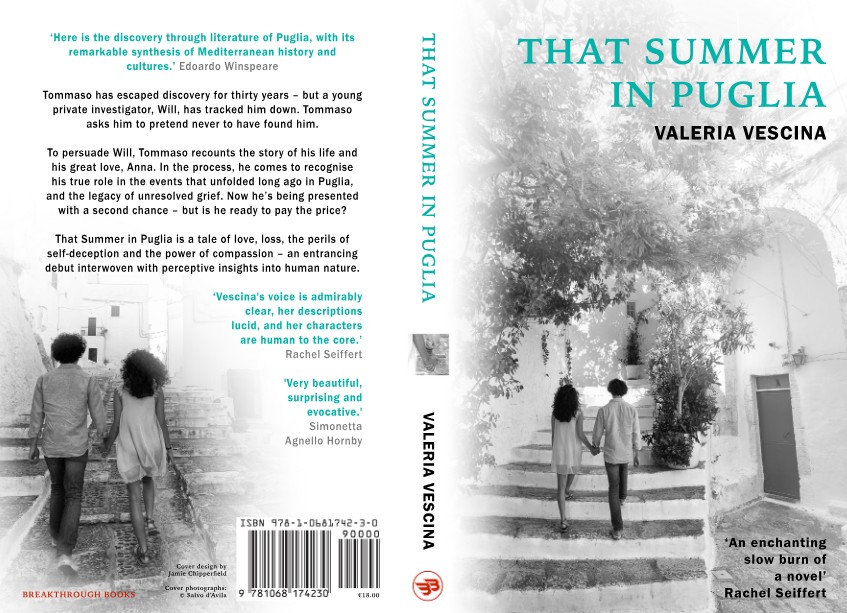
The cover for That Summer in Puglia is beautiful. Can you tell us how it came about?
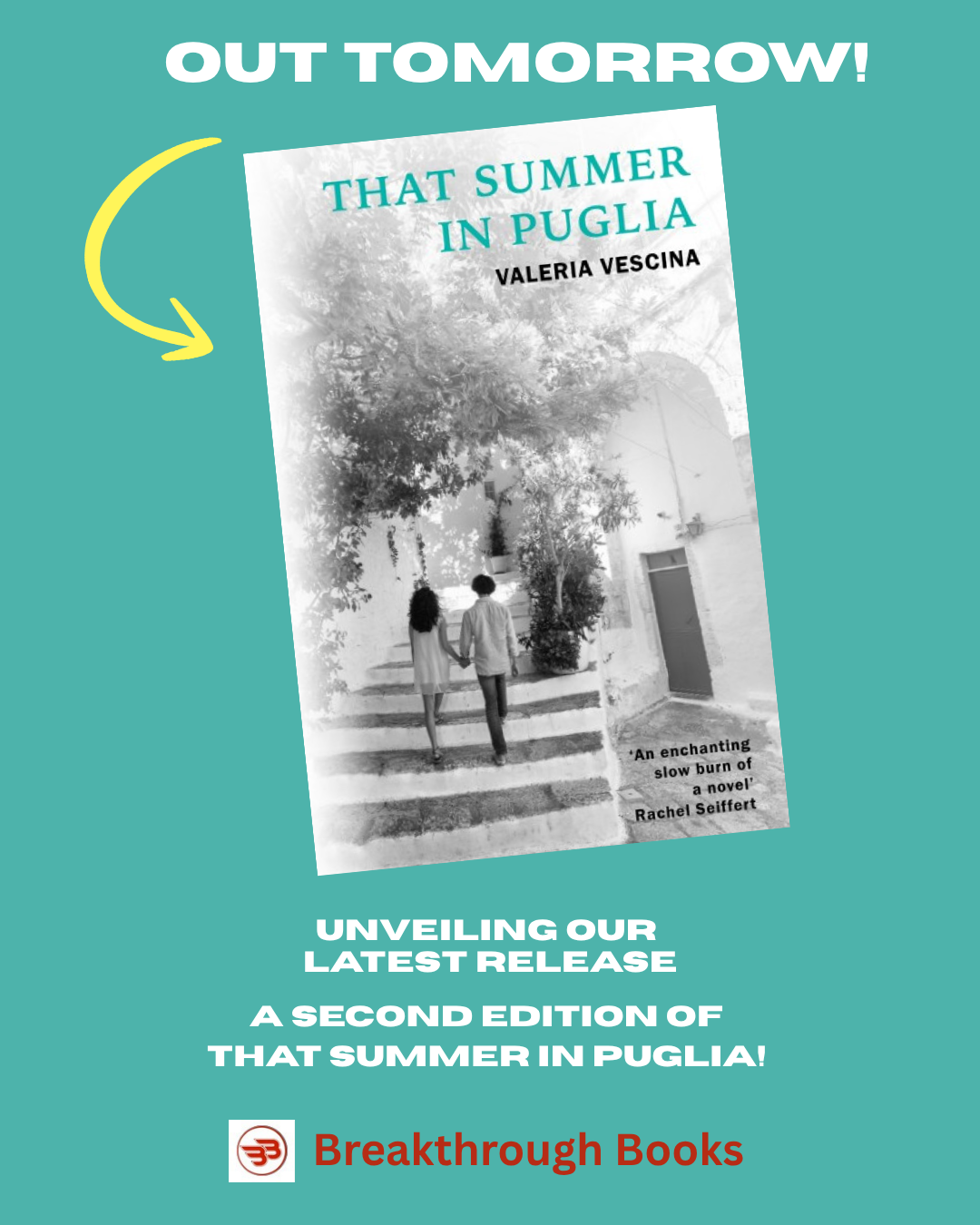
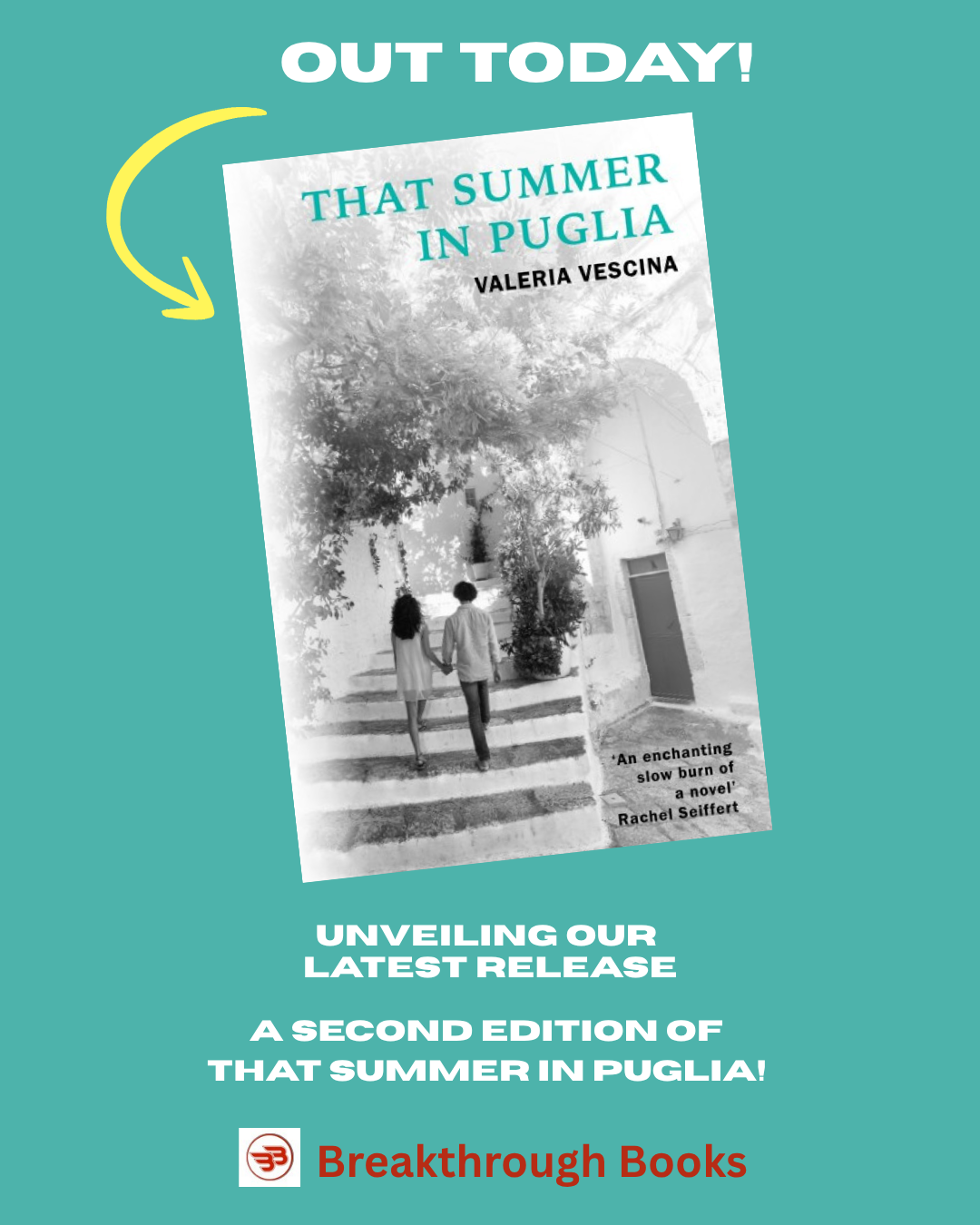
The cover photo was taken by photographer Salvo d’Avila as part of a shoot to capture the novel’s spirit. It shows a young couple in the old town of Ostuni, the novel’s main setting. It’s in black & white, and you see their backs. It conveys a sense of memory and nostalgia.
Breakthrough Books’ Jamie Chipperfield then designed the cover, and I love it. He heightened that sense of memory and nostalgia with a fading effect along the photo’s edges. And the blue-green of the title’s font evokes both the sea and the couple’s youth. I also like how dynamic Jamie Chipperfield made the back cover, with the blurb in black and the endorsements in the same blue-green of the title on the front.
Breakthrough Books: Jamie did such a good job! He really captured the spirit of young love, nostalgia, and a sense of the ‘unknown’ – it also has a timeless feel.
I agree! Not just a beautiful cover, but it captures so many aspects of the story!
Conveying the sense of nostalgia was important: it’s the nostalgia that Tommaso’s narration is infused with but that he refuses to acknowledge because it would mean recognising reality and therefore his responsibility in the events of years earlier. His nostalgia manifests by his selective recall of the beauty of Puglia: sights, sounds, aromas, tastes… They are all true, but he disregards the rest of a more complex reality. His refusal to acknowledge his nostalgia shows also in the way he depicts other protagonists. Almost until the end, Tommaso fails to acknowledge the humanity of people he casts in the role of villains, as he subconsciously fears opening a crack in his self-narrative. The PI forces him to excavate his past and to face up to his own role in the events of 30 years earlier.
Helen: The cover beautifully evokes this sense of nostalgia.
My thanks to designer Jamie Chipperfield and editor-in-chief Stephanie Bretherton at the wonderful Breakthrough Books for that!
Breakthrough Books: It was a joy to work on!
Helen: Where can we find out more about you and your books?
You can find me on my website (https://valeriavescina.com/) and on social media: Bluesky, Facebook, Instagram and LinkedIn. My second novel, Habit of Disobedience, will be forthcoming from Breakthrough Books this winter, and it too will be available from all good bookshops.
Breakthrough Books is an innovative independent press that emerged out of a collective of established authors. As I said earlier, in a risk-averse publishing landscape, it champions exciting, original, high-quality books. Being published by them is a joy. Here is a link to the Breakthrough Books website: https://www.breakthroughbookcollective.com/
Helen: Very exciting! Can’t wait to read it. We will have to have you back for another author interview when this one comes out. I am already anticipating lots of possible questions and I haven’t even read it yet!!
Rita E. Gould: I love a disobedient nun! I can’t wait to read this book.
Thank you, Rita! I’ve grown to love the “disobedient” 16th-century nuns who inspired the novel.
Helen: We are really looking forward to the release of Valeria’s second novel, Habit of Disobedience.
Thank you, Valeria, for chatting with us, and thank you to all who took part in tonight’s Author Interview. To find out about future events, make sure to follow us on Bluesky and the hashtag#WomenWritersNet.
Thank YOU, Helen Murray Taylor and the whole WomenWritersNet team, for this opportunity to chat with you at length about That Summer in Puglia! And thank you, of course, to all attendees and readers of our conversation!
Rita E. Gould: I’m so glad I came to tonight’s WomenWritersNet Author Interview! I think I love That Summer in Puglia even more after learning about all of the thought that Valeria Vescina put into this moving novel.
This weekend marks one month from Breakthrough Books’ release of That Summer in Puglia‘s second edition, in paperback and on Kindle. The first edition was launched in 2018 at the FT Weekend Oxford Literary Festival and had three print runs. I hope the book will continue finding its way into readers’ hands far and wide.
I’m grateful to Stephanie Bretherton, Breakthrough Books‘ editor, who is a joy to work with, and to Jamie Chipperfield for his gorgeous cover design, which captures the nostalgia of the narrating protagonist, Tommaso. Breakthrough Books will also be publishing my second book Habit of Disobedience, later this year – it’s a historical novel inspired by events that took place in Puglia in the 1500s.
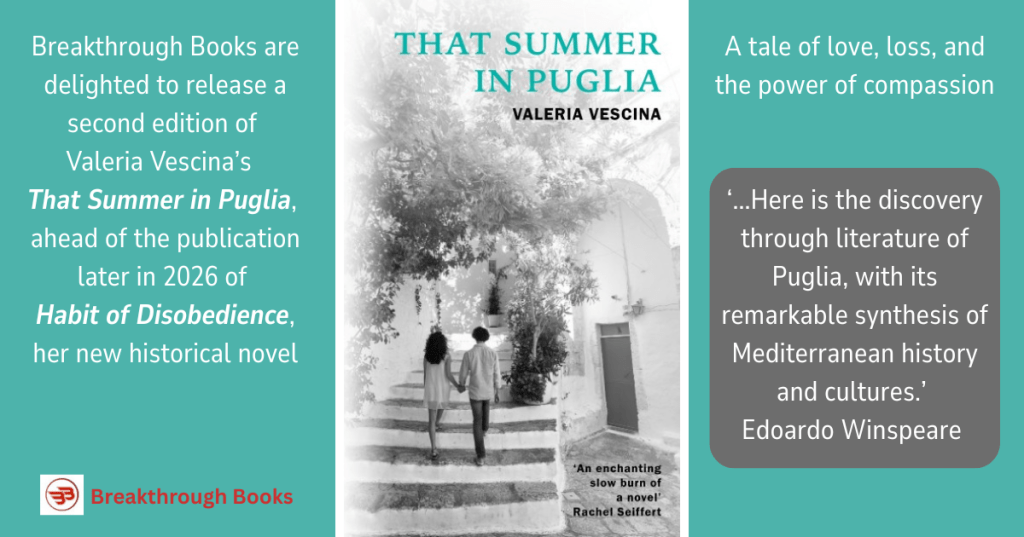
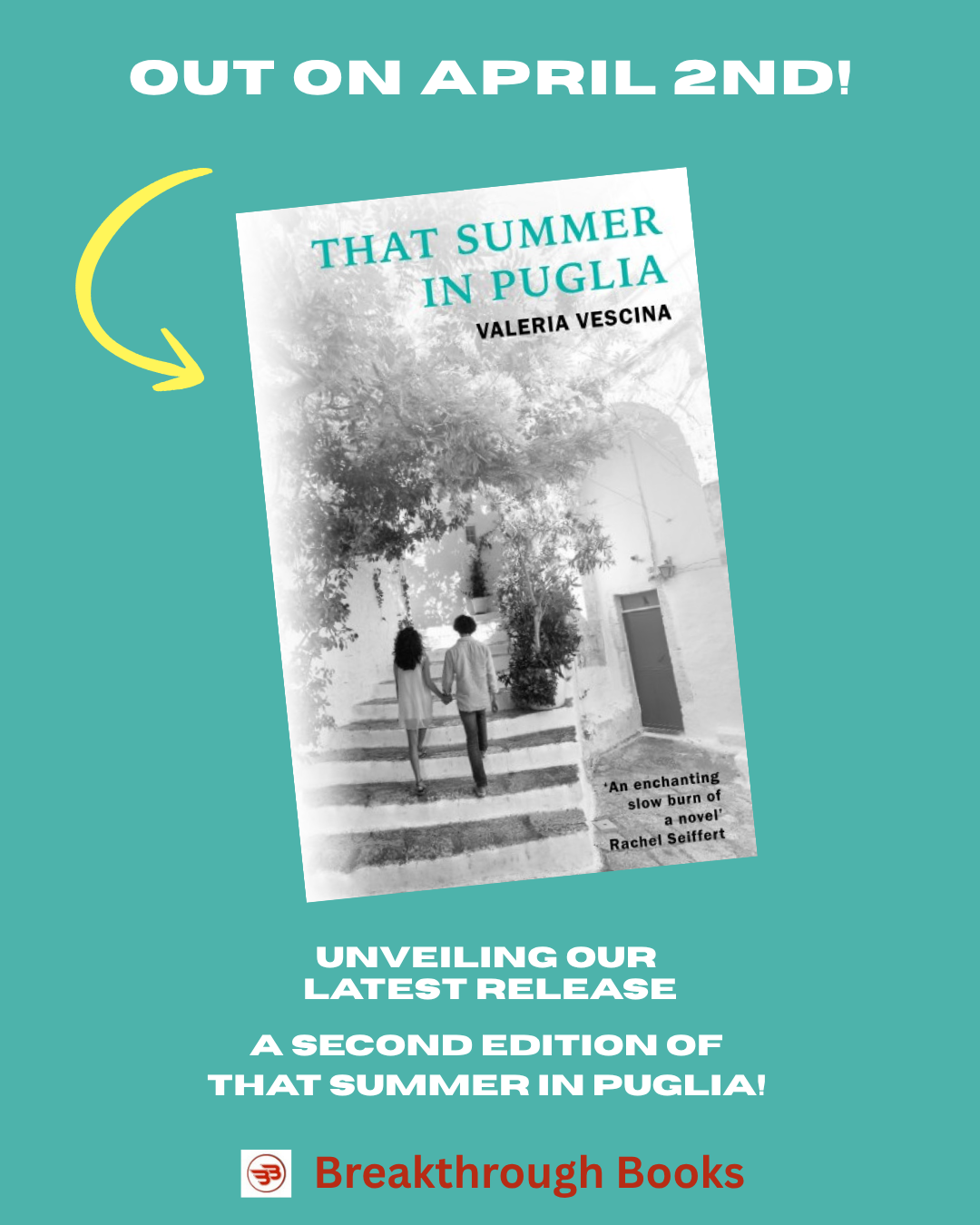
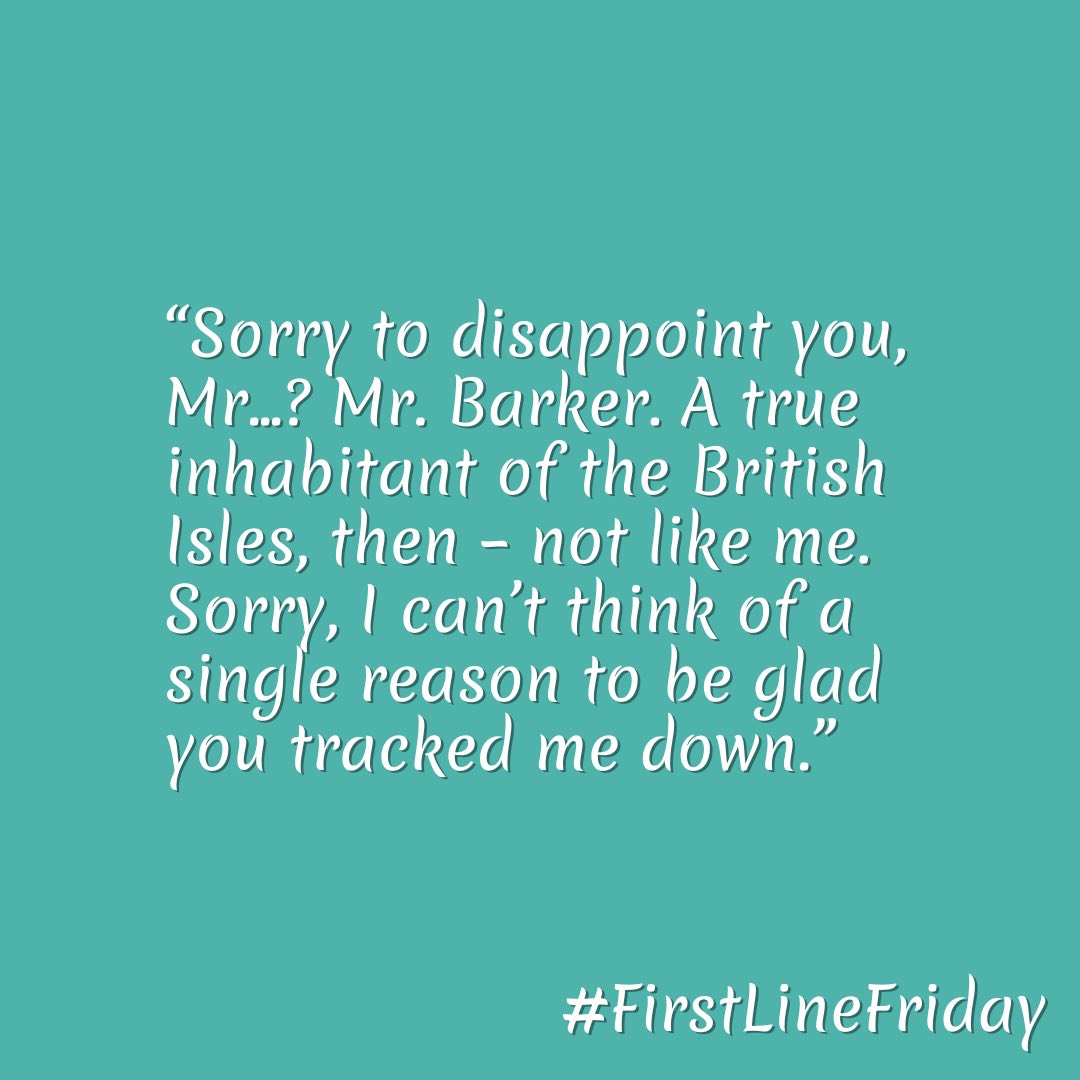
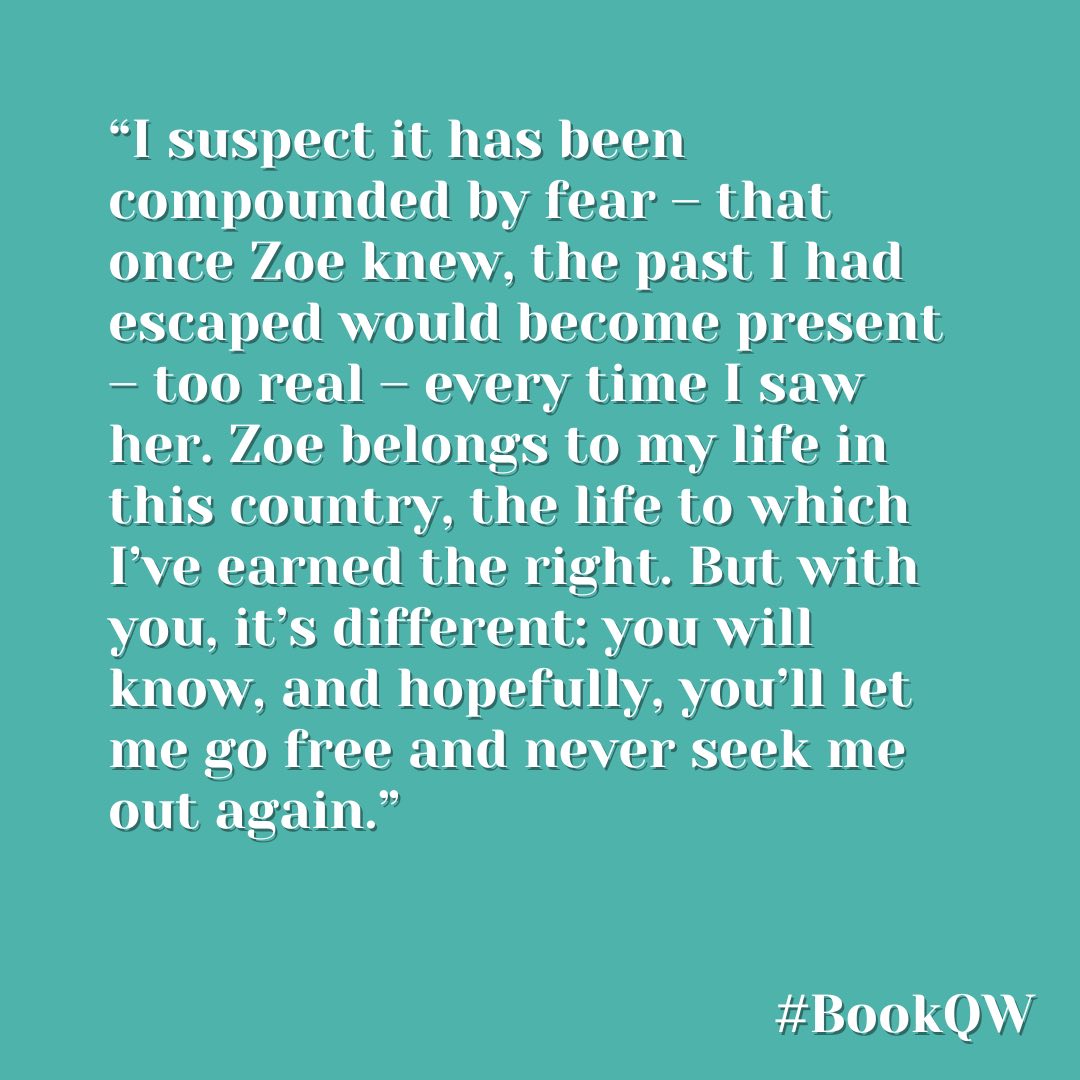
Breakthrough Books held a ‘countdown’ for the release, on several social media. Here, a few images.
Other posts, including two short extracts from the novel, have followed over the last thirty days.
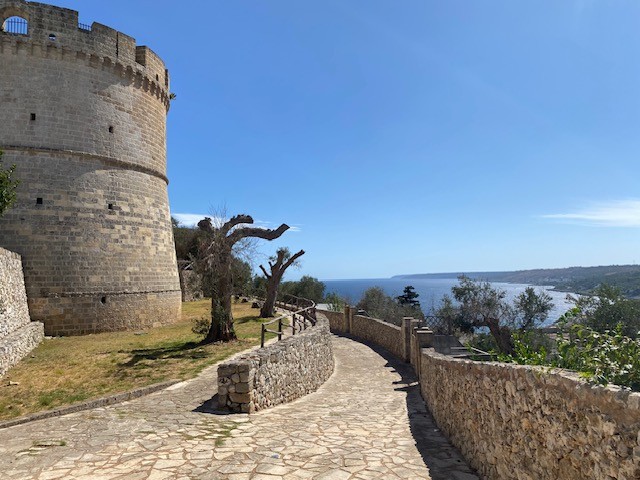
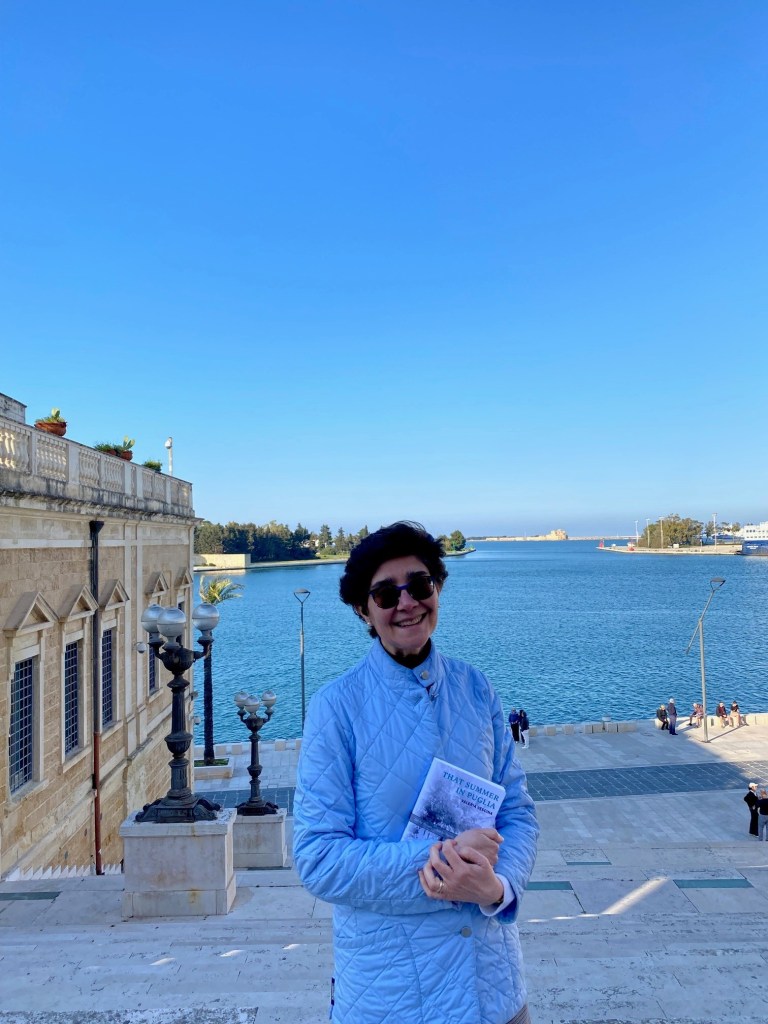
On publication day, I was… in my native Brindisi! That’s where a key section of the novel is set, while most of the story takes place in Ostuni, just 35 km up the Adriatic coast. Behind me in this photo you see Brindisi harbour: it isn’t just beautiful; it has also ‘seen’ major historic events over the last couple of thousand years (that would take a whole other blog post!). In this photo I’m the happy holder of a proof of the book! 😉
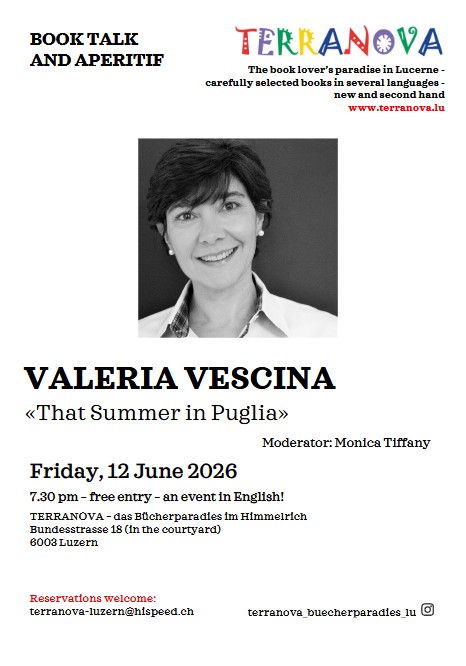
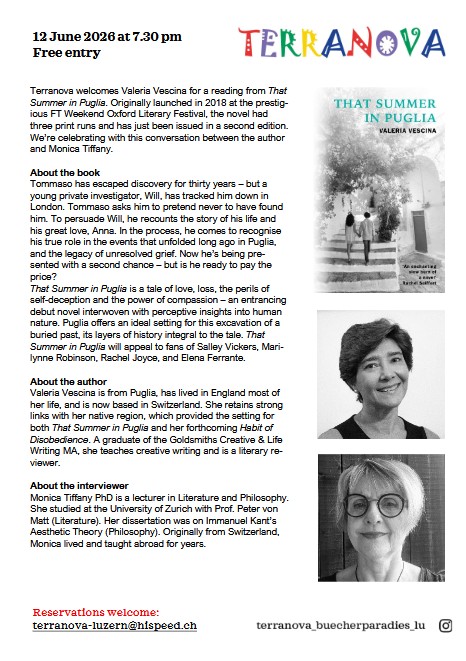
If you happen to be in or near Lucerne in Switzerland (where I now live), come to the event organised for 12 June by Terranova Bücherparadies, a super-lovely bookshop that stocks titles in several languages. My interviewer will be Dr Monica Tiffany, lecturer in Literature and Philosophy.
And if you’d like to get hold of the novel, you’ll find it wherever you usually buy your books! Here, just a few places:
Amazon (worldwide, from its country-specific sites)
‘It was my father who made the arrangements. My uncle helped, since he lived down south, where all this kind of business is carried out.’
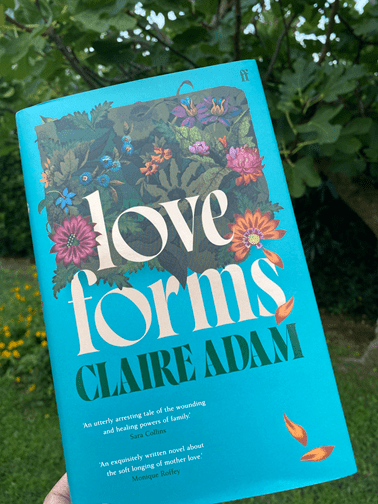
The opening of ‘Love Forms’ sets the tone for the whole novel: a voice that immediately draws you in with its fresh, direct, familiar cadence; and ‘the arrangements’ at the heart of the story. These arrangements see the then sixteen-year-old protagonist, Dawn, whisked off from her home in Trinidad to Venezuela, where she must give birth in secret and surrender her baby for adoption. The reason? ‘She made a mistake and brought shame to her family.’
It’s not long before Dawn realises that the real mistake – whether really hers or her parents’ – was to give up her daughter. The intense longing to find her again impacts the rest of Dawn’s life. Though she goes on to graduate in medicine in the UK, work, marry, and raise two beloved sons, her yearning for the lost child becomes an ever-present, aching part of who she is. When she’s fifty-eight, we witness one of her many attempts to track down her daughter – a search that plays out as a roller coaster of emotions.
Dawn feels so real, that I was absorbed by her evolving feelings and her growing understanding of herself, of her family, and of the changing world around her. This is partly thanks to Claire Adam’s sensitive psychological portrayal of her main character, and partly because of the three-dimensionality she lends to the places – Trinidad, Tobago, Venezuela and London – and times the protagonists inhabit. The dialogue across generations – between Dawn and her parents, siblings, and children – is deeply affecting, as powerful in its silences as in its words. These exchanges and the characters’ actions sustain a taut narrative tension: I often found myself wondering about the consequences of certain conversations – and discovered their outcomes in the novel’s final chapters.
It’s all there in the title: ‘Love Forms’ is about different kinds of love (starting with that of a mother for her child), and about the ways it’s kindled, grows, is challenged, changes… and how it changes us in turn. It’s a poignant, beautifully written novel, and one of the finest I’ve read in a long time. I couldn’t recommend it more highly.
“The Fire In Their Eyes” is a breath of fresh air: a thriller that keeps you hooked right up to the end, it’s boldly original, unafraid to experiment with form, and courageous in its engagement with urgent issues. It reveals the interconnections between these issues, while weaving a narrative that is both emotionally gripping and intellectually engaging. If you crave fiction that does more than entertain – stories that challenge you to think and that spark meaningful conversation – this book is for you. Structured across dual timelines, the novel follows three female protagonists, all of them gripped by a strong sense of impending danger. Each woman fights, with grit and intelligence, to prevent a catastrophe. Though separated by time and geography, the threats they face are connected. In the Arctic, geneticist Eloise races against time at a scientific research station to neutralise a fresh danger to humanity. What is its link to the DNA of “Sarah,” a woman whose 74,000-year-old remains were discovered on Mt. Kenya? Meanwhile in Manchester, psychiatric nurse Jessica – whose husband Max unearthed Sarah’s remains – is experiencing a heightened sense of threat. What is the cause of this change in her? And how will it affect her deep, tender bond with Max? In a lush Kenyan valley 74,000 years ago, the shamanic Old Woman – Sarah’s daughter – perceives an impending danger that could annihilate her people. It falls to her to discern the precise nature of the threat and devise a way to combat it. Stephanie Bretherton’s novel is underpinned by meticulous research. Complex scientific ideas – particularly in biology, genetics, and virology – are conveyed with clarity and precision and linked back to some of the most profound questions of our time. For example, the author draws links between globalisation, climate change and other environmental issues, rising population density, and the emergence of new pathogens. She also explores the spiritual and philosophical questions raised by natural disasters, political opportunism, and the consequences of human actions. One question resonates especially strongly: from one generation to the next, how do we pass on the best of what it means to be human? The power of all forms of love to help us meet the toughest challenges is one of the novel’s connecting threads. This is not, however, a didactic book. Each of its three narrative strands is as gripping as a thriller, with high stakes and expertly controlled pacing. The tension builds steadily towards an emotionally resonant climax. I found Jess and Max’s story particularly moving – an honest, tender portrayal of love and the difficulties it must overcome. The novel’s intricate structure is beautifully handled. You always know exactly where you are and feel secure in the hands of a confident storyteller. Each of the three protagonists is surrounded by sharply drawn secondary characters: family, friends, and colleagues who feel fully alive. The integration of emails, text messages, and unsent letters lends further realism and emotional depth. The settings are equally immersive: Eloise’s sterile research facility and the bleak beauty of the Arctic; Jess at the psychiatric hospital where she works, in the swimming pool where she finds release, and in the quiet refuge of memory – drifting back to a long-ago dive among minnows; and the Old Woman’s tribal village – rich with ritual and community – and its wild surroundings. This is a novel of gripping storytelling, literary substance, and lasting insight – one I wholeheartedly recommend. “The Fire In Their Eyes” is the second book in “The Children of Sarah” series, and I already look forward to its sequel.