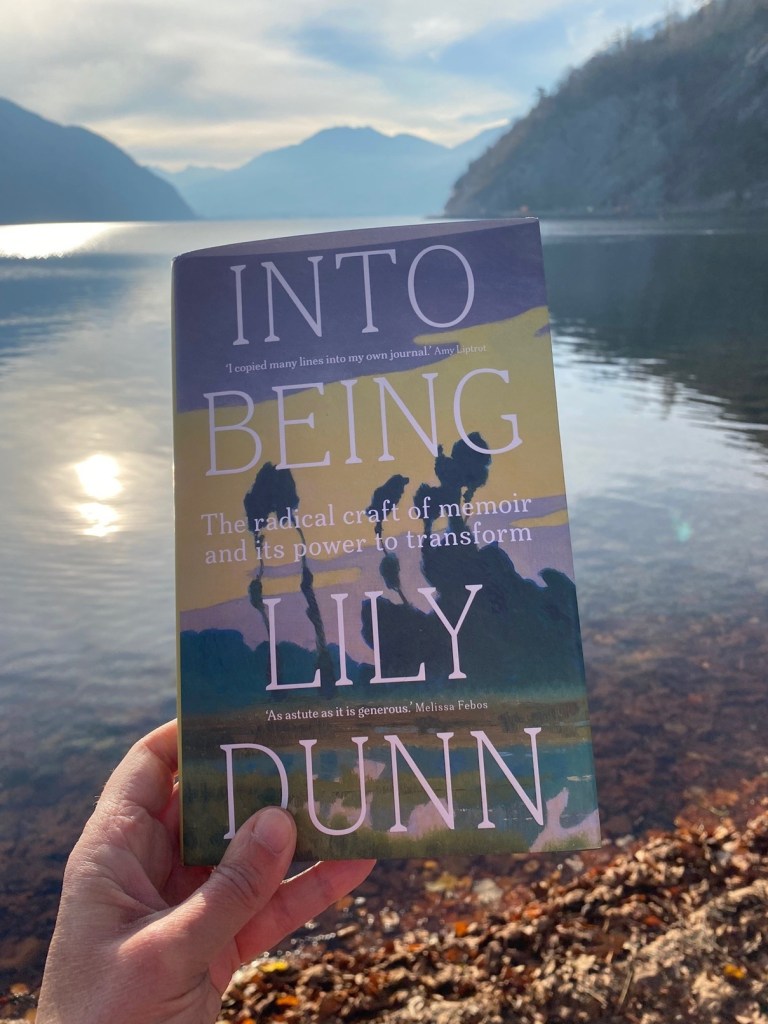
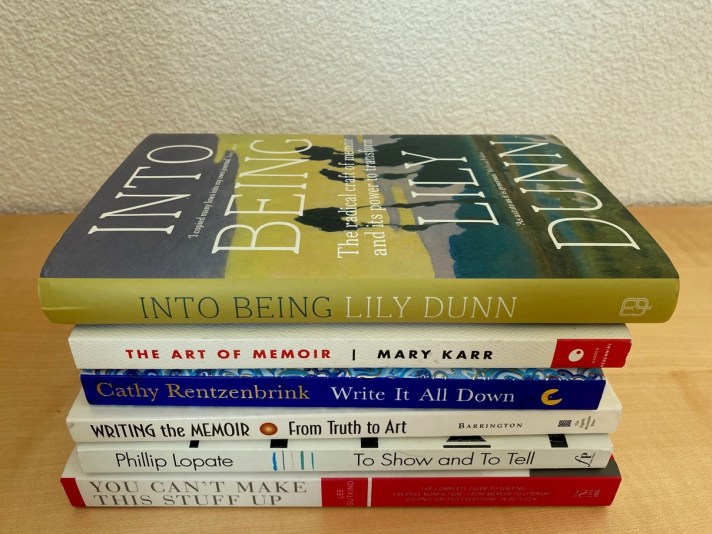
I’ve read many titles on the craft of memoir, but Into Being is about so much more than the craft. I can’t recommend it strongly enough. Lily Dunn’s focus on the transformative power of the process, her handling of philosophical questions, the generosity with which she shares her experience, the inclusion of other writers’ insights, and the voice – which blends authority and wisdom with modesty and empathy – make for a powerful mixture that I’m sure will be invaluable to memoirists for a long time to come.
I love how Lily conveys ‘the dance between writing and gaining in self-understanding in life, and how intimately connected they are.’ Her view of memoir-writing has a remarkable life-enhancing quality. ‘We are touching on questions not only of how to write better, but also how to live better, to be more self-aware and honest as we move through the world. The best memoirs, I believe, evolve alongside their authors who gain in understanding and wisdom […].’
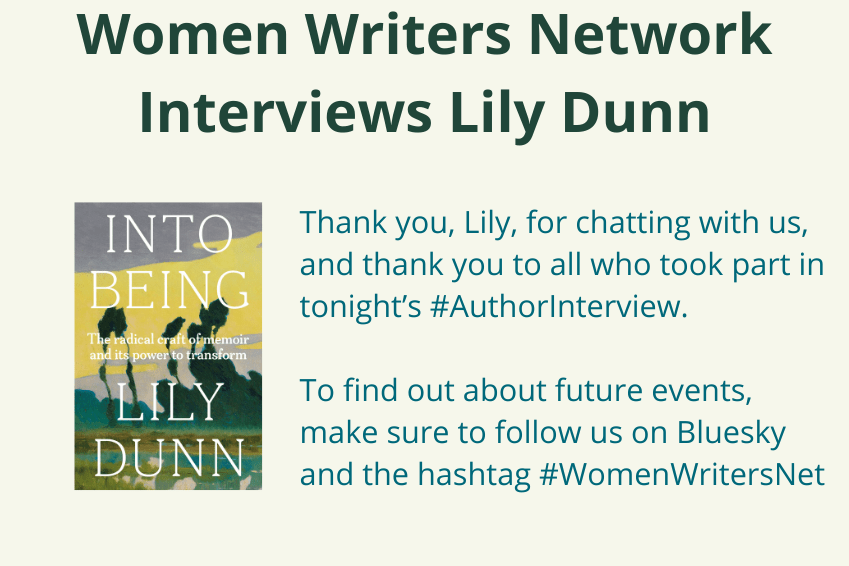
In January, I had the privilege of interviewing Lily on behalf of the Women Writers’ Network. We discussed how she balances her work as a memoirist, teacher, and mentor; her aims for the book; how to nurture the ‘gift of noticing’; approaches to concerns over protecting oneself and others; degrees of emotional distance; finding clarity of both vision and voice; unearthing the best shape for one’s memoir.
You can read the interview of 22.1.2026 by clicking on the six questions below. Happy reading!
‘Undercurrents’ (Broken Sleep Books) by Richard Skinner
What a breath of fresh air this slim volume is: a collection of uncompromisingly thought-provoking essays, and the variety of topics so stimulating. It feels like listening to a friend talking about subjects that deeply matter to him but that are also universal, and that he handles as only someone both knowledgeable and passionate about them can.
Richard Skinner is an author of literary fiction, life-writing, essays, non-fiction and poetry, and a highly regarded creative-writing tutor. In Undercurrents, he brings together essays about books, the writing craft, films and music, his own life experiences, as well as interviews with poets. Naturally, the tone varies as a function of each essay’s topic: from the more analytical one for a review, to the reflective and intense one about two beloved friends’ deaths.
Skinner’s thoughts on the link between Eisenstein’s ‘montage of attractions’ principle and making connections in one’s writing intrigued me. I enjoyed the expansiveness with which an essay about Talking Heads’ Remain in Light takes in Isiah Berlin, Marcel Proust and the ancient Greek chorus. The description of the state of ‘self-emptying’ and ‘belonging’ to the landscape while on a long hike resonated. The reflections on friendship, death, and acceptance of the unknowable, with regard to the death of dear friends, were relatable and made me think.
This is a rare gem in the current publishing landscape. All credit to the author, and to Broken Sleep Books for its ambitious publishing programme.
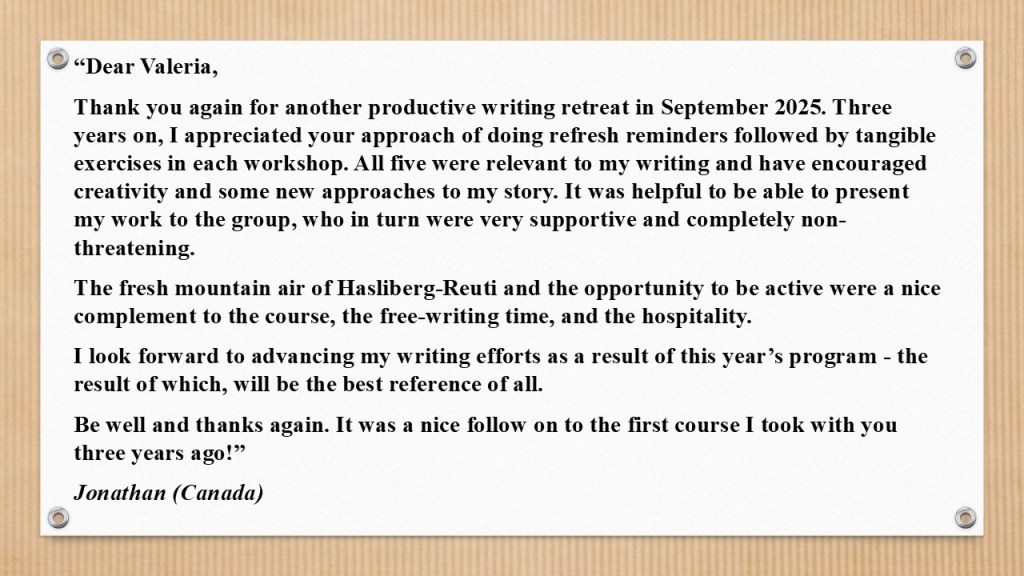
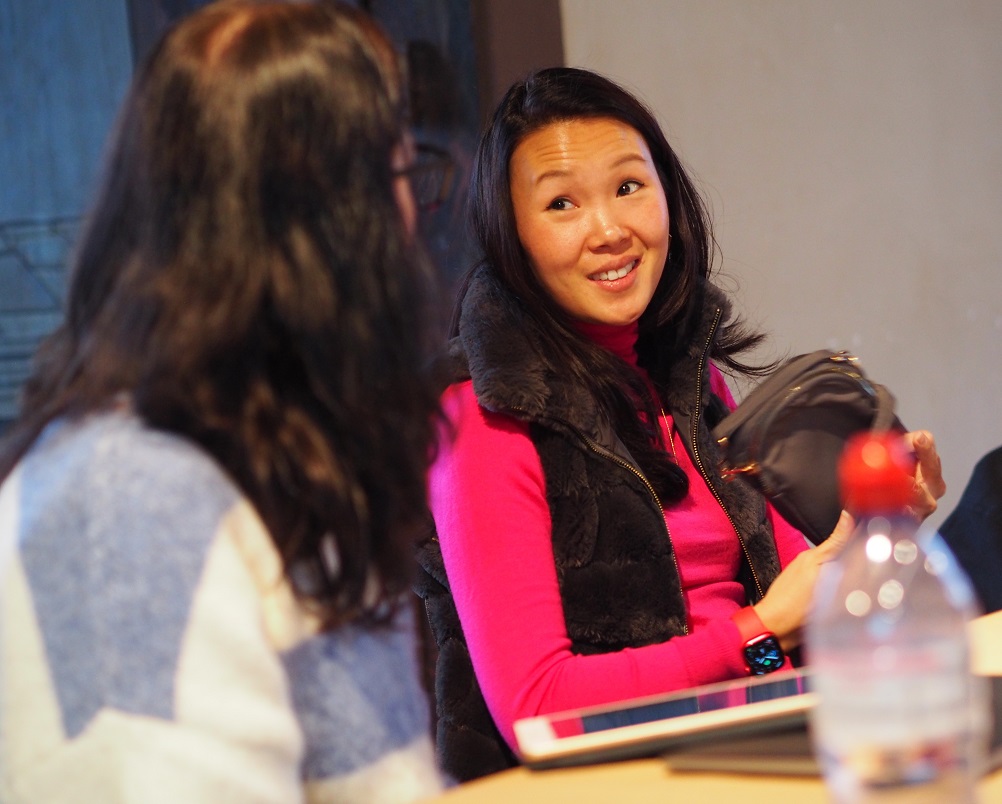
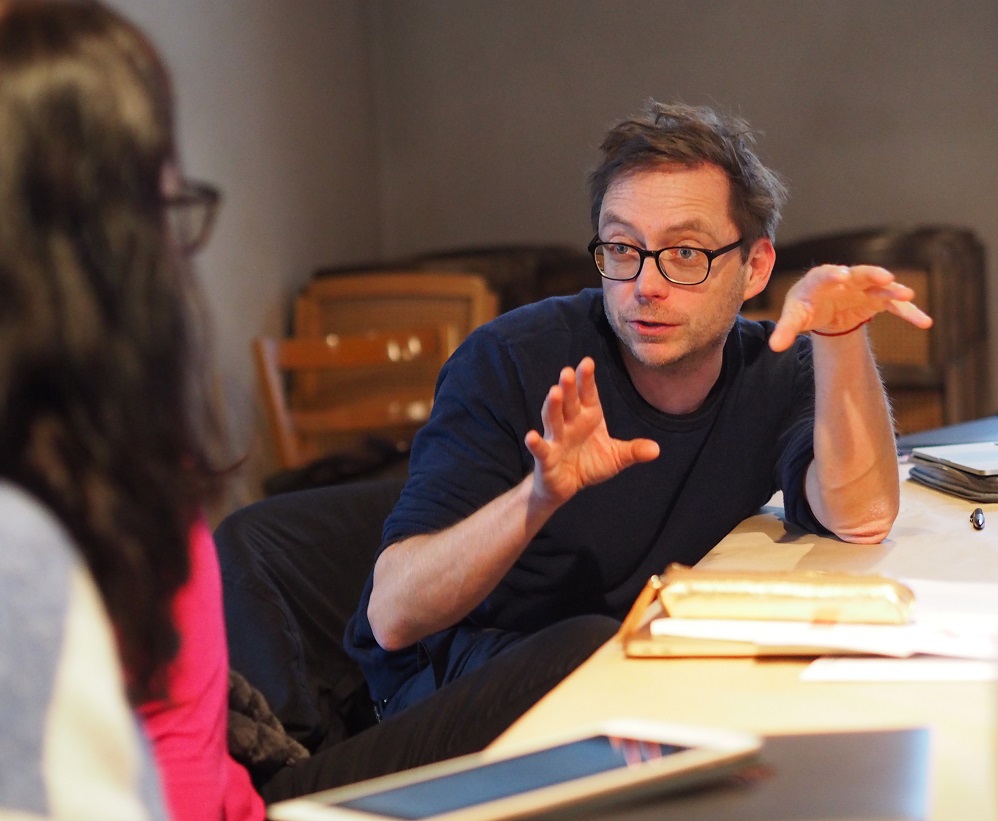
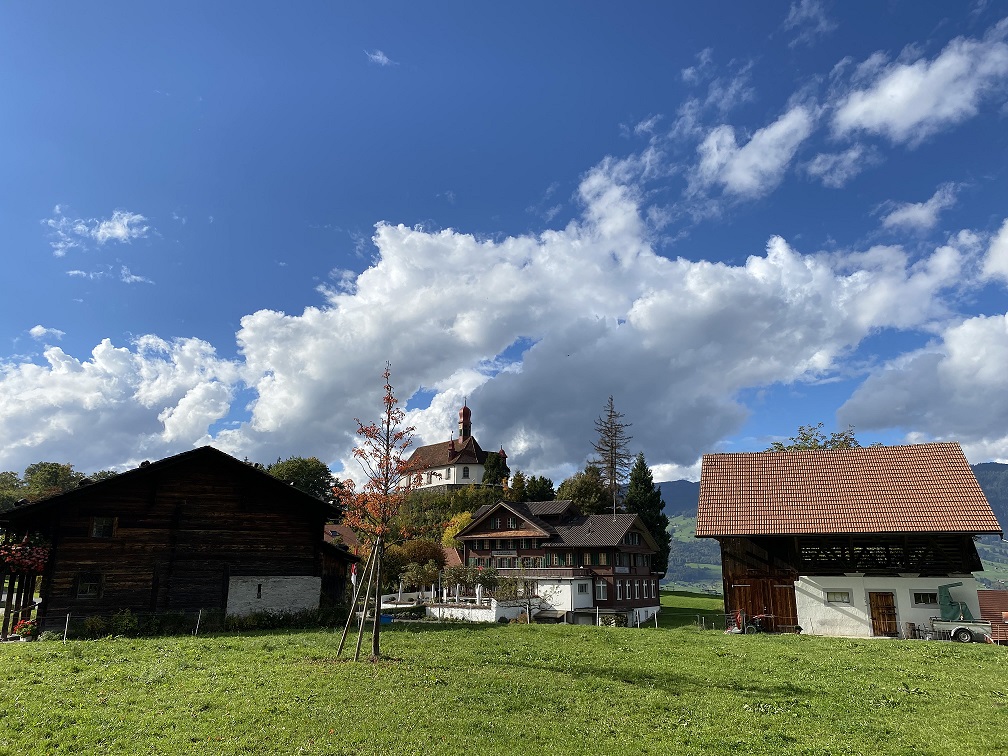
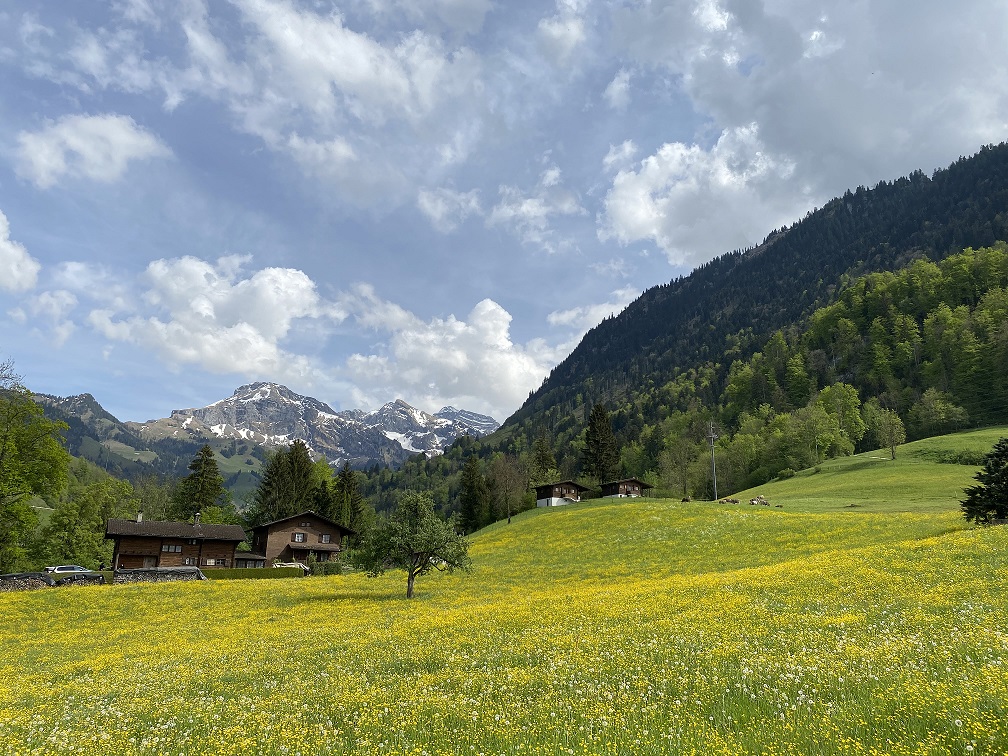
Our September 2025 writing retreat has just wrapped up! This special gathering brought together writers who had previously attended one of my tutored retreats. They returned for a week of workshops, focused writing time, supportive feedback sessions, and refreshing walks in the breathtaking Alpine landscape. It was such a joy to welcome them back! By the end of the week, old friendships had been deepened and new ones forged, and the group left with a promise to continue meeting online for ongoing feedback and support.
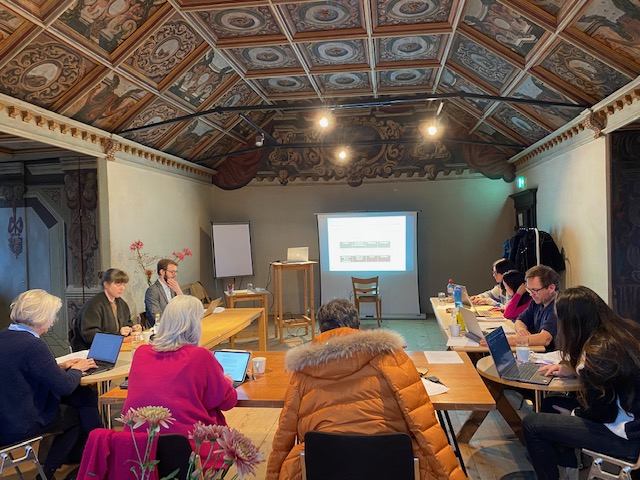
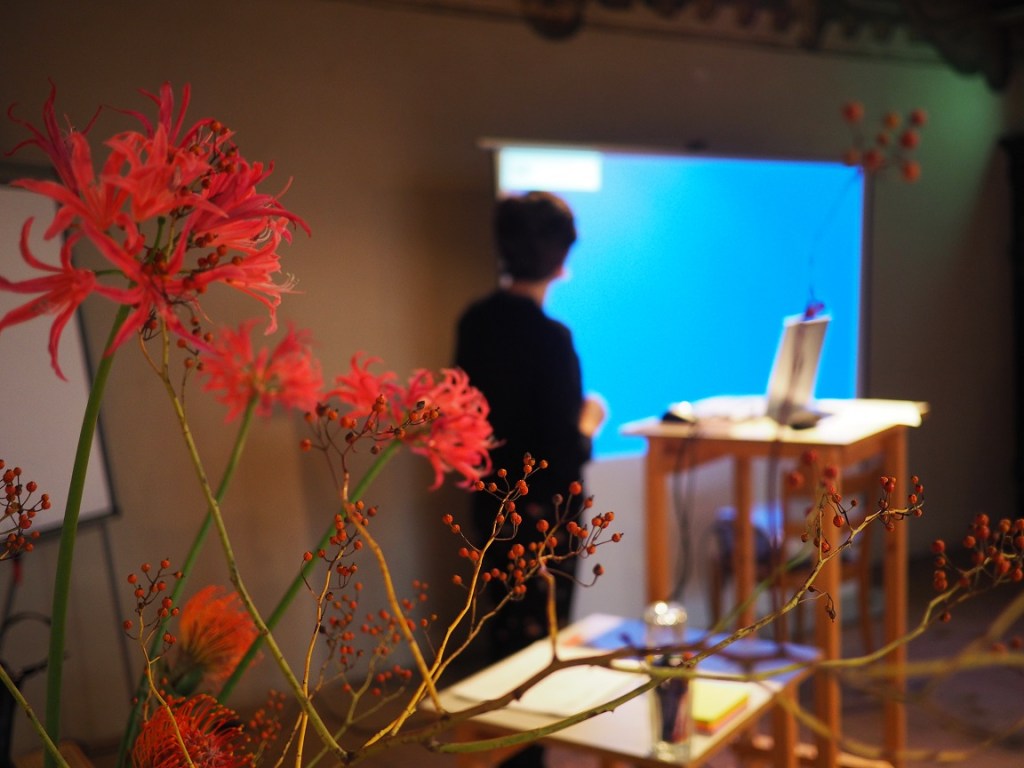
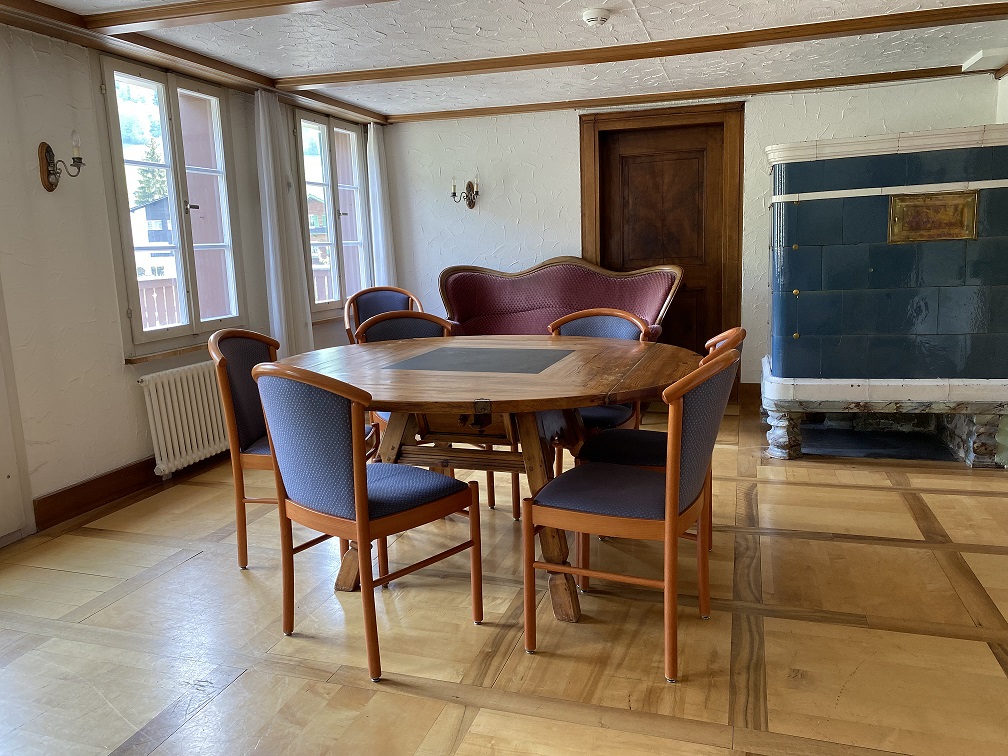
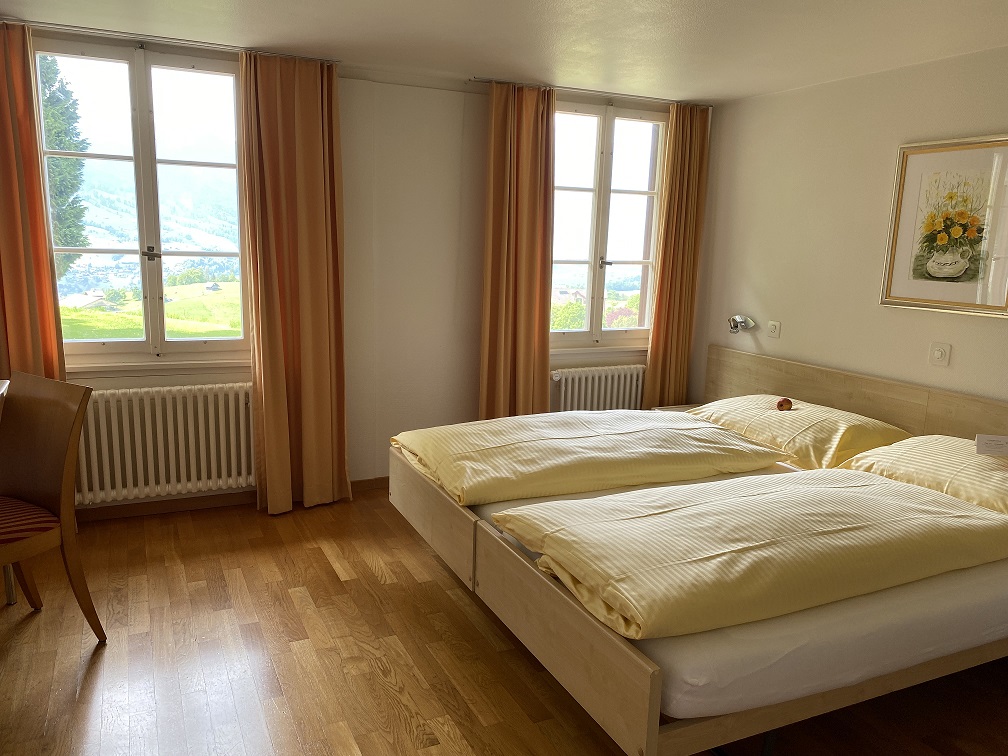
The attendees came from various groups but shared a common writing-craft foundation from their first retreat, so they were keen to take the experience one step further, together. Finding dates that suited everyone was the main challenge, but five participants were able to make the week of 7 to 13 September. Three stayed at the apartment in Hasliberg-Reuti that had welcomed them before, while two (since the flat wasn’t big enough for everyone) stayed at a lovely nearby B&B. The large seminar room in the apartment comfortably held us all for the workshops and feedback sessions.
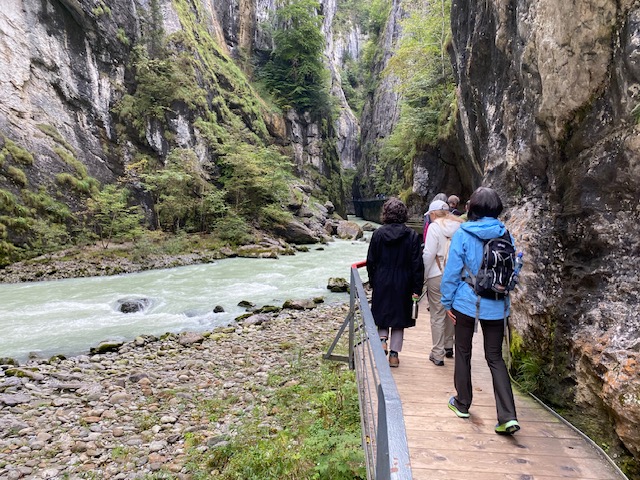
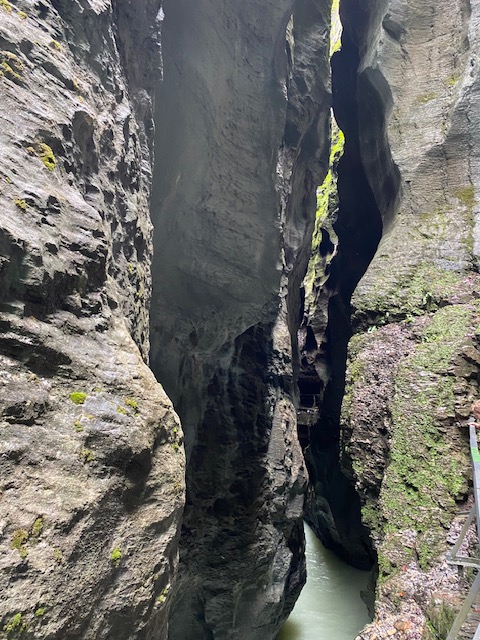
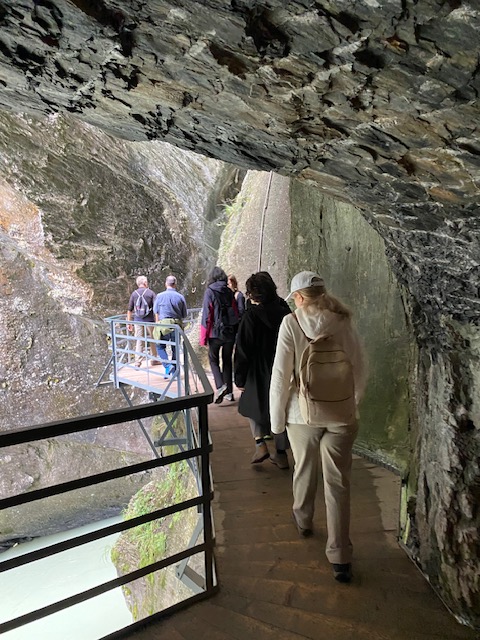
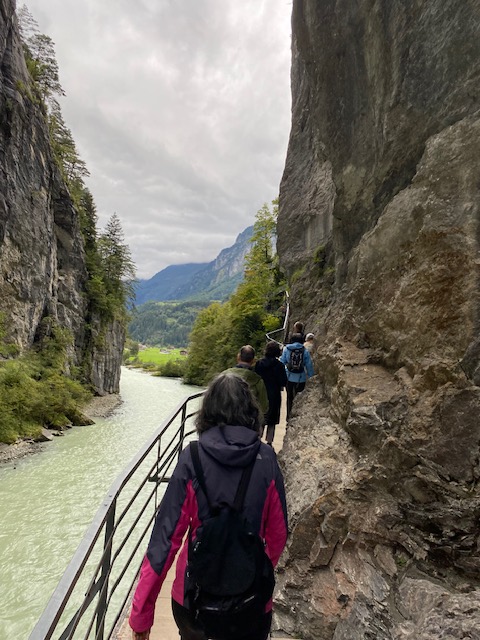
Each morning began with a 90-minute workshop to inspire creativity, deepen knowledge of the craft, and strengthen the group’s bond. Ample personal writing time during the day gave everyone space to advance their projects. In the afternoons, we reconvened for two and a half hours of group feedback. A short daily walk in the fresh mountain air – and a mid-week excursion to the spectacular Aare Gorge just outside Meiringen – provided not only physical activity but also inspiration and the chance to connect more deeply. Much talk and laughter were shared also over breakfast, lunch (at the nearby Hotel Reuti restaurant), and dinner!
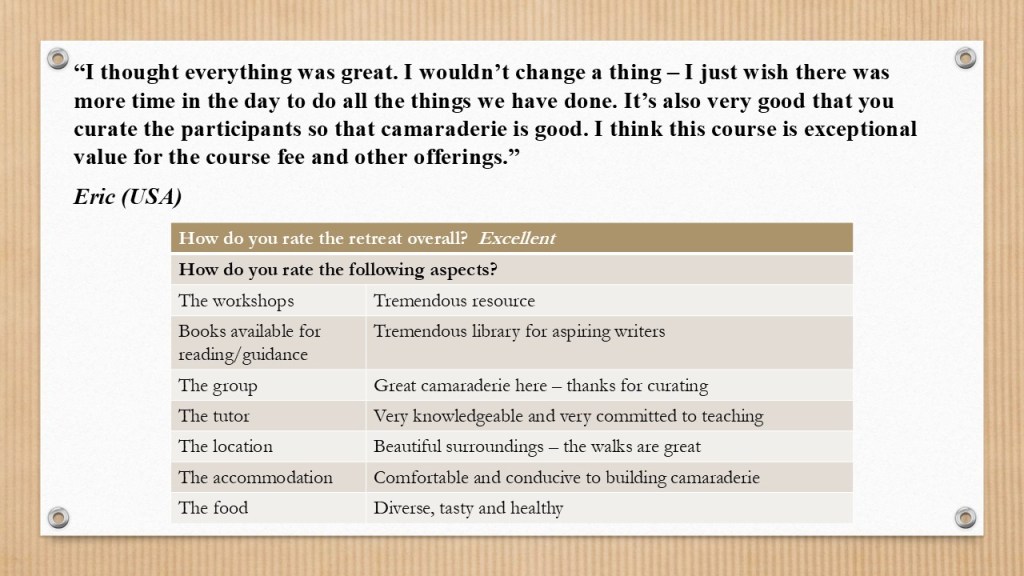
The workshops built on the group’s shared knowledge base. I provided recaps of what we had covered during their previous retreats: on Day 1, Story Structure and Plot Development; on Day 2, Story Openings; on Day 3, Characterisation… We quickly reviewed these notes together, then moved on to exercises that drilled down into the relevant topic while introducing something new and unleashing creativity. For example, our session on Characterisation was paired with exploring the uses and effects of music (in both fiction and life writing); another exercise delved into the narrative possibilities of photographs, to experiment with Point of View and ‘Psychic Distance’; and so on. You can read attendees’ feedback in their own words. The response has been so enthusiastic that I plan to repeat this retreat next year. I’ll be contacting the community of former participants soon to find out which dates work best.
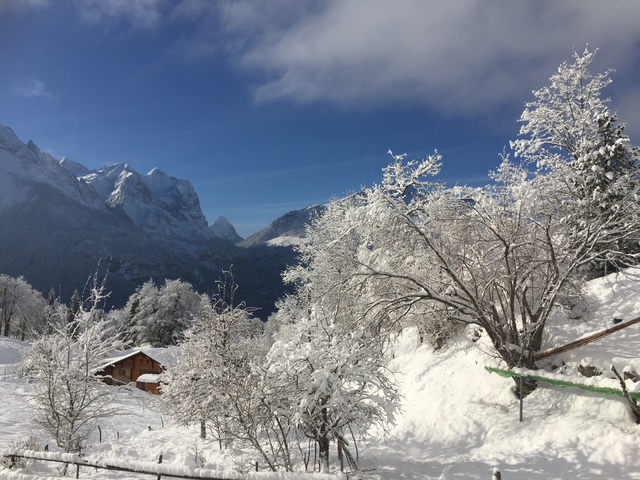
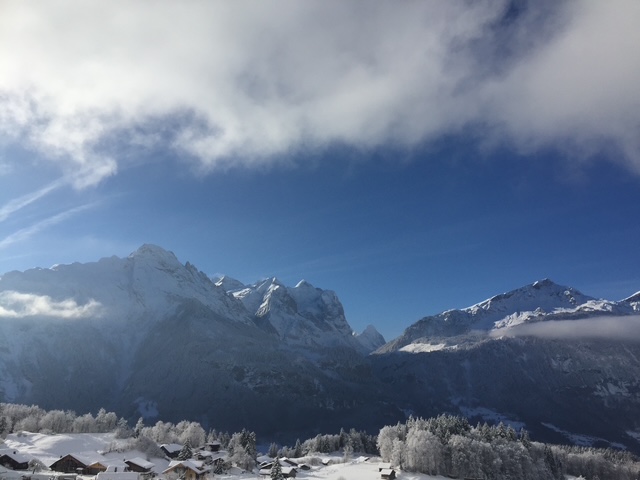
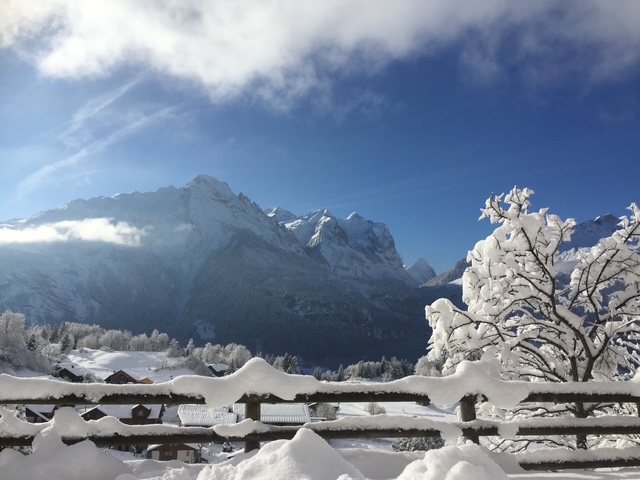
In the meantime, the next tutored retreat (open to participants at all levels of experience) will run from 1 to 7 March 2026 – an inspiring week designed to nurture your writing, spark new ideas, and connect you with a community of fellow writers. If you’d like to be part of it, you can find details here: https://valeriavescina.com/teaching/writing-retreats/ In that period, Hasliberg-Reuti is often covered in snow, making the landscape magical in yet another way.
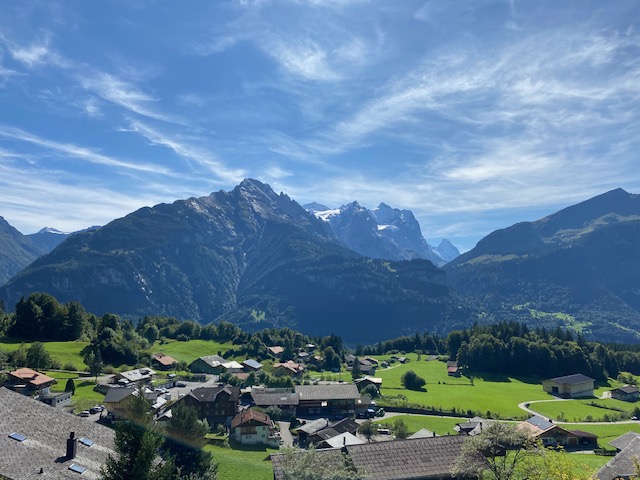
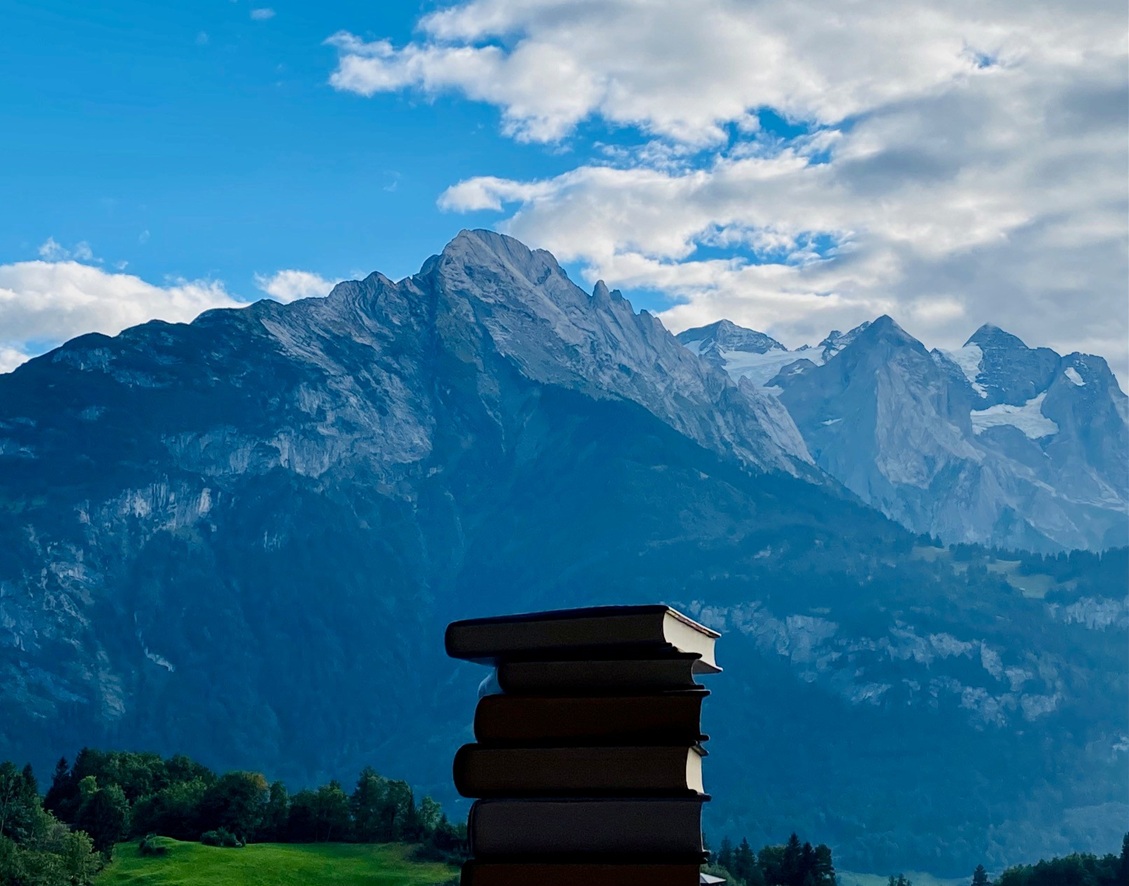
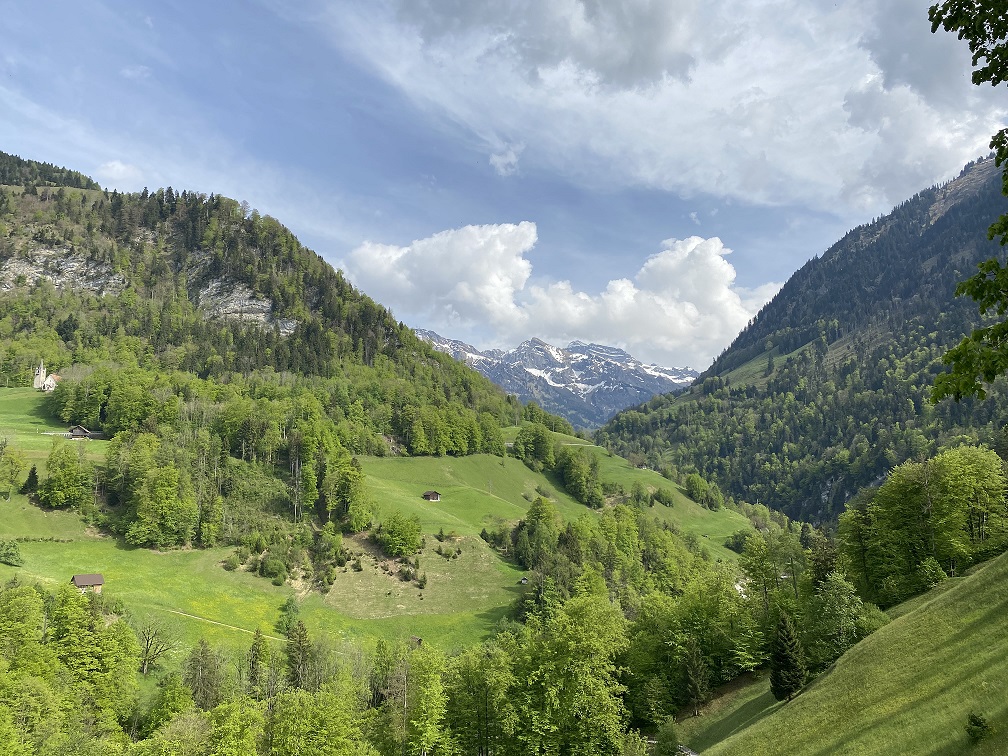
Here’s a post to give you a flavour of the writing retreats in the Bernese Oberland. I’ve run several retreats in this spectacular corner of the world, and it’s where I’ll be hosting future ones.
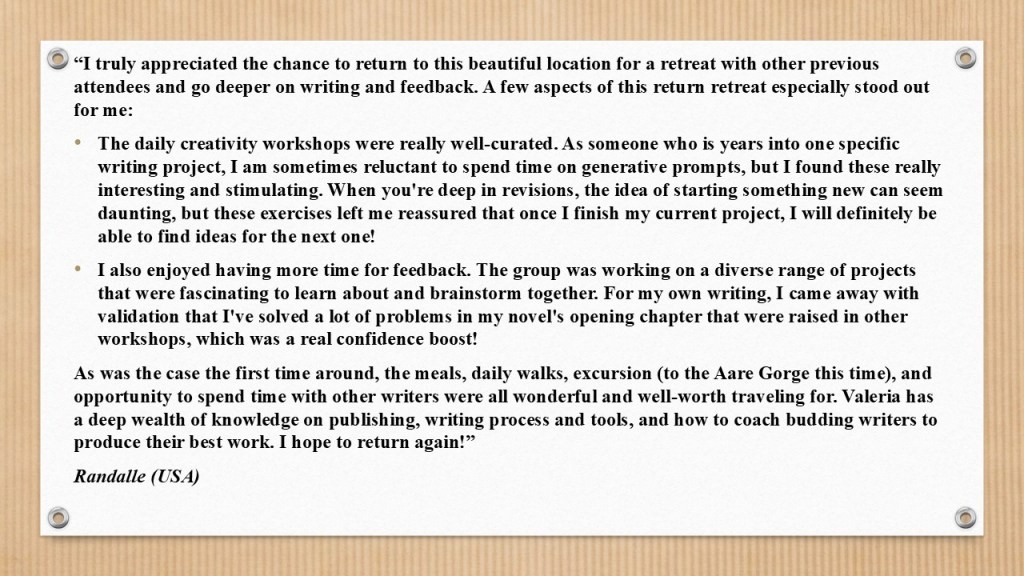
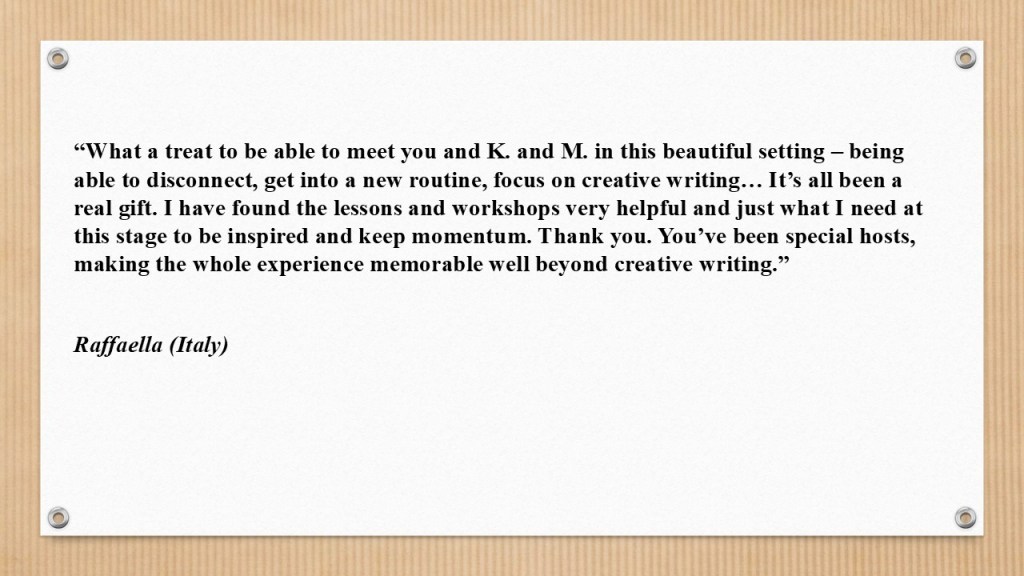
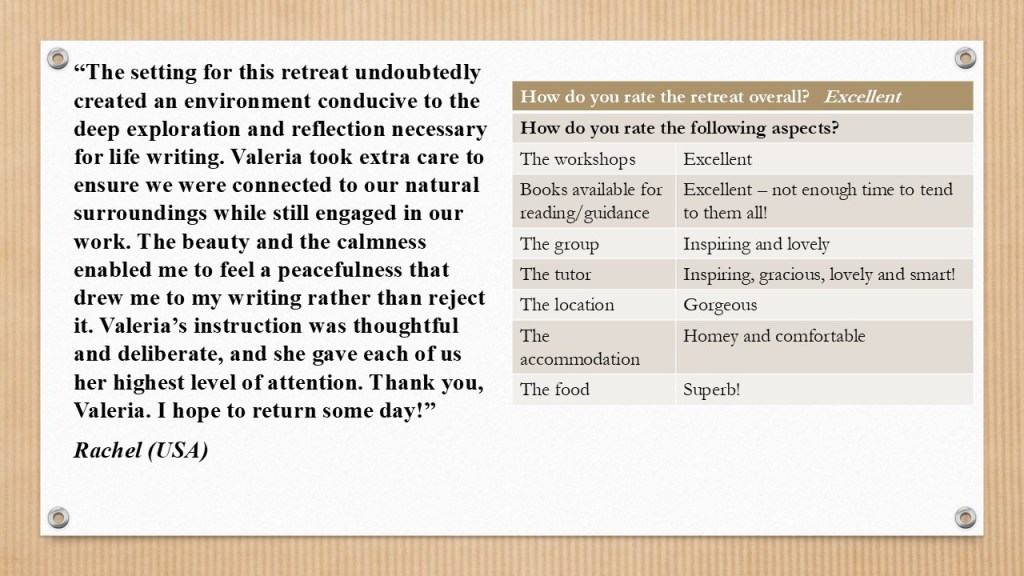
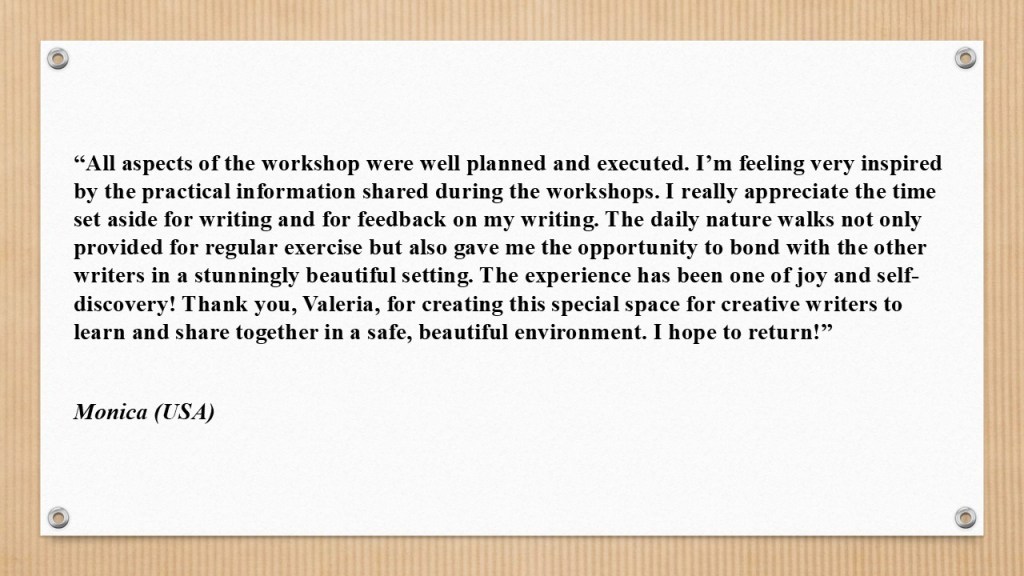
The days involve a mix of lectures, workshop exercises, feedback, and individual writing time. A maximum of three participants means your work receives a truly exceptional degree of attention – from me and from your fellow attendees. And then, of course, there’s a warm social side to it: meals and easy walks offer more opportunities for getting to know others who share your passion for writing, and for making friends. Participants often stay in touch with one another after the retreat, exchanging feedback on their writing projects on a regular basis. I’ll leave the word to them, through their testimonials!
First, a few words from attendees working on fiction projects:
Here, some testimonials from attendees working on life-writing projects:
Afterwards, I love hearing how everyone is progressing! One of the retreats this year will be for returning attendees, enabling them not only to find time and space for their projects, but also to grow their supportive writing community by meeting people from other cohorts. What a joy it will be to see them all again!
If you’d like to learn more about these writing retreats in the Swiss Alps, and to book, click here.
Author and critic A.S. Byatt died last week, leaving behind a priceless legacy of engaged, richly layered writing.
Byatt’s work stimulated readers to reflect on the stories she told and the complex questions she raised. A recurring one was the extent to which individuals can shape their own destinies and history, and vice-versa. In her fiction she interwove stories, history, material traces, fairy tales, myths, never afraid to cross the boundaries of disciplines: from literature to psychology, from philosophy to museum studies… Her books of literary criticism are treasure troves of dazzling insight.
The detailed material world in her novels and short stories was emblematic of her attempt to capture ‘the hard idea of truth’ – an attempt she believed all language is doomed to fail at, and which therefore demands accuracy, to achieve even qualified success. My mind jumps by association to pages in which Richard Holmes, whilst retracing Robert Louis Stevenson’s steps in the Cévennes, realises the passage of time makes the enterprise’s perfect success impossible – and yet it must be attempted, with passion and care.
The accuracy Byatt admired in George Eliot, who saw it as a moral imperative, was characteristic also of herself: she never aped nineteenth-century realism, however, but asserted the freedom to incorporate lessons from it in her work. Unsurprisingly, she praised Hilary Mantel’s or Pat Barker’s forms of realism as ‘almost an act of shocking rebellion.’ Byatt wouldn’t be slotted into categories, and instead pointed out that literature’s history is discontinuous – ‘there’s loss as well as gain’ even with Proust, she said, though she admired his ability to combine the ‘truth’ of things with conscious narrative form and though she learnt from him, too.
During my Creative and Life Writing MA at Goldsmiths years ago, we each had to produce a long essay on a topic relevant to our writing. I chose to research the use of art and artefacts in Byatt’s work. She utilised art and artefacts to produce and orchestrate an astonishing variety of effects: to render a description vivid and memorable; ground a story in time and place; define characters and relationships; shape and reflect character development; drive the action forward; illuminate key themes… She could even raise selected objects to the status of a near-character, for yet more purposes. Some artefacts offered the potential for motifs, which she exploited to various ends, including metafictional ones. The way she harnessed the taxonomy of gold, silver and lead in The Children’s Book is a virtuoso demonstration of how recurring metaphors can highlight and connect characters as much as issues.
I applied some of those lessons in my novels, and I’ve since taught for various institutions on the narrative potential of art and artefacts. At yet another – deeper – level, I’m grateful for the encouragement Byatt’s work gave me to never stop learning and experimenting.
Some sources behind this short blog post:
Antonia S. Byatt, Passions of the Mind (London: Vintage, 1993)
Antonia S. Byatt, On Histories and Stories (London: Chatto & Windus, 2000).
Last Saturday, 3 December, we had the first in a series of creative-writing workshops at the Literaturhaus Zentralschweiz (‘lit.z’). Based in the historic Rosenburg in beautiful Stans, lit.z is Central Switzerland’s literature hub, offering a lively, high-calibre programme in the cantons of Lucerne, Nidwalden, Obwalden, Schwyz, Uri and Zug.
Dating back to the 14th century, the Rosenburg was restructured first during the Renaissance and again during the Baroque period. Its fortunes waned in the 19th and 20th centuries, until in 1969 the Canton of Nidwalden, the municipality of Stans and the Nidwalden Historical Society established the Höfli Foundation to acquire and restore this gem of Switzerland’s historical heritage.
Lit.z regularly hosts authors’ readings in various languages and runs workshops for adults as well as kids. The Rosenburg Writers workshops are the first to be taught in English. The initiative reflects a wish to address Switzerland’s sizeable international community and to draw together like-minded people.
It’s an honour for me to teach this series. The creative-writing workshops at the Rosenburg are taking place on three Saturdays: 3 December 2022 (Characterisation), 14 January (Plot Structure and Story Development) and 18 March 2023 (Sense of Place). The sessions are for anyone with an intermediate-to-advanced level of English, not just for native-English speakers.
I’ve structured the workshops in such a way as to address a wide variety of needs, by offering material and exercises which meet participants where they’re at. The group on 3 December was wonderful. Attendees ranged from beginners to professional authors. We had a stimulating and fun day. Swiss, American, German and Belgian participants of different ages got along really well and contributed great questions and insights throughout. They had come from all over Switzerland: Basel, St Gallen, Bern, Freiburg… and Central Switzerland! Lunch in the Wirtschaft zur Rosenburg on the ground floor of the building was delicious and an opportunity to get to know each other better and enjoy lively conversation.
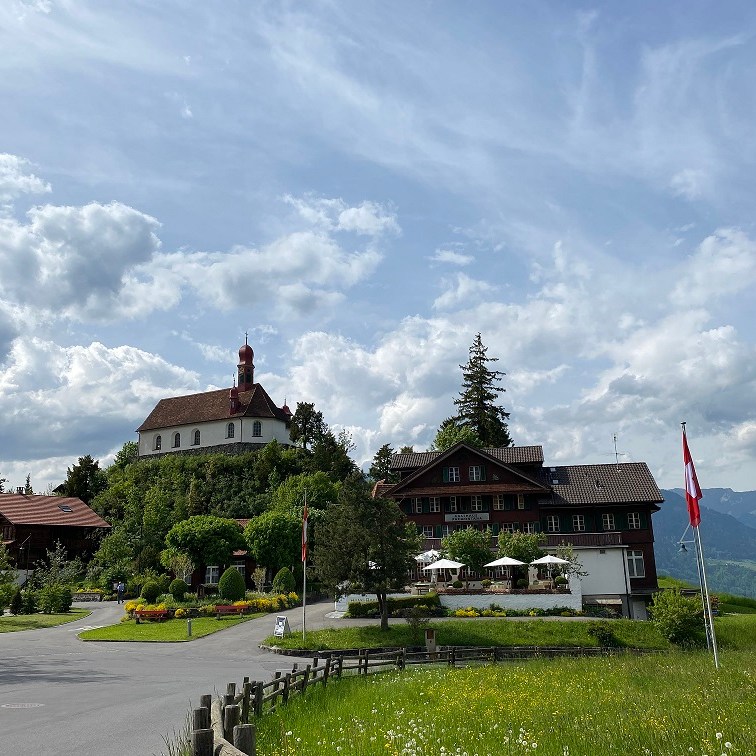
Flüeli-Ranft, with Gasthaus Paxmontana in the centre
What a wonderful six days on the writing retreat in Switzerland this October! Let me share the experience with you through this short write-up.
The participants were an absolute joy to teach: lovely and interesting people, enthusiastic about writing and about everything Switzerland has to offer! It seems right to give them the first word – so here are a couple of testimonials.
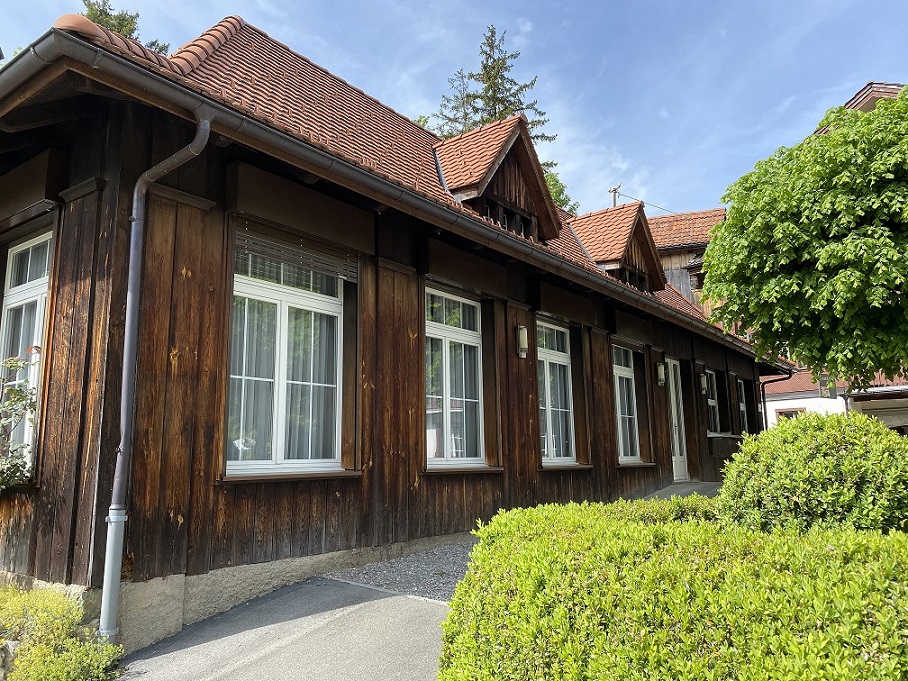
We stayed at the Gasthaus Paxmontana in the historic village of Flüeli-Ranft, which sits in enchanting landscape. Built in 1617, the intimate Gasthaus (only 16 rooms) belongs to the nearby Jugendstil-Hotel Paxmontana, an icon of Art Nouveau. The staff were unfailingly kind, attentive and ready to offer assistance with a genuine smile.
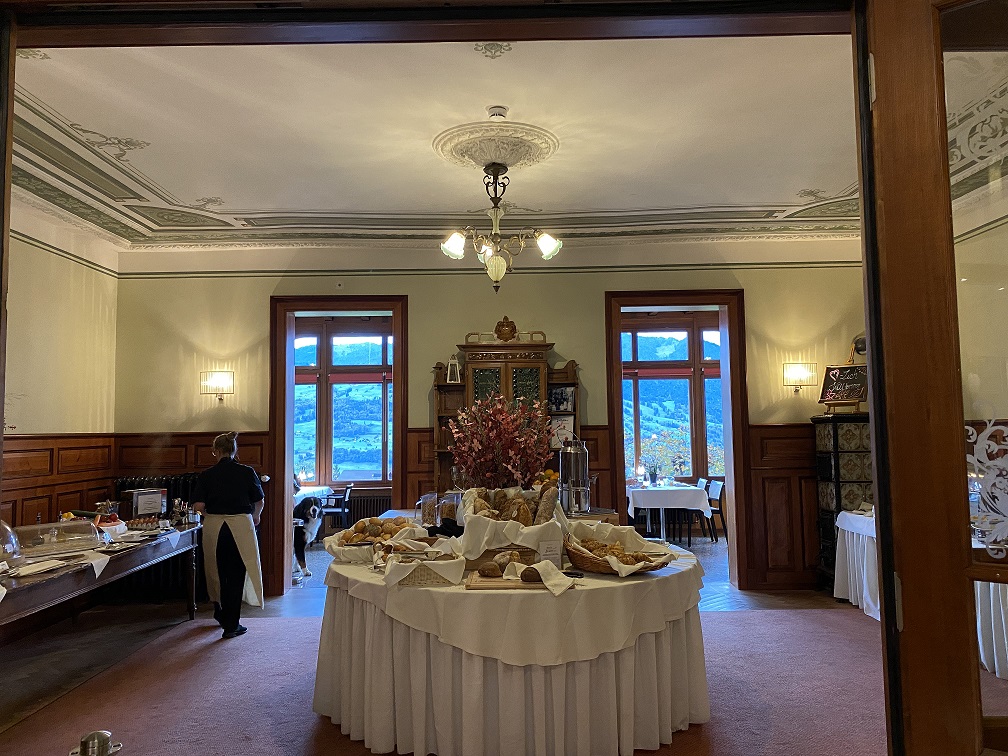
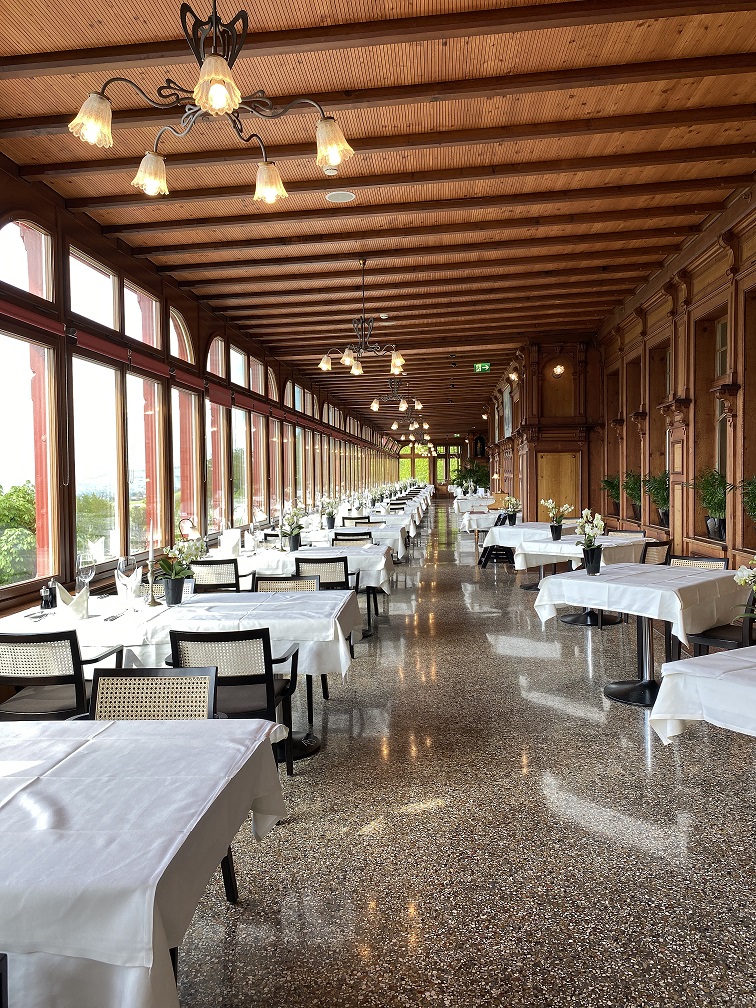
Breakfast at the Jugendstil-Hotel was a daily treat. How better to start our day than with the awe-inspiring views on our 1-minute stroll there, with the stunning Veranda Restaurant and a buffet rich in authentic local specialties?
Every morning we had a two-hour workshop on an element of the writing craft: characterisation, story structure and plot development, sense of place… Each session involved a mixture of lecture time, writing exercises, discussion and feedback. Though sharing one’s work was optional, participants were more than happy to do so in a safe and encouraging environment. This openness supercharged everyone’s leap forward, as people learnt from, and contributed to, each other’s work. Over the course of the week, participants acquired tools that helped them define important aspects of their projects.
For lunch we were provided with generous sandwiches to be consumed wherever we preferred on the day: either in the indoor restaurants of Gasthaus and Jugendstil-Hotel, or in their external dining spaces in the autumnal sunshine.
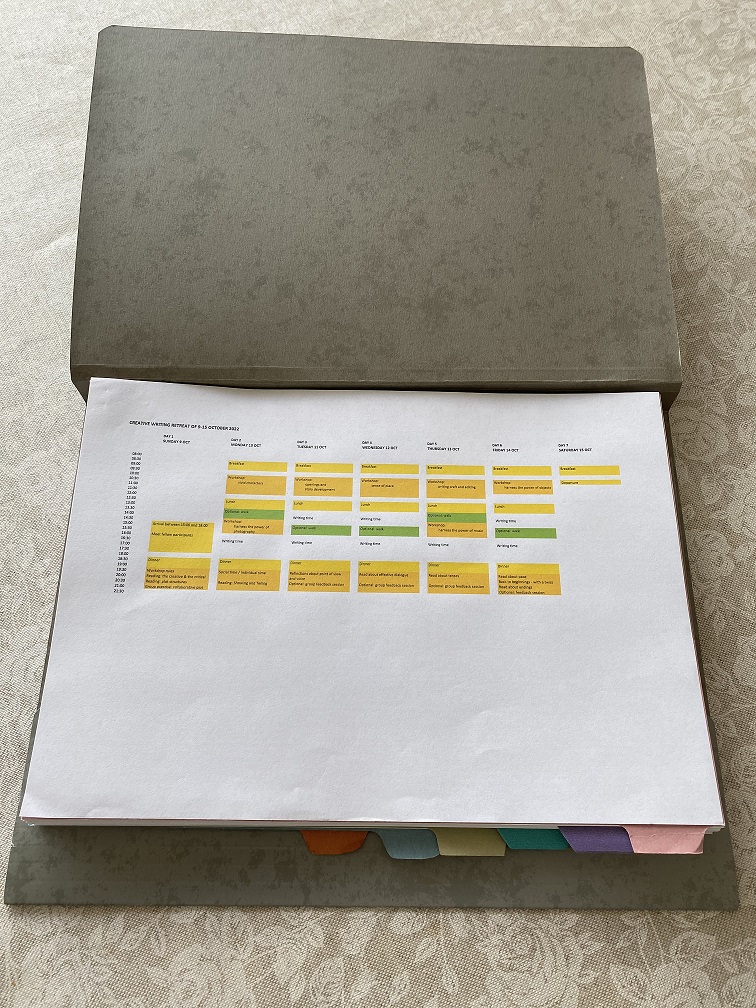
Originally, I planned to leave the afternoons free for independent writing time. However, in pre-retreat correspondence, this group expressed the wish to cover a range of topics which required workshops also on some afternoons. Below, you can see the accordingly customised schedule.
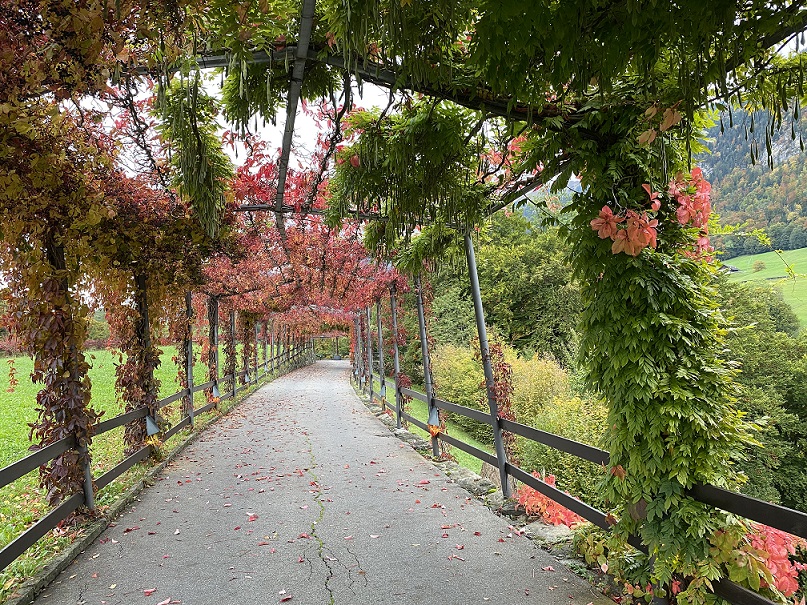
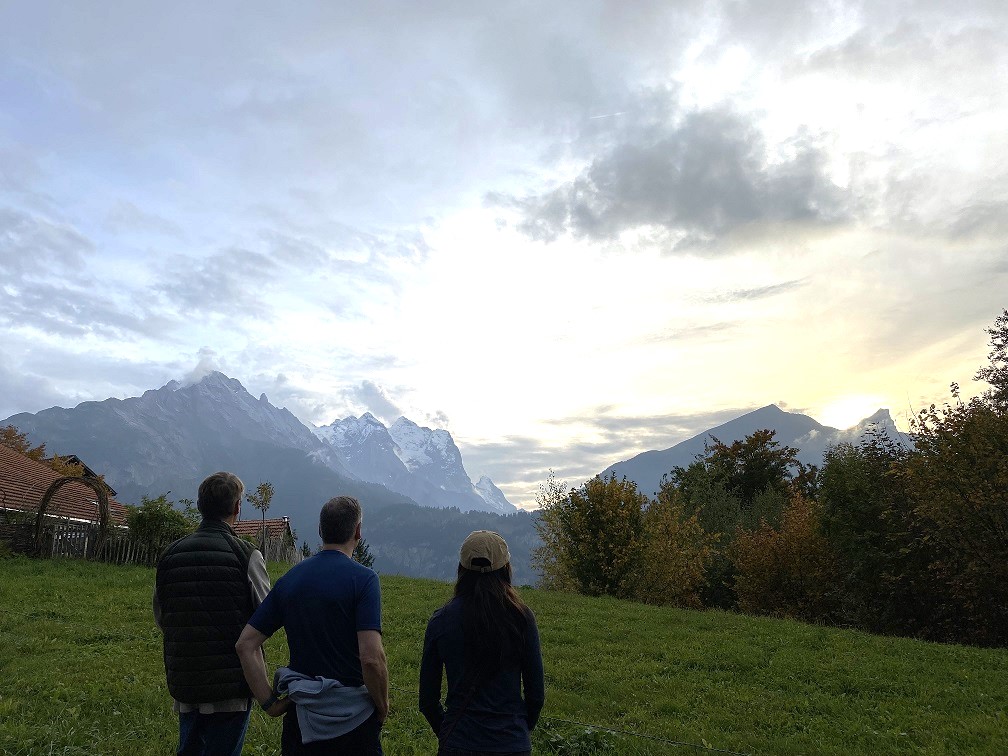
We loved our daily walks in the peaceful landscape around Flüeli-Ranft. Walking and talking in such glorious surroundings was relaxing and an all-round pleasure. As you’d expect, our conversations touched on all kinds of topics. The hikes stimulated effective problem-solving: they facilitated access to fresh perspectives and inspiration for our projects.
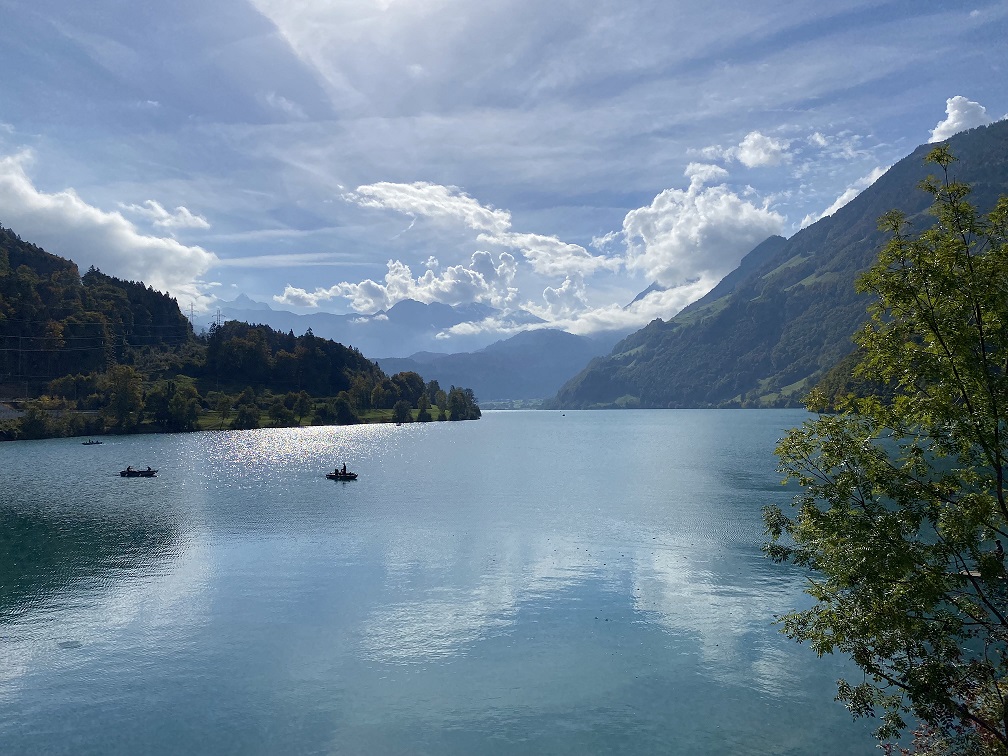
We spent an afternoon in the Bernese Oberland, with a stop-over on Lake Lungern and an easy hike on a breath-taking trail in the Hasliberg.
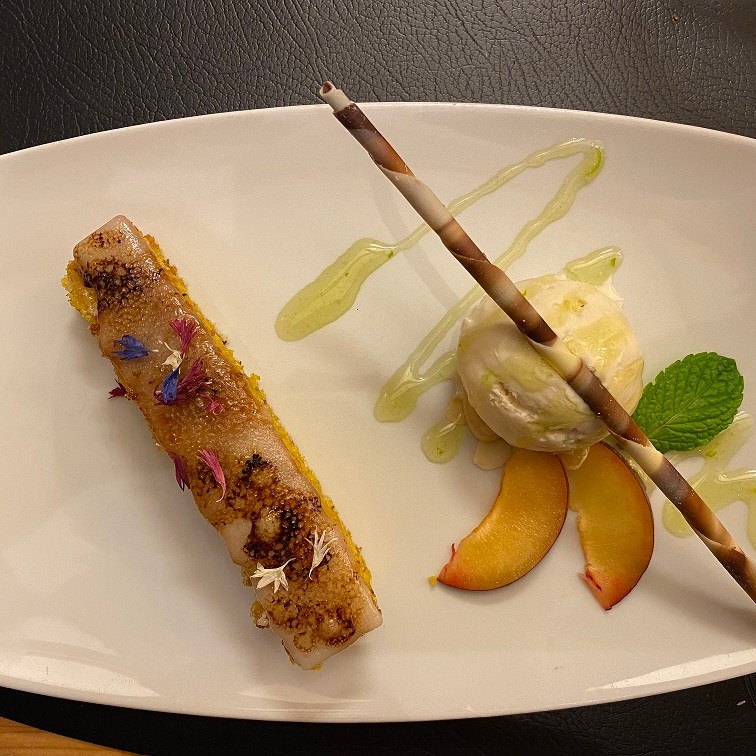
We looked forward to the amazing three-course dinners served at the cosy Gasthaus restaurant, and, on two evenings, in the elegant Veranda restaurant. Both places boast superb cuisine. A vegetarian option was always available.
After dinner, we briefly read something together on an agreed topic, before breaking up for private time and a good night’s sleep!
We left the retreat not just with warm memories, but with new friendships. We can’t wait to see how everyone’s projects develop!
Why not join me on future retreats? The next ones will be:
28 May to 3 June 2023 – again at the Gasthaus Paxmontana in Flüeli-Ranft
24 to 30 September 2023 – at a chalet in the Alps of the Bernese Oberland.
You can check out this page to learn more. And you’re always welcome to drop me a line.
Starting something ‘from scratches’? Not ‘from scratch’? For a split second, the sentence jarred. But its author, Iwona Fluda of Creative Switzerland (see her post, where she kindly mentions my writing retreats – thank you, Iwona!), had not made a mistake: perfectly aware of the correct idiomatic expression, she was being joyously playful with language.
That freedom to take apart idioms and clichés, to view them with new eyes, may come easier to non-native speakers of a language. Foreign students of English soon discover that ‘a pretty kettle of fish’ isn’t, actually, a good thing (no, not even if you love fish); that people can ‘fly off the handle’ (really? how?); and that you can ‘go Dutch’, whatever your nationality. You see what I’m getting at: taken literally, expressions we use every day can be a source of amusement, bemusement, discoveries, reflection… The same is true of single words: in my first novel, the protagonist deconstructs ‘nostalgia’, so that for him it means not the yearning to return home, but pain at that prospect.
The world around us offers countless sparks for our creativity. They’re everywhere: in landscapes, objects, fellow passengers on a train, overheard conversations in a café, a piece of music… And they’re ‘inside’ language(s), too, as Iwona highlighted. The trick is in spotting all these creative prompts hiding in plain sight, and transforming them into fruitful writing material. We can train our capacity to do that.
Flüeli-Ranft, Switzerland
But how? An effective way is to attend creative-writing workshops. In the ones I teach, I combine prompts with the transmission of specific skills, so that participants may continue practising and perfecting them autonomously afterwards. For example, I’ll show you how to extract ideas for a story from a small object, in the context of how to create a three-dimensional character; or how to develop an engaging plot structure from a photo. You can free up your creativity and cover key elements of writing (characterisation, sense of place, etc.) on the retreat I’m running from 9 to 15 October 2022. Click here if you’d like to find out more about the venue, schedule, etc.
If you’re curious about what writing retreats are, what to look for, and how they might benefit you, here’s an article I wrote for Writing.ie Resources.
Any questions? Just get in touch via this short contact form or email me on mvaleriavw [at] outlook [dot] com.
Image credits:
‘Journaling over Coffee’ by Hannah Olinger on Unsplash.
Ever wondered what a writing retreat is all about and whether it would benefit you? There are at least 10 reasons why writing retreats are invaluable. You’ll find them in my article (FREE to read on this link) for Writing.ie, the magazine for writers and readers.
Image of Writing.ie Resources page
Click HERE for the full article (a 5-minute read) to find out:
what writing retreats consist of
at what stage they’re helpful
whether they’re expensive
the top 10 reasons why they enable significant leaps forward.
Image of Writing.ie article: Why Go on a Writing Retreat?
Below is a super-brief summary of the ten reasons:
Allow yourself time and space for you and your writing, away from daily responsibilities
Stimulate inspiration and creativity
Hone your craft with workshops and discussions
Productivity: let full immersion boost the quantity and quality of your stories
Feel supported and make friends
Let quality feedback highlight your strengths and enable you to overcome weaknesses, in a supportive atmosphere
Learn from each other’s work and experiences
Gain motivation and confidence
Re-energise: through workshops, social occasions and time on your own, all in idyllic surroundings
Meet writing buddies and mentors.
I hope you’ve found this post helpful (and the full article even more). My next writing retreats take place in Switzerland from 9 to 15 October 2022, 28 May to 3 June 2023 and 24 to 30 September 2023: clicking here will take you to details of them and future writing events.
I’ve been teaching creative writingsince 2013 to a variety of audiences: from secondary-school pupils to university BA and MA students and from Adult Education classes to individuals. I’m a novelist and the Literary Programme Director of the Hampstead Arts Festival in London.
Credits:
Images of Writing.ie website reproduced with kind permission.
So, what to consider when reviewing a work of fiction? Here are my top ten tips.
Begin with a gripping line or paragraph which conveys your overall opinion. It could be phrased as (a) a statement or (b) a question. As an alternative, you could begin with (c) a quote from the book which encapsulates its themes. An example of each:
The title says it all: smoking kills – though in the case of this novel, the victim is not the smoker but those he kills (‘and not through passive smoking,’ he clarifies) in order to enjoy the pleasures of a cigarette. We’re firmly in humour noir territory: the book’s incisive, satirical take on modern-day life offers a succession of laugh-out-loud moments.[1]
What might drive a left-wing intellectual to espouse xenophobic views and defend the indefensible? How might the community around him react? How would you react if he were your father? In Autopsy of a Father, Pascale Kramer poses uncomfortable questions and tests your tolerance of disquiet.[2]
‘“Fate,” said Arthur. “The capital letter F. But chance is a powerful force, and suddenly you acquire a Fate that was never assigned to you. Some kind of accidental fate. It happens in a flash.”’[3]
Give us a reason why we should read the book / why it should spark our curiosity
E.g.: One of the most original novels I’ve read in a long time, The Core of the Sun is set in an alternative present – in the “Eusistocratic Republic of Finland”.[4]
In your plot summary, tell us about the protagonist(s)’ approach to the key issue/conflict/mystery
E.g.: Caterina’s process of reconstruction involves acquiring that part of herself which she left to her twin. […] But as she learns to take care of their elderly mother, of Olivia’s son and of a young neighbour who has lost her little girl, she understands that it was too simple for her and others to rely on Olivia.[5]
What questions does the story raise?
Does it interrogate and challenge any stereotypes? Or the opposite?
Does it prompt us to read relevant books?
An example of questions raised: Raimo leaves readers to judge: was there any love at all on his part, or only desire, fetishism, possession and the drive to dominate, self-justified with theword ‘love’? Can any of these ever coexist with love, or do they often taint it, but only to hardly perceptible and therefore unrecognised degrees?[6]
Tell us how the book makes you feel
What, if anything, will move us? Or amuse us, etc?
What causes that response? It could be an episode, or the language, or…
E.g.: It would be incorrect to infer too much neatness from the symmetries in the book’s structure. The subtle play of balance and counterbalance constantly engages the reader, while offering a reassuring framework to explore the chaos of complex issues with no easy answers.[7]
What might this book add to readers’ lives?
E.g.: ‘A Whole Life’ attests to the enduring value of just this kind of ‘lightness’ – a lightness of touch which offsets the depth of Robert Seethaler’s themes, distilling them into thoughts and images that linger in the reader’smind.[8]
Select your quotes carefully
The ones you choose should illustrate your points
Try to find one or two that are representative of the book as a whole
E.g.: He possesses the ability to capture the joy of the earth warmed by the sun under his “night-damp feet”, the wood which “had stored the warmth of the last days of summer and smelled of dry moss and resin”, and the coolness of a flat rock on which he lies down.[9]
Analyse the author’s (and the translator’s, if it’s a foreign work in English) treatment of the most relevant elements of writing, such as:
individuality of voice (style, language…)
characterisation
sense of place
structure
E.g.:
The writing alternates wit and humour with darkness and melancholy, dramatic tension with aphorisms, the real with the surreal, poignant observation with optimism. The rhythm of the prose is thus pleasantly engaging, and the plot suspenseful – not least due to some ethically questionable choices on the protagonist’s part – but more compelling still is the development of the themes over the story’s arc. Antoine Laurain succeeds in creating a first-person narrator who is whimsically and yet realistically unaware of the full depth of his unhappiness until he has distanced himself from it.[10]
Authors of intimate stories that reflect the course of a country’s historical fortunes face a challenge: to create fictional protagonists we’ll care about without their writerly imagination being clipped by the magnitude and details of nationally significant events. Aareleid deftly overcomes that challenge, giving us believable human beings through the eyes of…[11]
You can mention relevant novels or short stories by other writers
E.g.: The themes may bring to mind Margaret Atwood’s The Handmaid’s Tale, but it would be a disservice to both authors to insist on comparisons.[12]
Ensure your review’s ending addresses your central idea
E.g.: This is a book which challenges you to work hard and amply rewards you for it: a gripping read in its own right, and fiction that enhances our engagement with the world we inhabit.[13]














































 Valeria Vescina