‘It was my father who made the arrangements. My uncle helped, since he lived down south, where all this kind of business is carried out.’
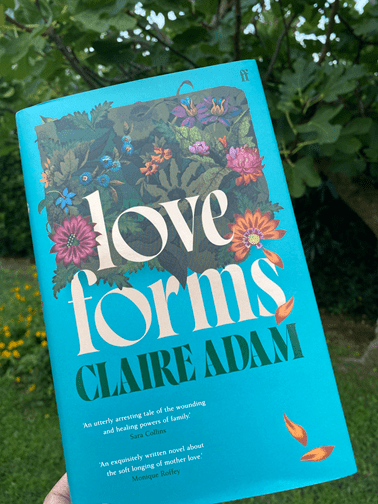
The opening of ‘Love Forms’ sets the tone for the whole novel: a voice that immediately draws you in with its fresh, direct, familiar cadence; and ‘the arrangements’ at the heart of the story. These arrangements see the then sixteen-year-old protagonist, Dawn, whisked off from her home in Trinidad to Venezuela, where she must give birth in secret and surrender her baby for adoption. The reason? ‘She made a mistake and brought shame to her family.’
It’s not long before Dawn realises that the real mistake – whether really hers or her parents’ – was to give up her daughter. The intense longing to find her again impacts the rest of Dawn’s life. Though she goes on to graduate in medicine in the UK, work, marry, and raise two beloved sons, her yearning for the lost child becomes an ever-present, aching part of who she is. When she’s fifty-eight, we witness one of her many attempts to track down her daughter – a search that plays out as a roller coaster of emotions.
Dawn feels so real, that I was absorbed by her evolving feelings and her growing understanding of herself, of her family, and of the changing world around her. This is partly thanks to Claire Adam’s sensitive psychological portrayal of her main character, and partly because of the three-dimensionality she lends to the places – Trinidad, Tobago, Venezuela and London – and times the protagonists inhabit. The dialogue across generations – between Dawn and her parents, siblings, and children – is deeply affecting, as powerful in its silences as in its words. These exchanges and the characters’ actions sustain a taut narrative tension: I often found myself wondering about the consequences of certain conversations – and discovered their outcomes in the novel’s final chapters.
It’s all there in the title: ‘Love Forms’ is about different kinds of love (starting with that of a mother for her child), and about the ways it’s kindled, grows, is challenged, changes… and how it changes us in turn. It’s a poignant, beautifully written novel, and one of the finest I’ve read in a long time. I couldn’t recommend it more highly.
“The Fire In Their Eyes” is a breath of fresh air: a thriller that keeps you hooked right up to the end, it’s boldly original, unafraid to experiment with form, and courageous in its engagement with urgent issues. It reveals the interconnections between these issues, while weaving a narrative that is both emotionally gripping and intellectually engaging. If you crave fiction that does more than entertain – stories that challenge you to think and that spark meaningful conversation – this book is for you. Structured across dual timelines, the novel follows three female protagonists, all of them gripped by a strong sense of impending danger. Each woman fights, with grit and intelligence, to prevent a catastrophe. Though separated by time and geography, the threats they face are connected. In the Arctic, geneticist Eloise races against time at a scientific research station to neutralise a fresh danger to humanity. What is its link to the DNA of “Sarah,” a woman whose 74,000-year-old remains were discovered on Mt. Kenya? Meanwhile in Manchester, psychiatric nurse Jessica – whose husband Max unearthed Sarah’s remains – is experiencing a heightened sense of threat. What is the cause of this change in her? And how will it affect her deep, tender bond with Max? In a lush Kenyan valley 74,000 years ago, the shamanic Old Woman – Sarah’s daughter – perceives an impending danger that could annihilate her people. It falls to her to discern the precise nature of the threat and devise a way to combat it. Stephanie Bretherton’s novel is underpinned by meticulous research. Complex scientific ideas – particularly in biology, genetics, and virology – are conveyed with clarity and precision and linked back to some of the most profound questions of our time. For example, the author draws links between globalisation, climate change and other environmental issues, rising population density, and the emergence of new pathogens. She also explores the spiritual and philosophical questions raised by natural disasters, political opportunism, and the consequences of human actions. One question resonates especially strongly: from one generation to the next, how do we pass on the best of what it means to be human? The power of all forms of love to help us meet the toughest challenges is one of the novel’s connecting threads. This is not, however, a didactic book. Each of its three narrative strands is as gripping as a thriller, with high stakes and expertly controlled pacing. The tension builds steadily towards an emotionally resonant climax. I found Jess and Max’s story particularly moving – an honest, tender portrayal of love and the difficulties it must overcome. The novel’s intricate structure is beautifully handled. You always know exactly where you are and feel secure in the hands of a confident storyteller. Each of the three protagonists is surrounded by sharply drawn secondary characters: family, friends, and colleagues who feel fully alive. The integration of emails, text messages, and unsent letters lends further realism and emotional depth. The settings are equally immersive: Eloise’s sterile research facility and the bleak beauty of the Arctic; Jess at the psychiatric hospital where she works, in the swimming pool where she finds release, and in the quiet refuge of memory – drifting back to a long-ago dive among minnows; and the Old Woman’s tribal village – rich with ritual and community – and its wild surroundings. This is a novel of gripping storytelling, literary substance, and lasting insight – one I wholeheartedly recommend. “The Fire In Their Eyes” is the second book in “The Children of Sarah” series, and I already look forward to its sequel.
I’ve always loved historical fiction, so putting together a full list of titles I’d recommend would make for a very long post. The first novels to captivate me were Nathaniel Hawthorne’s The Scarlet Letter and Giuseppe Tomasi di Lampedusa’s The Leopard at secondary school. Soon after, I discovered Dacia Maraini’s The Silent Duchess. To these, over the years, I added books by Umberto Eco, Carol Shields, A.S. Byatt, Hilary Mantel, Rose Tremain, Tracy Chevalier, and many others.
What must historical fiction do, for it to stand out for me? First, it must be beautifully written. I’m very open to experimentation with form – perhaps a result of my own background as a novelist and creative writing tutor. I prize books strong in characterisation, sense of place, story structure and plot development, and other elements of the craft. Second, I’m thrilled when a novel teaches me something surprising. It could be an event central to the whole book, or a small, striking detail. I’m especially drawn to forgotten or silenced perspectives. Third, I value insights and themes that shed light on the past and the present: do they challenge harmful narratives or illuminate legacies we’re still contending with? And fourth, the story must be painstakingly researched and imagined, to possess the authenticity on which everything else rests. That includes a serious attempt at immersing me in the worldviews of the time and place depicted.
If any of this resonates with you, here are seven books I read in the past twelve months that I hope you’ll enjoy. They’re listed in alphabetical order.
This powerful little volume (115 pages) won the 2024 Weatherglass Novella Prize. Set on a ship in the nineteenth century, it’s about a cargo of female convicts destined for Australia. We experience events from the point of view of fifteen-year-old Maryanne. It’s a haunting yet hopeful tale of resilience and camaraderie in the face of misery and brutality. The narration is viscerally immersive, anchored in Maryanne’s raw physical and mental perceptions. Look out for Kate Kruimink, who has already published two other novels.
Costanza Piccolomini, the woman at the centre of this novel, was the muse, lover and model of Gianlorenzo Bernini, the leading sculptor of seventeenth-century papal Rome. In a horrific act of violence, Bernini ordered a servant to disfigure her, in the belief she had been unfaithful to him with his younger brother. Basing herself on the facts that have come down to us about Costanza and the other protagonists, Rachel Blackmore has painstakingly reimagined her life. The reconstruction of the all-important social and cultural context is outstanding, and her conjectures about what happened highly plausible, while her portrayal of Costanza’s inner world is empathetic and engaging. The novel tackles enduring themes: double standards, the abuse of power, and coercive control.
For Thy Great Pain Have Mercy on My Little Pain – Victoria MacKenzie (2023, Bloomsbury)
This slim novel brings to life two well known English mystics, Julian of Norwich and Margery Kempe. They are, respectively, the first woman to have written a book in English, and the first author of an autobiography in English. Victoria MacKenzie imagines their meeting in 1413. She draws on their writings and on her research into the medieval context to offer us vivid portrayals of both. Their personalities and circumstances differ greatly from each other: Julian, a reflective anchoress, and Margery, a chaotic mother of fourteen. And yet, their experiences and spirituality make for a strong connection between the two. MacKenzie balances their alternating voices with a poet’s precision and sensitivity. A luminous reading experience.
Once The Deed Is Done – Rachel Seiffert (2025, Virago)
This is the fifth novel by Rachel Seiffert, whose The Dark Room (historical fiction) was shortlisted for the Booker Prize. Once The Deed Is Done opens in March 1945, as the collapse of the Reich draws near. A multi-point-of-view narration gives us access to the thoughts, choices, and personal histories of several inhabitants of a Northern German village. Ruth, a British Red Cross officer, is tasked with supervising and caring for displaced people in a camp the advancing Allied Forces have just set up on the village’s outskirts. Gradually, a dark, shocking secret harboured by some of the villagers emerges. The novel highlights an issue rarely covered in WW2 fiction: the fate of forced labourers during and after the war. With her moving, unsentimental prose, Seiffert poses tough questions about individual and collective responsibility.
The Painter’s Daughters – Emily Howes (2024, Simon & Schuster) Peggy and Molly Gainsborough are the charming objects of portraits by their father Thomas, one of eighteenth-century England’s most acclaimed painters. Emily Howes turns the two sisters into the subjects of her deeply moving debut novel. Molly suffers episodes of mental confusion from a young age and Peggy instinctively shields her. When the family moves from rural Ipswich to fashionable Bath, hiding Molly’s condition becomes harder. Add to this mix a beguiling composer who enters the sisters’ lives, disrupting their close bond and putting Molly’s fragile sanity at risk. Howes steeps the characters’ thinking firmly in the mentality of the era, rendering their feelings, actions, and dilemmas convincing and deeply affecting. The novel delicately examines themes of devotion, mental illness, sisterly love and rivalry, and other family dynamics. It thoughtfully explores the complex area between protectiveness and control in challenging circumstances, without casting judgment.
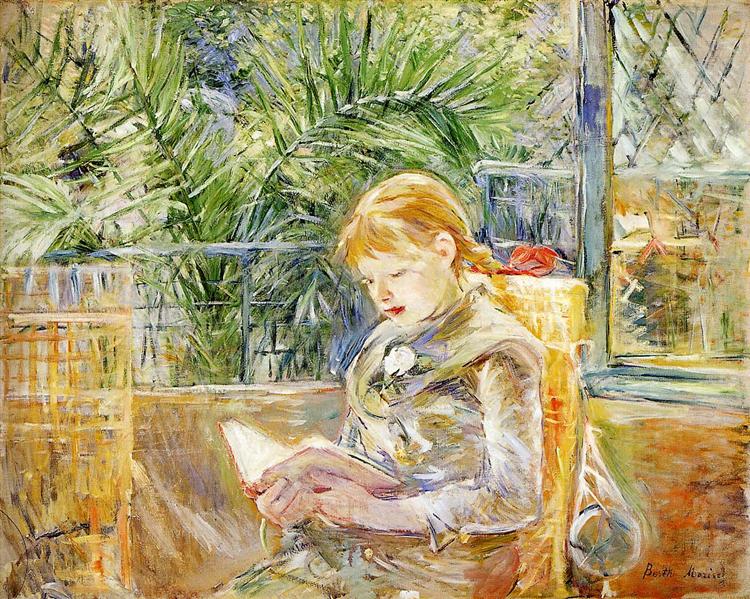
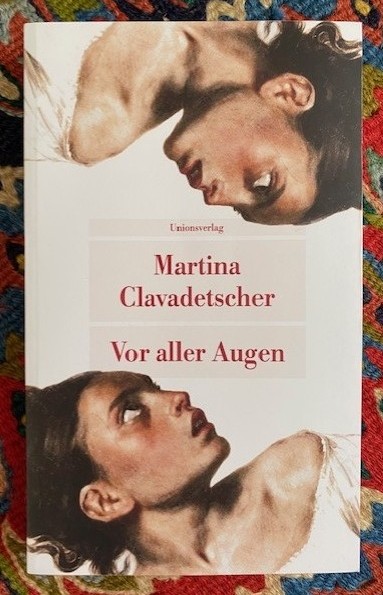
Vor Aller Augen – Martina Clavadetscher (2022, Unionsverlag) I’m afraid this one isn’t available in English yet. Martina Clavadetscher is a well-known author of books and plays, and the winner of the 2021 Swiss Book Prize. In Vor Aller Augen (In Plain Sight), she foregrounds nineteen women portrayed in iconic paintings: from Cecilia Gallerani in Leonardo’s Lady with an Ermine to Victorine-Louise Meurent and Laure in Edouard Manet’s Olympia, from Joanna Hiffernan in James Whistler’s Symphony In White no. 1 to Dagny Juel in Edvard Munch’s Madonna. Clavadetscher not only captures the moments immortalised on canvas, but, above all, lets each protagonist recount her life story in her own distinctive voice. The silenced object of the painter’s (and the viewer’s) gaze thus becomes the active subject, a real-life woman demanding recognition.
And finally, a bonus recommendation: not a novel, but a piece of historical life writing. Fiction can vividly evoke what it was like to live in another era, but so can micro-history and exceptionally well-crafted family memoirs like the one featured below. Originally published in German, it appears in a superb English translation by Jamie Bulloch.
Alice’s Book – by Karina Urbach, trans. Jamie Bulloch (2022, MacLehose Press)
The title refers to So kocht man in Wien!, a bestselling cookbook authored in 1935 by historian Karina Urbach’s Jewish grandmother, Alice. Forced to flee Austria for England in 1938, Alice survived, while her sisters perished in concentration camps. After the war, she discovered that her book had been reissued in 1939 in an ‘Aryanised’ edition: the author ostensibly a German man; and the names of Jewish and foreign recipes germanised. Despite her repeated appeals, the publisher refused for decades to acknowledge Alice as the true author; it returned the rights to her heirs only after being publicly exposed in 2020. In Alice’s Book, the cookbook is symbolic of loss. It offers a powerful vehicle for tracing the devastating impact of Nazi persecution on one Jewish family – dispersed across China, England, and the U.S. – and for honouring Alice’s spirit of resilience, generosity, and hope. It also sheds light on the disturbing reality of companies and individuals that continued to profit from crimes committed against Jews long after the war had ended.
About me:I’m Italian and British, and moved from England to Switzerland a few years ago. I hold an MA in Creative & Life Writing from Goldsmiths College (University of London). My debut novel, That Summer in Puglia, was published in 2018. I’ve just completed the manuscript of my second novel, Habit of Disobedience, set in Southern Italy in the late 1500s. Inspired by true events, this tale of nuns who stood up to the Church explores themes of power, control and female resistance that resonate today.
Here’s a post to give you a flavour of the writing retreats in the Bernese Oberland. I’ve run several retreats in this spectacular corner of the world, and it’s where I’ll be hosting future ones.
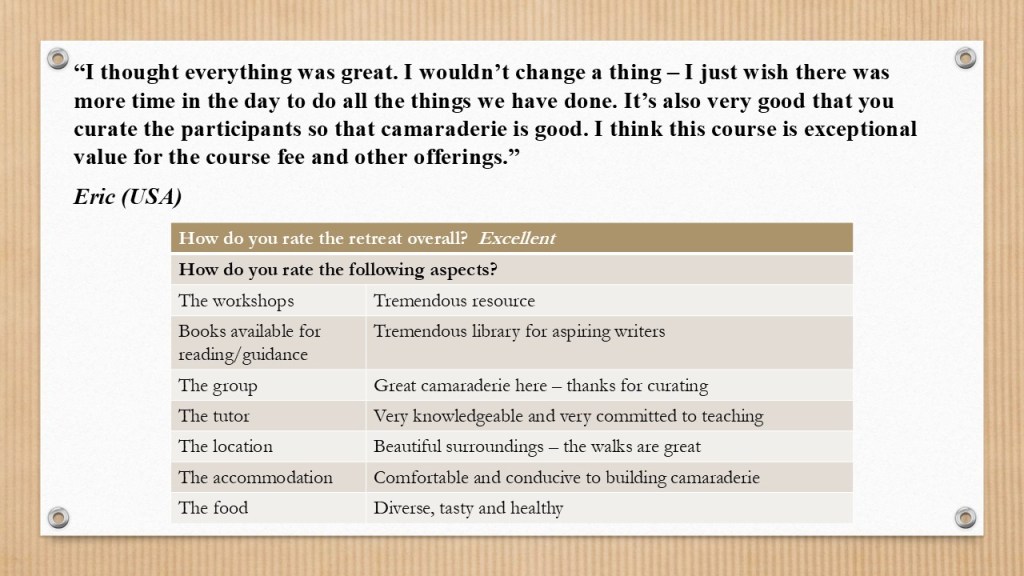
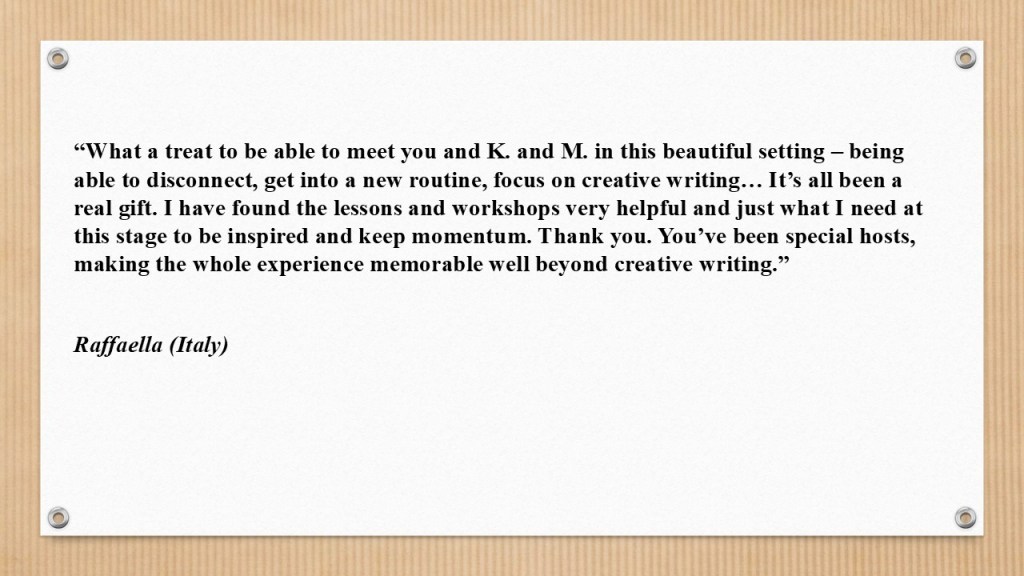
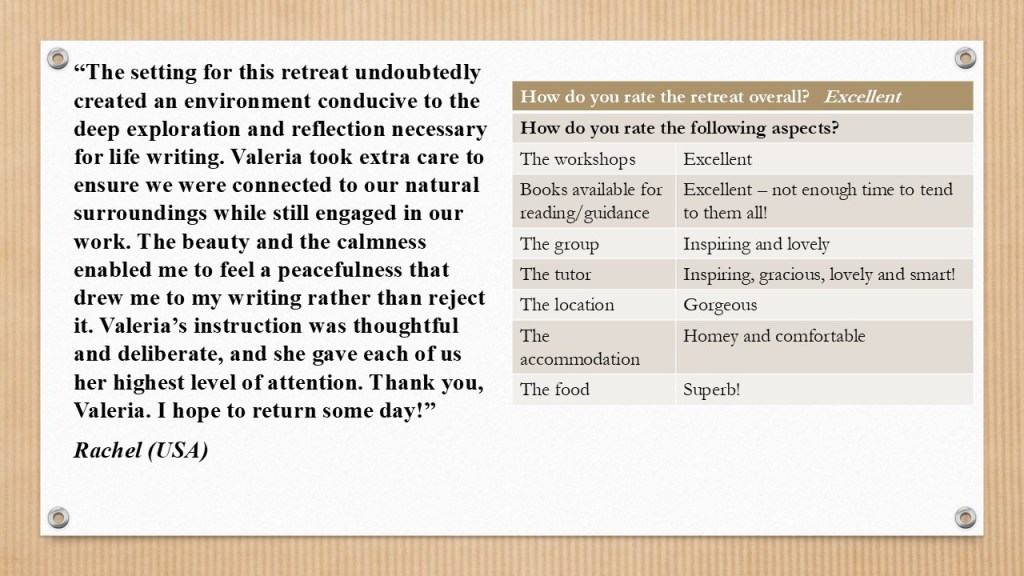
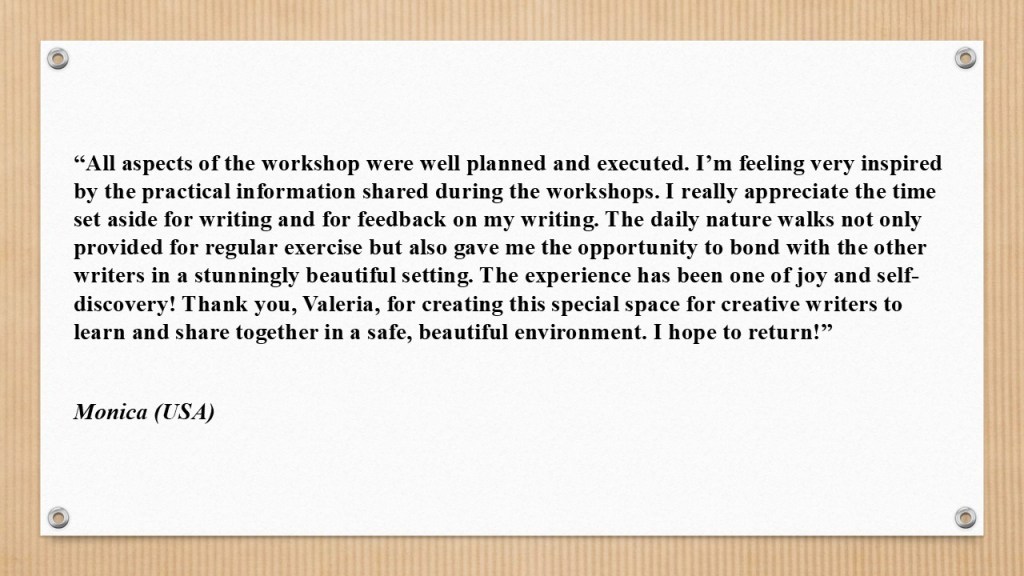
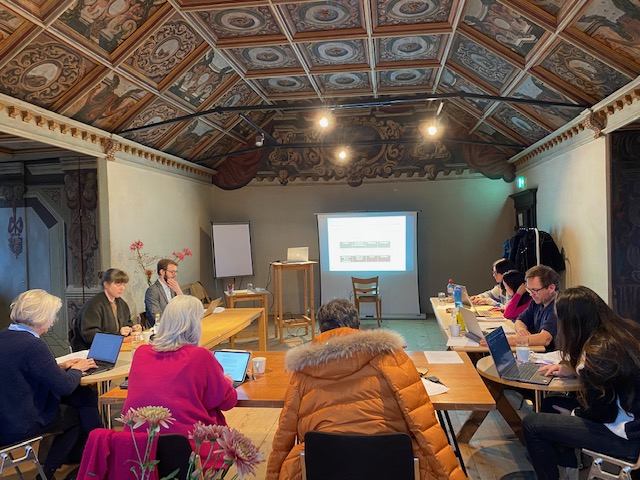
The days involve a mix of lectures, workshop exercises, feedback, and individual writing time. A maximum of three participants means your work receives a truly exceptional degree of attention – from me and from your fellow attendees. And then, of course, there’s a warm social side to it: meals and easy walks offer more opportunities for getting to know others who share your passion for writing, and for making friends. Participants often stay in touch with one another after the retreat, exchanging feedback on their writing projects on a regular basis. I’ll leave the word to them, through their testimonials!
First, a few words from attendees working on fiction projects:
Here, some testimonials from attendees working on life-writing projects:
Afterwards, I love hearing how everyone is progressing! One of the retreats this year will be for returning attendees, enabling them not only to find time and space for their projects, but also to grow their supportive writing community by meeting people from other cohorts. What a joy it will be to see them all again!
If you’d like to learn more about these writing retreats in the Swiss Alps, and to book, click here.
Author and critic A.S. Byatt died last week, leaving behind a priceless legacy of engaged, richly layered writing.
Byatt’s work stimulated readers to reflect on the stories she told and the complex questions she raised. A recurring one was the extent to which individuals can shape their own destinies and history, and vice-versa. In her fiction she interwove stories, history, material traces, fairy tales, myths, never afraid to cross the boundaries of disciplines: from literature to psychology, from philosophy to museum studies… Her books of literary criticism are treasure troves of dazzling insight.
The detailed material world in her novels and short stories was emblematic of her attempt to capture ‘the hard idea of truth’ – an attempt she believed all language is doomed to fail at, and which therefore demands accuracy, to achieve even qualified success. My mind jumps by association to pages in which Richard Holmes, whilst retracing Robert Louis Stevenson’s steps in the Cévennes, realises the passage of time makes the enterprise’s perfect success impossible – and yet it must be attempted, with passion and care.
The accuracy Byatt admired in George Eliot, who saw it as a moral imperative, was characteristic also of herself: she never aped nineteenth-century realism, however, but asserted the freedom to incorporate lessons from it in her work. Unsurprisingly, she praised Hilary Mantel’s or Pat Barker’s forms of realism as ‘almost an act of shocking rebellion.’ Byatt wouldn’t be slotted into categories, and instead pointed out that literature’s history is discontinuous – ‘there’s loss as well as gain’ even with Proust, she said, though she admired his ability to combine the ‘truth’ of things with conscious narrative form and though she learnt from him, too.
During my Creative and Life Writing MA at Goldsmiths years ago, we each had to produce a long essay on a topic relevant to our writing. I chose to research the use of art and artefacts in Byatt’s work. She utilised art and artefacts to produce and orchestrate an astonishing variety of effects: to render a description vivid and memorable; ground a story in time and place; define characters and relationships; shape and reflect character development; drive the action forward; illuminate key themes… She could even raise selected objects to the status of a near-character, for yet more purposes. Some artefacts offered the potential for motifs, which she exploited to various ends, including metafictional ones. The way she harnessed the taxonomy of gold, silver and lead in The Children’s Book is a virtuoso demonstration of how recurring metaphors can highlight and connect characters as much as issues.
I applied some of those lessons in my novels, and I’ve since taught for various institutions on the narrative potential of art and artefacts. At yet another – deeper – level, I’m grateful for the encouragement Byatt’s work gave me to never stop learning and experimenting.
Some sources behind this short blog post:
Antonia S. Byatt, Passions of the Mind (London: Vintage, 1993)
Antonia S. Byatt, On Histories and Stories (London: Chatto & Windus, 2000).
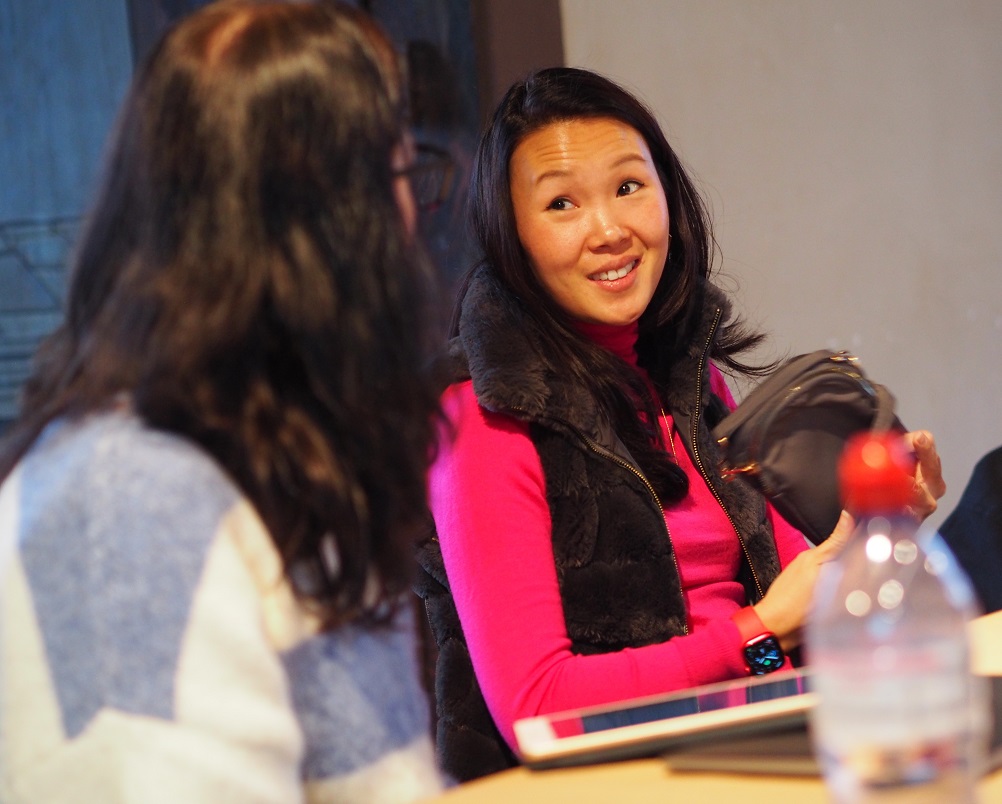
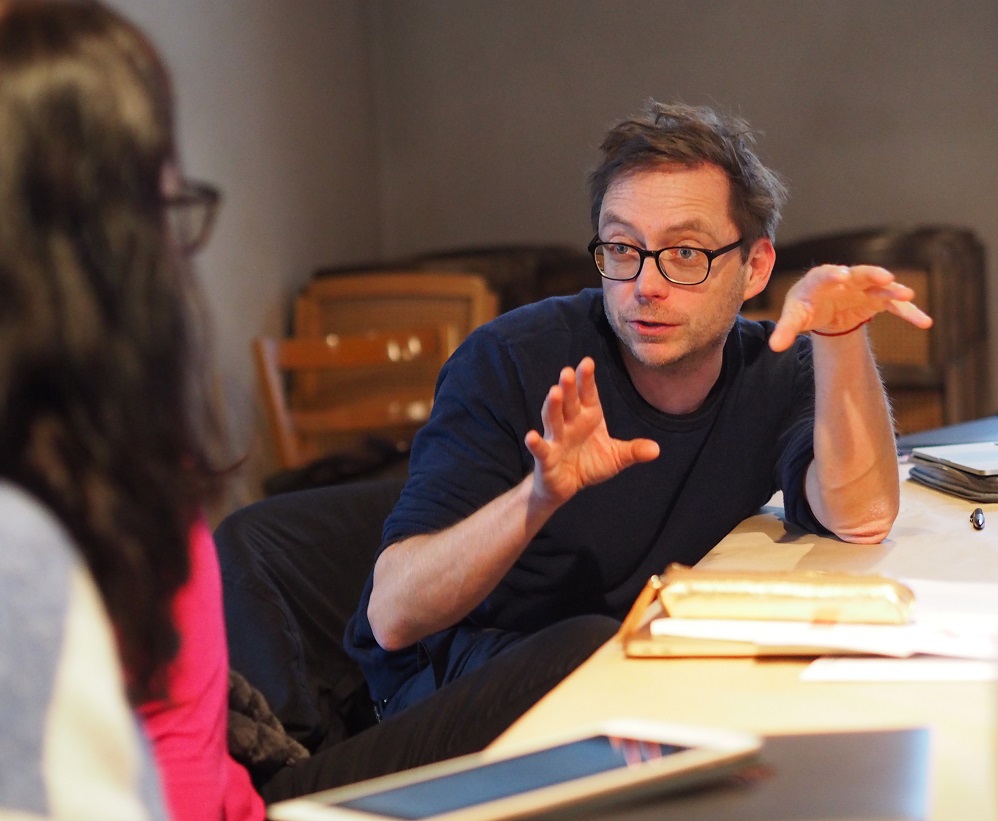
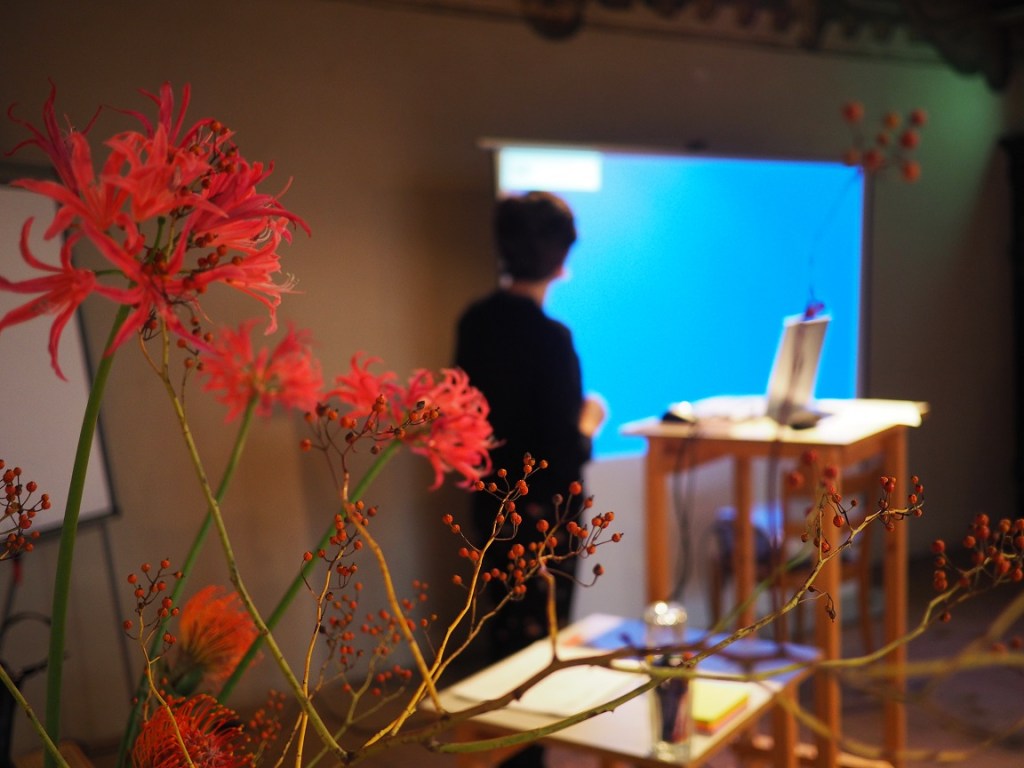
Last Saturday, 3 December, we had the first in a series of creative-writing workshops at the Literaturhaus Zentralschweiz (‘lit.z’). Based in the historic Rosenburg in beautiful Stans, lit.z is Central Switzerland’s literature hub, offering a lively, high-calibre programme in the cantons of Lucerne, Nidwalden, Obwalden, Schwyz, Uri and Zug.
Dating back to the 14th century, the Rosenburg was restructured first during the Renaissance and again during the Baroque period. Its fortunes waned in the 19th and 20th centuries, until in 1969 the Canton of Nidwalden, the municipality of Stans and the Nidwalden Historical Society established the Höfli Foundation to acquire and restore this gem of Switzerland’s historical heritage.
Lit.z regularly hosts authors’ readings in various languages and runs workshops for adults as well as kids. The Rosenburg Writers workshops are the first to be taught in English. The initiative reflects a wish to address Switzerland’s sizeable international community and to draw together like-minded people.
It’s an honour for me to teach this series. The creative-writing workshops at the Rosenburg are taking place on three Saturdays: 3 December 2022 (Characterisation), 14 January (Plot Structure and Story Development) and 18 March 2023 (Sense of Place). The sessions are for anyone with an intermediate-to-advanced level of English, not just for native-English speakers.
I’ve structured the workshops in such a way as to address a wide variety of needs, by offering material and exercises which meet participants where they’re at. The group on 3 December was wonderful. Attendees ranged from beginners to professional authors. We had a stimulating and fun day. Swiss, American, German and Belgian participants of different ages got along really well and contributed great questions and insights throughout. They had come from all over Switzerland: Basel, St Gallen, Bern, Freiburg… and Central Switzerland! Lunch in the Wirtschaft zur Rosenburg on the ground floor of the building was delicious and an opportunity to get to know each other better and enjoy lively conversation.
The July 2019 edition of the European Literature Network‘s #Riveting Reviews is out today. My review is of Veronica Raimo’s “The Girl at the Door” (4th Estate). Bold stylistic choices give a sharp edge to this novel. This is unsettling, thought-provoking work.
The Girl at the Door is in tune with the concerns of the #MeToo movement, but Raimo began writing the novel years before its rise. The book is relevant also to other burning issues. It highlights the question of the failure to see clearly and to seek dialogue not only at a personal level but at a societal one, especially in the age of social media, when views of history and the present seem to polarise around extremes.
This is a book which challenges you to work hard and which amply rewards you for it: a gripping read in its own right, and fiction that enhances our engagement with the world. Highly recommended.
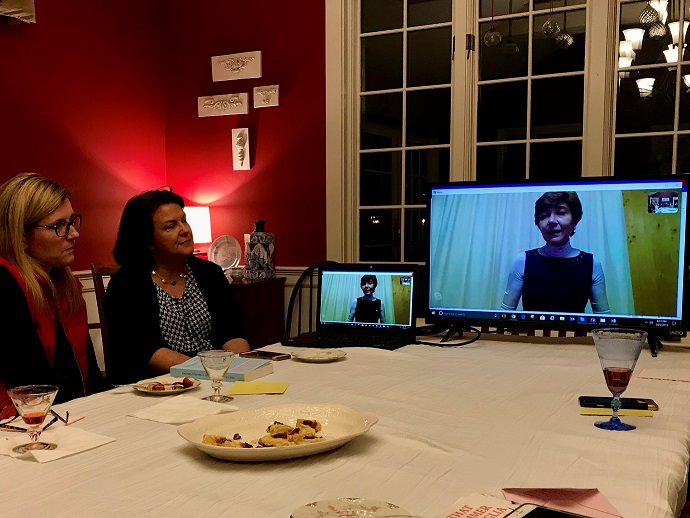
Since the launch of That Summer in Puglia in March 2018, my events schedule has been somewhat intense (you’ll get a sense of it if you click on the Events page, here). However, until last week I had never had the experience of a Skype chat with a reading group.* With this post, I’d like to share what made it work, trusting it may be helpful to other authors and readers. Much of what I’ve learnt from the event I owe to my friend Alice and her fabulous book club colleagues, whose preparations were impressive. The group was warm, well organised, intellectually rigorous and wise – ‘visiting’ them was an absolute joy.
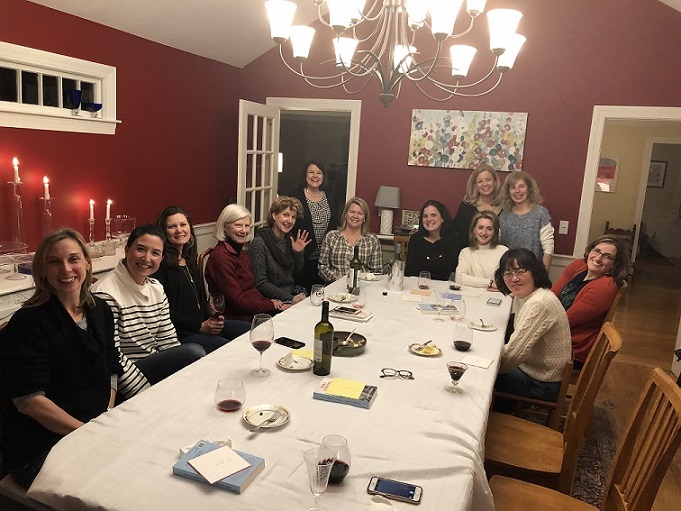
Around Alice’s table in Harvard, MA, sat 14 members of a 17-strong reading group (which makes it a relatively large one). I ‘sat’ at one end of the table… on a television screen: in actual fact, I was on the other side of the Atlantic, in the mountains to which I had escaped from London to write my second novel.
Alice and I last saw each other twenty years ago, when we completed a Master’s degree together. This past autumn she read That Summer in Puglia and proposed it to her fellow book club members, who took up her suggestion. She contacted me after that, wondering whether I might be open to a Skype chat with the group. This was nearly two months before the eventual call; a few days before it, we tested the Skype connection. We also exchanged by email some questions about the novel.
Tip 1: contact the author a couple of months (or more) in advance. This will ensure: (1) a higher likelihood of finding a date convenient for the writer and for a large number of group members; and (2) ample time for all participants to have read the book
Tip 2: test the Skype connection and your equipment in good time. I discovered that I had to use a different computer from the one I normally carry, for better network reception and microphone quality
Tip 3: (for authors) if you’ve never done an ‘author visit via Skype’, starting with a group of which you know one member will ensure it doesn’t feel daunting in the least
Tip 4: exchanging questions in advance by email is helpful to the readers and the author. On the night, only some of these questions were expressly posed, as awareness of them meant they could be addressed in the flow of conversation, out of which spontaneous ones could (and did) then emerge. This made it possible to get rapidly into deep discussion.
There were some lovely surprises:
the call lasted an hour, but it felt much shorter. It was a real pleasure, and we covered a lot of ground
the technology and the human warmth, combined, made it feel as if we were all sitting in the same room
although participants were nearly 4,000 miles away, and the novel is set in Southern Italy, their understanding of, and engagement with, it erased that distance.
The group’s questions were insightful, their observations thoughtful and thought-provoking, ‘spilling’ from the world of the novel into the ones we inhabit. Someone asked whether the book could have had a setting other than Puglia, and the answer to that is, in many respects, no, but from another perspective, yes. In the story, Puglia provides the ‘framework’ which shapes and tests the protagonists; the region’s simultaneous bridging and clashing of contradictions – the result of its layers of history and cultures – are integral to the conflicts within and between my fictional characters. At the same time, those conflicts, those emotions, can and do arise at all longitudes and latitudes, though their specific triggers and expression may vary.
What other aspects made the event so pleasant and – dare I say it – meaningful for all of us? Here are some more pointers from the evening.
Tip 5: let all group members introduce themselves to the author at the outset. Putting names to faces, and in some cases mentioning something relevant about people’s backgrounds, helps establish a real, personal connection
Tip 6: to get the most out of the opportunity to discuss a book with its author, it’s well worth giving it attentive reading. It’s very much a case of ‘what you put in, you get out’ – insightful questions and observations are bound to elicit thoughtful responses: trust me, the author will be as genuinely intrigued as you are by the questions you pose
Tip 7: if cuisine plays an important role in the book, consider holding the discussion over a dinner which reflects it – it’s fun, immerses you further in the world of the novel, and makes the evening more memorable. Alice went to amazing lengths to cook or buy some of the Apulian dishes which appear in That Summer in Puglia. Another wonderful reading group I visited in London in October did the same (there, I could actually taste the orecchiette and the burrata).
Orecchiette al pomodoro – photo by P. Turo
Burrata di Andria – photo by FM433
In the novel, Puglia’s cuisine and wines feature for several reasons: they evoke vivid memories for the narrator; they connect characters and point to their evolution; they hint at truths the protagonists cannot face head-on; they are quiet carriers of centuries of embodied culture and history. For example, cartellate, the honey-dipped rosettes served in Puglia for Christmas, are identical to Crete’s xerotigana and to the diples of other parts of Greece, revealing the region’s Ancient Greek past; originally, they were offerings to the goddess Demeter, and, centuries later, to the Virgin Mary. These and other traces of Puglia’s multi-layered past are integral to the story, whose protagonist must ‘excavate’ layers of his personal history to be able to move on. (For more on the broader subject of why history in fiction matters, see here.)
Tip 8: arrange for the reading group to be assembled 15-30 minutes before the Skype call, so that everyone may be settled before you connect with the author. This ensures: (1) that all participants (the writer included) can relax and concentrate on the conversation; and (2) that the time available for asking questions is used to the fullest
Tip 9: continue the conversation among reading group members after the Skype call is over. What did you appreciate most about it? Which of the author’s answers or other participants’ comments added a fresh perspective of particular value to you?
Tip 10: thank each other by email the next day (if you can, provide feedback). The Harvard group sent me emails and photos overnight, expressing their enjoyment and warm appreciation of the event – and all their reasons why. I enjoyed and appreciated our encounter no less than they did, and wrote back to say so.
My first experience of a ‘Skype visit’ to a book club has been tremendous, and one I’ll gladly repeat. I hope this post will be helpful to you – whether you’re a fellow author or a reader – and encourage you to give the experience a try.
* I’m here using the expressions ‘reading group’ and ‘book club’ interchangeably, reflecting their common usage. Neither is to be confused with a ‘book sales club’.
Recently the European Literature Network published The Swiss Riveter, a compendium of writing about contemporary fiction, poetry and memoir from Switzerland. It contains essays on Swiss literature’s richness and diversity, as well as reviews and extracts, including an exclusive English excerpt of Peter Stamm’s The Gentle Indifference of the World (to be published this year in Michael Hoffman’s translation) and an essay by Swiss-British writer Alain de Botton.
My review of Pascale Kramer’s Autopsy of a Father (Bellevue Literary Press, 2017) appears on pp. 56-57. Kramer won the Grand Prix Suisse de Littérature in 2017 for her oeuvre. Autopsy of a Father is a powerful novel for our times: it tackles xenophobia, racism and nationalism. You can access the review here.
The European Literature Network promotes literature in translation. The Swiss Riveter was produced with support from Pro Helvetia, the Swiss Arts Council, the Embassy of Switzerland in the UK, Arts Council England and ELit Literature House Europe. Sections of it are now available also in digital form here.
This is the fifth of the European Literature Network’s Riveters. The first was devoted to literature from Poland, on the occasion of the 2017 London Book Fair’s Polish focus. The second, on literature from Russia, coincided with ELNet’s Russian events at the British Library. In The Nordic Riveter of October 2017, five countries were represented: Sweden, Norway, Denmark, Finland and Iceland. The fourth covered the Baltics, the focus of the 2018 London Book Fair.
The Polish Riveter
The Russian Riveter
The Nordic Riveter
The Baltics Riveter
Image credits:
Images courtesy of The European Literature Network.
A review of That Summer in Puglia has just been published in the Winter 2018 edition of Ambassador Magazine, NIAF’s beautiful semi-annual publication. Washington-based NIAF – the National Italian American Foundation – is a key resource for the Italian American Community. It aims to preserve and promote the cultural heritage of Italian Americans, and to strengthen ties between the United States and Italy.
My thanks to NIAF and to Ambassador Magazine reviewer Kirsten Keppel for her fabulous piece on That Summer in Puglia.
Credits:
Article reproduced with kind permission of NIAF / Ambassador Magazine.


















 Valeria Vescina

